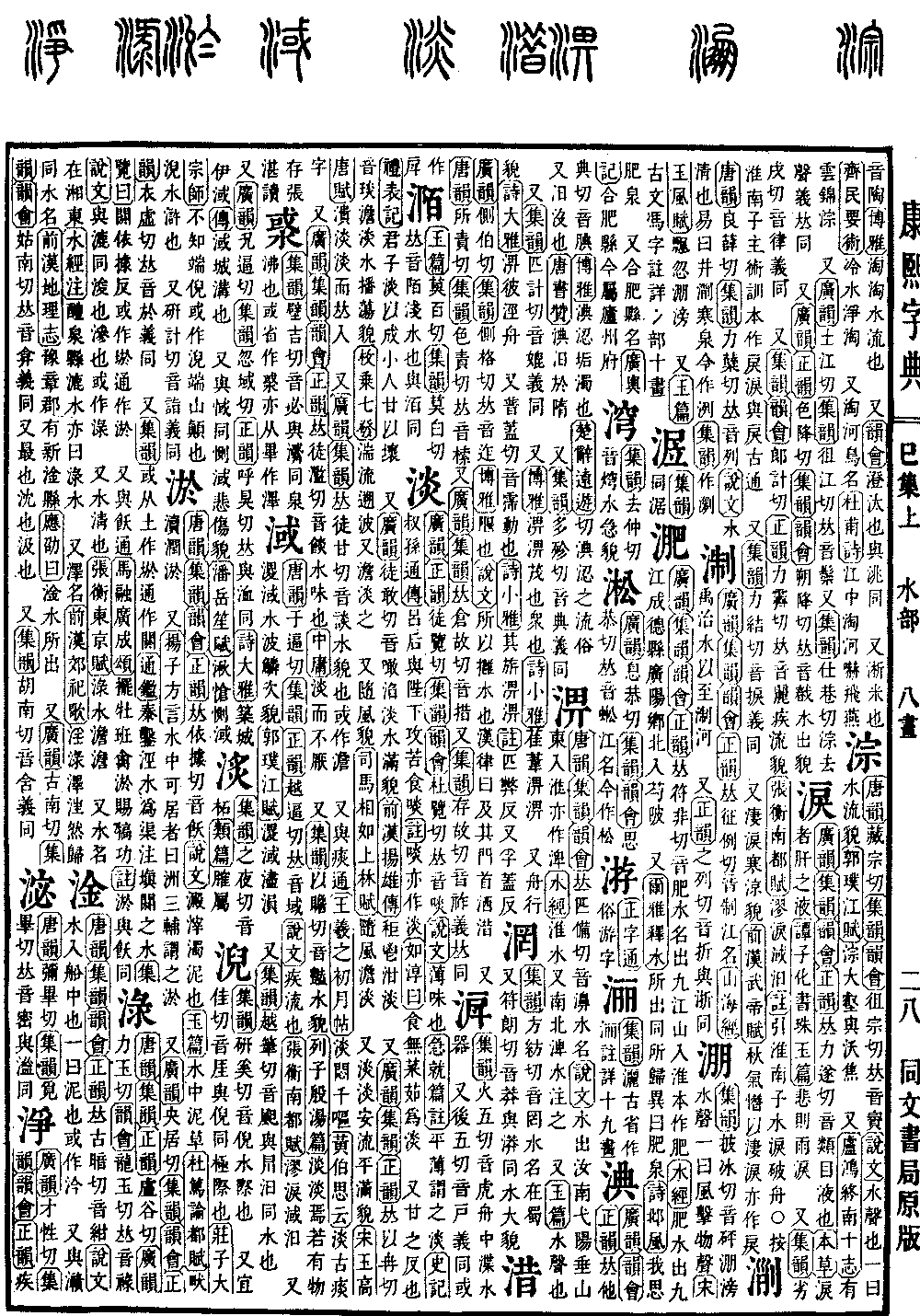
Si Collection, Upper Volume
Radical: Water (shuǐ)
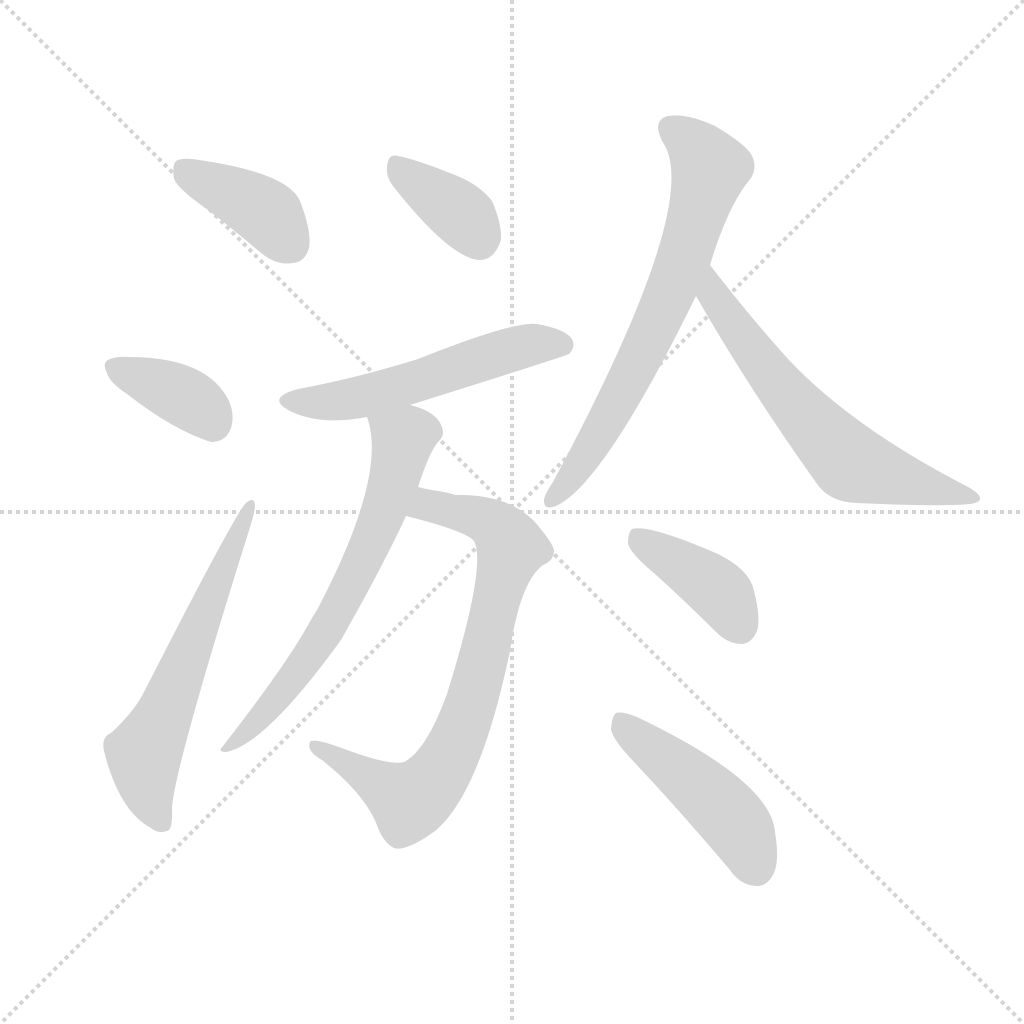
淤
Kangxi stroke count: 12
Page 630, Entry 23
Tang Dynasty Rhymes (Tangyun), Collected Rhymes (Jiyun), Dictionary of Rhymes (Yunhui), and Rectified Rhymes (Zhengyun) all provide the pronunciation yu (falling tone).
Shuowen Jiezi (Shuowen): Sediment or turbid mud.
Jade Chapters (Yupian): Mud and weeds in water.
Du Du, Rhapsody on the Capital (Lun du fu): Drains and irrigation channels moisten the mud.
Yang Xiong, Dialect (Fangyan): That which is in water and can be inhabited is called a shoal (zhou); in the area of the three Sufu (the capital region), it is called yu.
Guangyun: Pronounced yu (level tone). Collected Rhymes (Jiyun), Dictionary of Rhymes (Yunhui), and Rectified Rhymes (Zhengyun) provide the pronunciation yu (level tone). The meaning is the same.
Collected Rhymes (Jiyun): Sometimes written with the earth radical. Commonly written as e.
Comprehensive Mirror (Tongjian): The Qin state dug a channel from the Jing River, directing the water that carries sediment.
Collected Annotations (Jilan): E is pronounced yu (falling tone). Sometimes written as 阏. Commonly written as yu.
Also interchangeable with yu (to satiate).
Ma Rong, Eulogy on the Vast Park (Guangcheng song): To distribute the catch and reward the laborers with a feast.
Annotation: Yu is identical to yu (to satiate).