Xu Collection, Upper Volume
Radical: Gate (mén)
Kangxi stroke count: 16
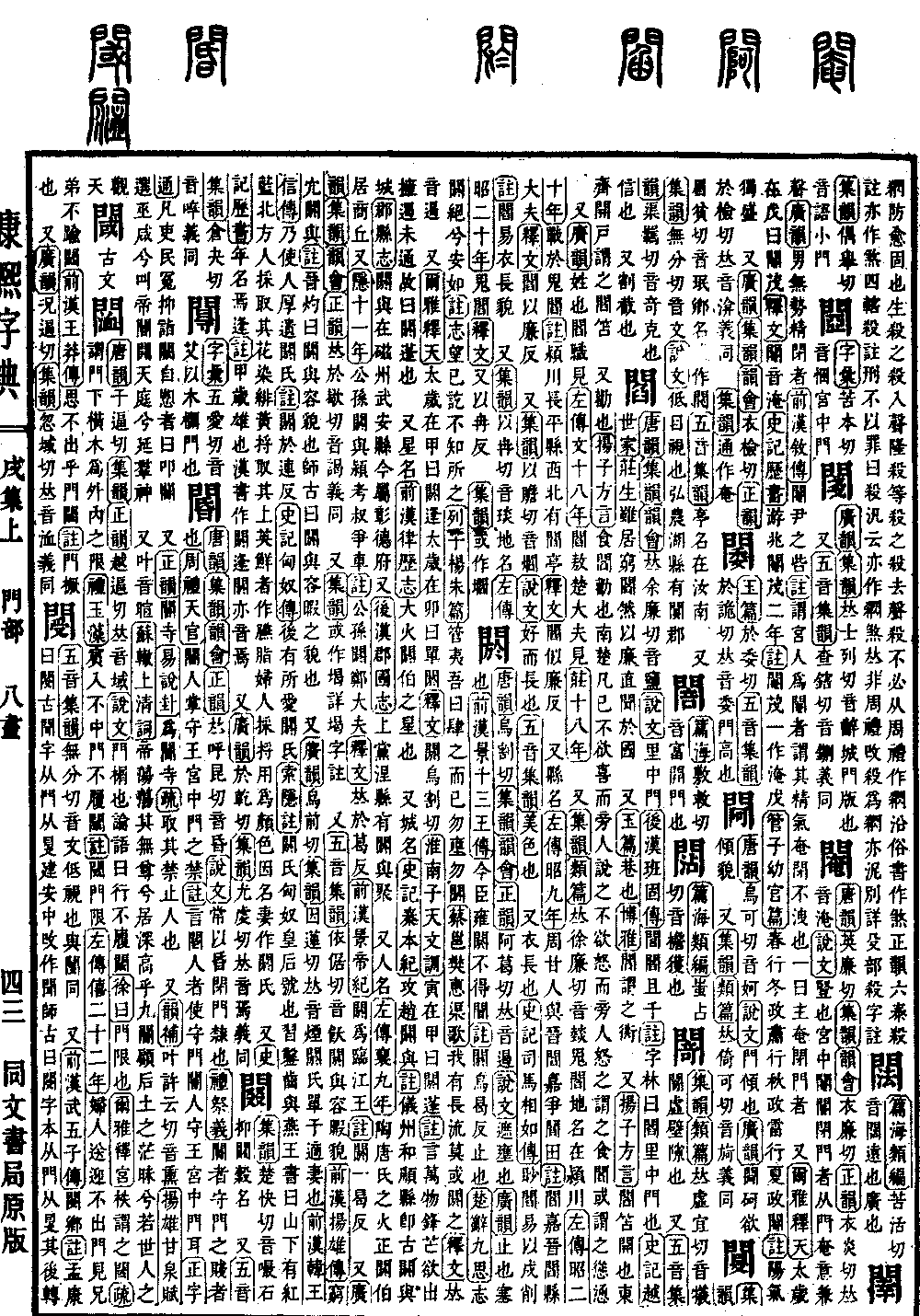
Page 1337, Entry 05
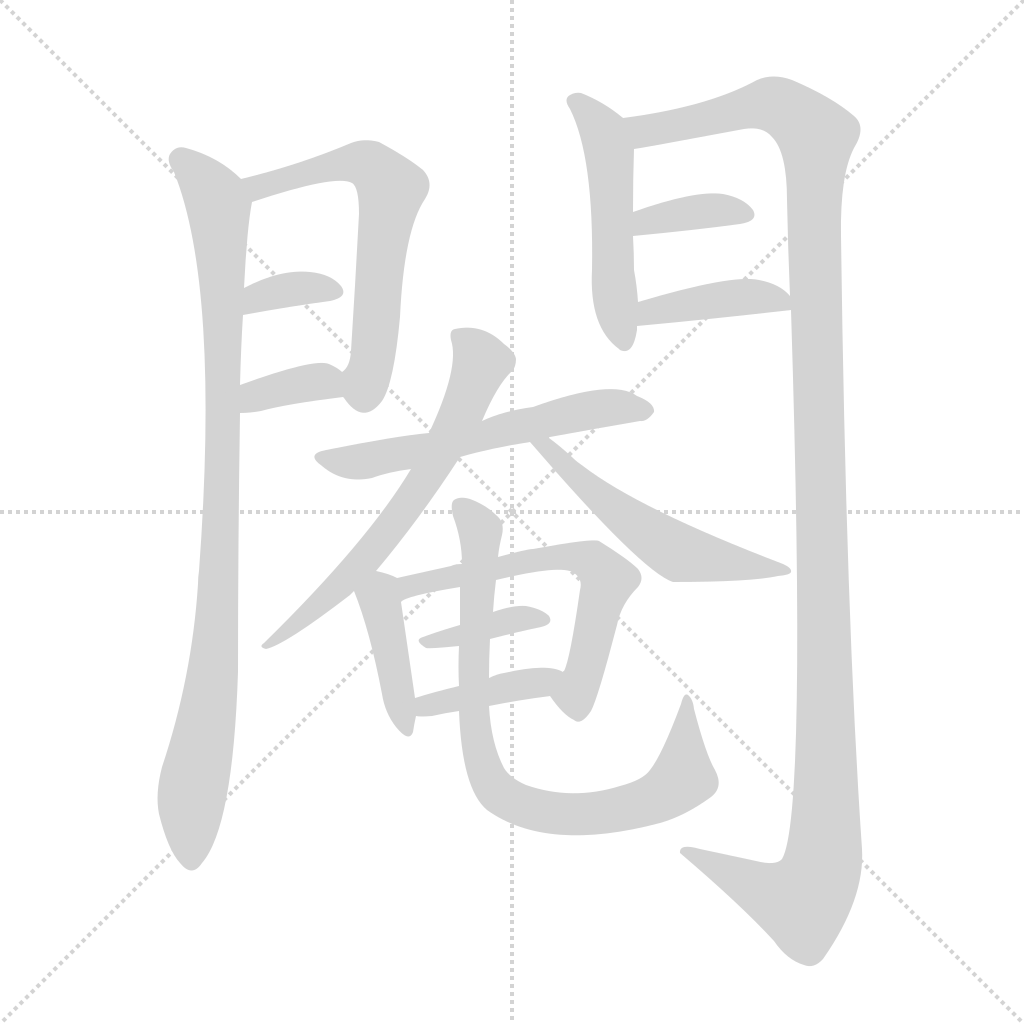
Pronounced yan. According to the Explaining Graphs and Analyzing Characters (Shuowen Jiezi), it refers to someone in the palace responsible for guarding the gate and closing the doors. It is composed of the gate radical with the character yan acting as both semantic and phonetic indicator.
According to the Expanded Rhymes (Guangyun), it refers to a man who has lost his reproductive capacity, whose essence is obstructed.
In the History of the Former Han (Qianhan Shu), Narrative Biography: The mistakes of the leader of the eunuchs. The commentary explains this refers to palace attendants who perform the duties of a eunuch, so named because their vital essence is blocked and cannot be released. Another theory suggests it refers to the person in charge of closing the palace gates.
Also, according to the Literary Expositor (Erya), Interpretation of Heaven: The year when the Great Year star enters the Earthly Branch of Xu is called Yanmao. The Explanation of Text states that Yan is pronounced like yan.
In the Records of the Grand Historian (Shiji), Treatise on the Calendar: During the second year of Youzhao and Yanmao. The commentary notes that Yanmao is also written as a variant form (yanwu).
According to the Book of Master Guan (Guanzi), Chapter on Young Officials: If the government policies of winter are carried out in spring, there will be a sense of severe cold. If the government policies of autumn are carried out, there will be many thunderous storms. If the government policies of summer are carried out, there will be an obstruction of the yang energy. The commentary explains this as the yang energy being overly concentrated.
Also pronounced yan. The meaning is the same. According to the Collection of Rhymes (Jiyun), it is used interchangeably with the character yan.
Textual Research: In the Literary Expositor (Erya), Interpretation of Heaven, it says: The Great Year at Xu is called Yanmao. It is hereby noted that in the original text, the phrase at the branch of Xu was corrected from the phrase at the branch of Wu.