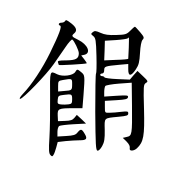
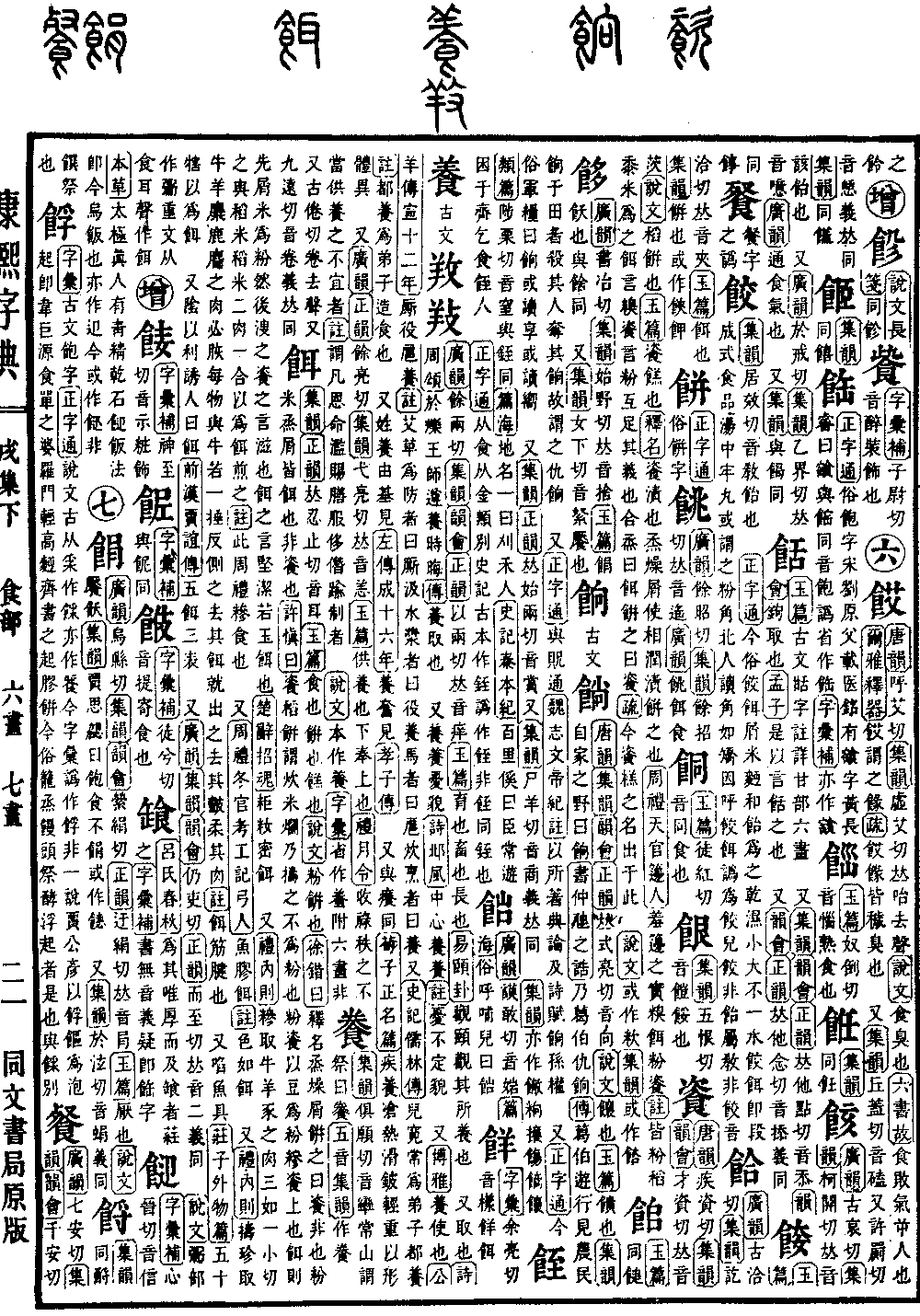
Zi Collection, Upper Volume, Page 11, Entry 03
Pronounced wuán (departing tone)
Also pronounced yíng juàn (departing tone) in Jiyun (Jiyun) and Yunhui (Yunhui), and ǘ juàn (departing tone) in Zhengyun (Zhengyun). The pronunciation is the same as "yuan".
Yupian (Yupian) explains it as "satisfied." Guangyun (Guangyun) explains it as "full." Jiyun (Jiyun) quotes Jia Sixie (Jia Sixie) as saying: "When one is full, one does not feel satisfied."
Sometimes also written in a variant form.
Additionally, in Jiyun (Jiyun), it is also pronounced yū xuàn (departing tone), with the same pronunciation as "yuan," and the meaning is the same.
Etymology: [Explained as "satisfied" in Yupian (Yupian). Explained as "full" in Shuowen (Shuowen).]
Note: Shuowen (Shuowen) does not contain a record of "full," so it has been changed to "full" as explained in Guangyun (Guangyun).