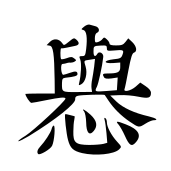
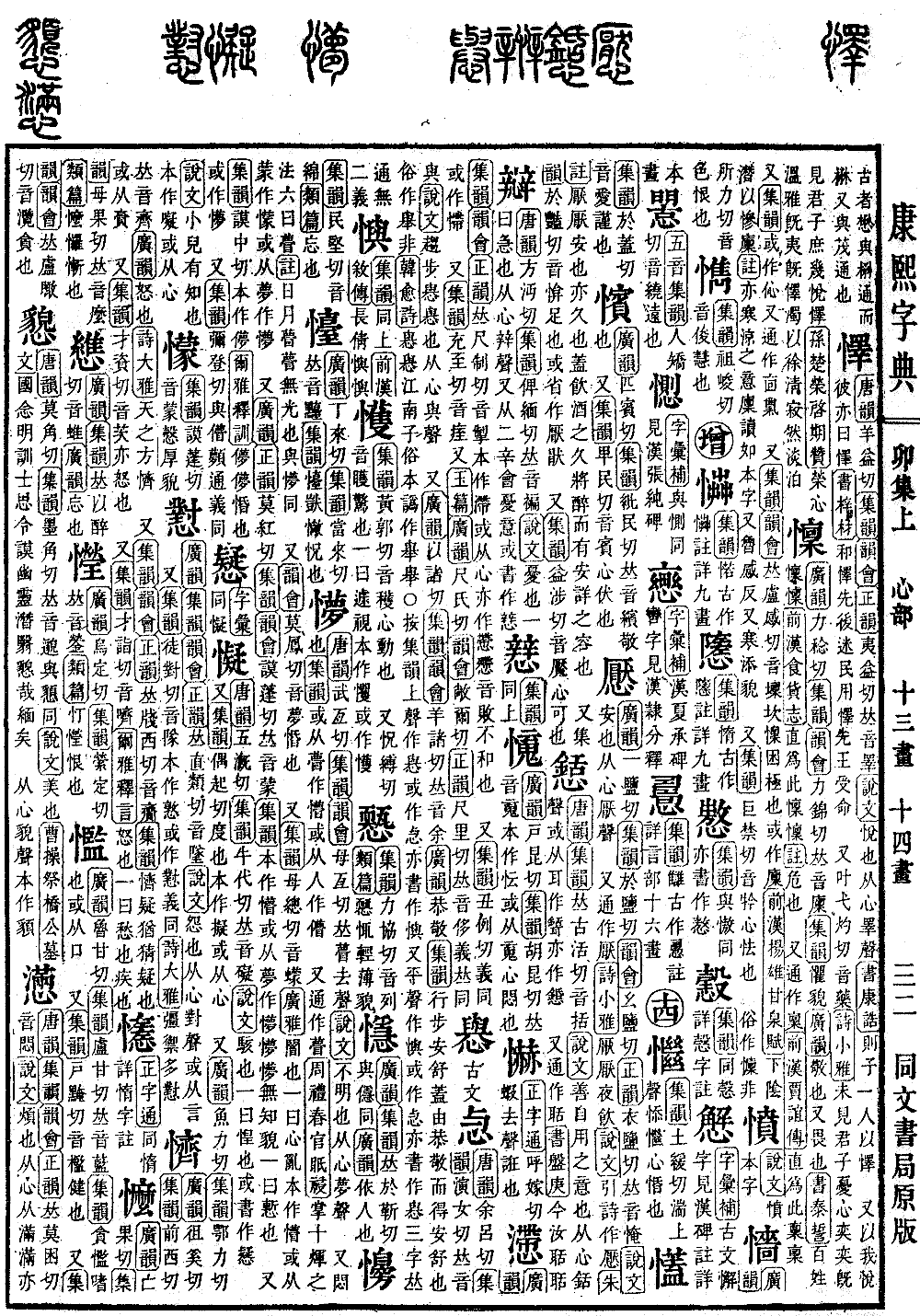
Archaic form. Tang Rhymes (Tangyun) gives the pronunciation as yu (rising tone); Collected Rhymes (Jiyun) gives the pronunciation as yan (rising tone), which is the same as yu. According to the Explaining Graphs and Analyzing Characters (Shuowen Jiezi), it describes a manner of walking that is calm and unhurried. Derived from Heart, with the phonetic component yu.
Also, Wide Rhymes (Guangyun) gives the pronunciation as yi; Collected Rhymes (Jiyun) and Collection of Rhymes (Yunhui) give the pronunciation as yang (level tone), which is the same as yu. Wide Rhymes defines it as respectful. Collected Rhymes defines it as walking in a steady and slow manner. This is likely because, due to inner respect, one appears steady and slow. The common form is written as ju, which is incorrect. In the poetry of Han Yu, it is written as yu yu, referring to people from the south of the Yangtze River. Common editions incorrectly write it as ju ju.
Note: According to Collected Rhymes, the rising tone is written as yu, or as an alternate form, or as yu. Additionally, the level tone is written as yu, or as an alternate form, or as yu. These three characters are interchangeable and do not possess distinct meanings.
Zi Collection, Page Position: Upper
Radical: Heart (xīn)
Page 01, Entry 01