Zi Collection, Page Position: Lower
Radical: Self (wǒ)
Page 158, Entry 09
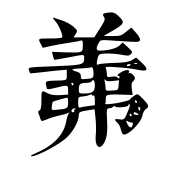
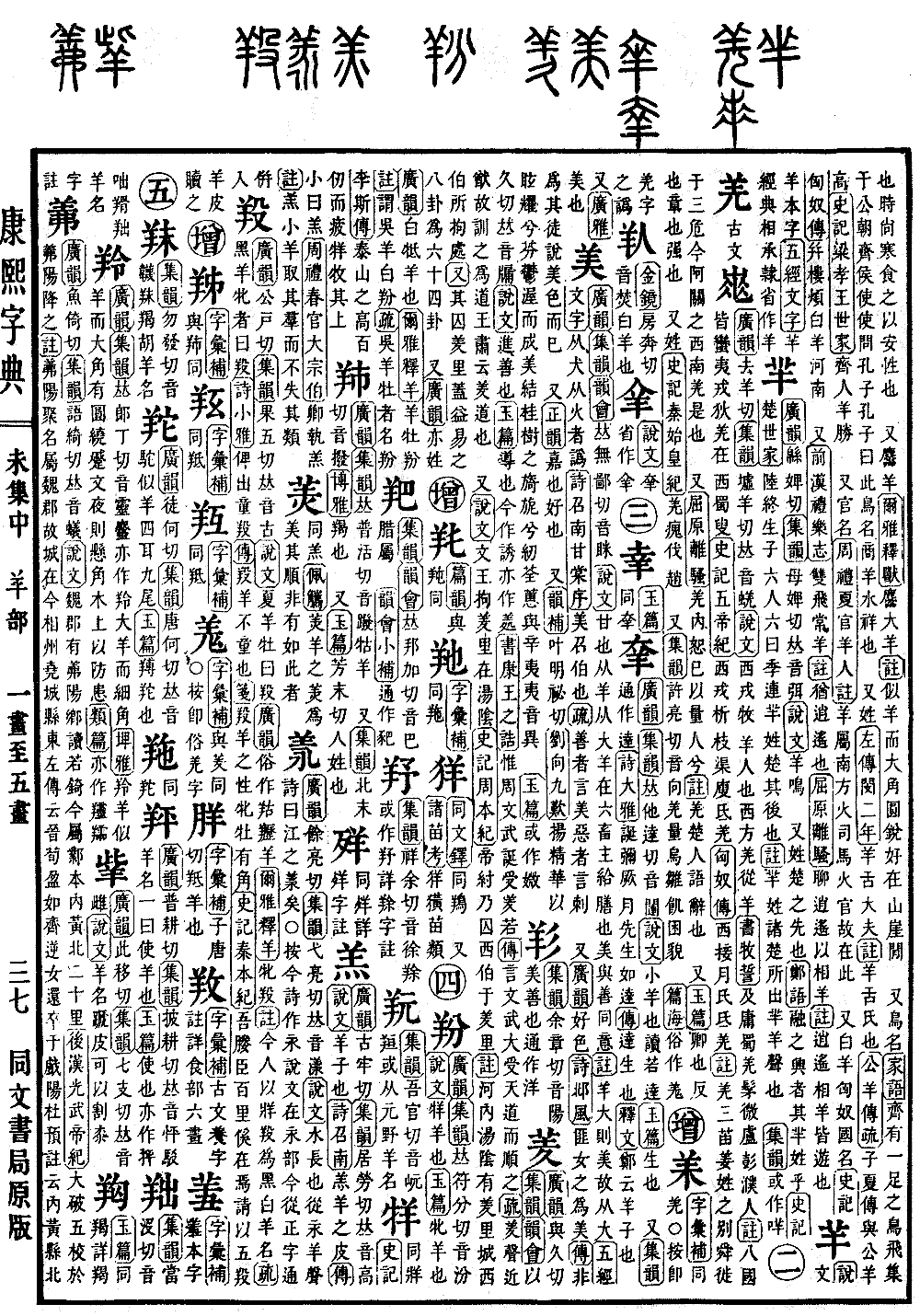
Guangyun (Broad Rhymes) records the pronunciation as yi (rising tone). Jiyun (Collected Rhymes) records the pronunciation as yi (rising tone), which is the same as the pronunciation of the word for ant.
Explaining Graphs and Analyzing Characters (Shuowen Jiezi) records: There is a place called Yiyang Township in Weijun, with a pronunciation similar to the word for a type of tripod cauldron (qi). It currently belongs to Yexian, and was originally located twenty li north of Neihuangxian.
Book of the Later Han (Hou Hanshu): Chronicle of Emperor Guangwu records: The Five Schools Army was defeated and surrendered at Yiyang. The commentary notes: Yiyang is the name of a settlement, which belongs to Weijun; its old city is located east of the present-day Yaochangxian in Xiangzhou.
Zuo Tradition (Zuo Zhuan) records: Xun Ying of the state of Jin went to the state of Qi to marry a woman, and died in Xiyang on his return. Du Yu comments: There is a Xiyang City north of Neihuangxian. The character xi is interchangeable with the character yi.
Additionally, Jiyun (Collected Rhymes) records the pronunciation as xi, which is the same as the pronunciation of the word for sacrificial animal. The meaning is the same.
Additionally, Jiyun (Collected Rhymes) records the pronunciation as yi (falling tone), which is the same as the pronunciation of the word for discuss. The character yi (righteousness) can be written as yi in ancient texts. Explaining Graphs and Analyzing Characters (Shuowen Jiezi) mentions: In the book of Mo Di (Mozi), the character for righteousness is written as yi. Note: According to the original Explaining Graphs and Analyzing Characters (Shuowen Jiezi), the character yi was classified under the Radical: Self (wǒ), but it has now been merged into other radicals.