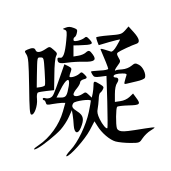
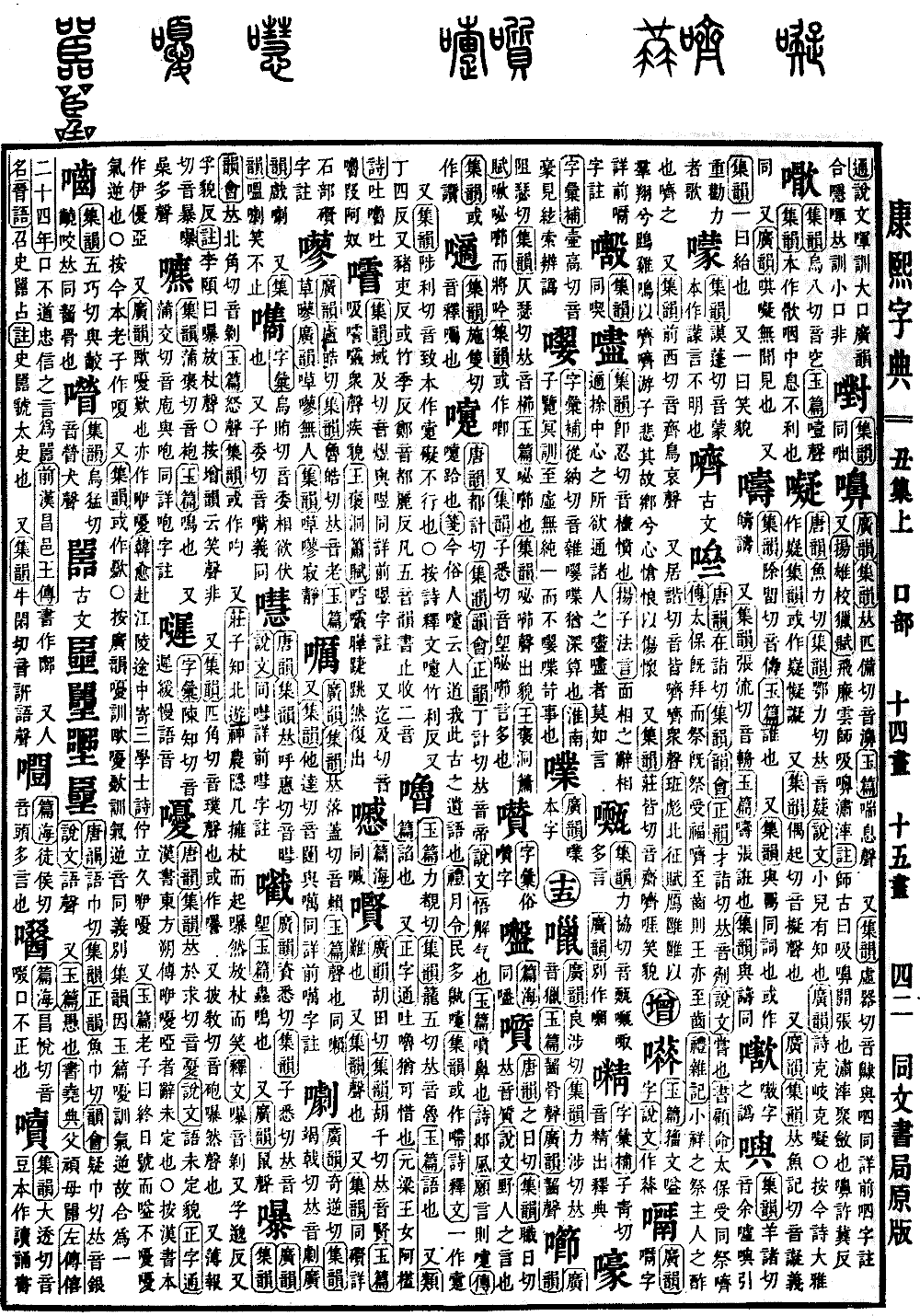
Tang Rhyme (Tangyun) states the pronunciation is yi. Collected Rhymes (Jiyun) states the pronunciation is yi. The pronunciation is the same as ni. Discussing the Definition of Characters (Shuowen Jiezi) defines it as the appearance of a young child possessing wisdom. Broad Rhymes (Guangyun) cites the Book of Odes (Shijing): "Able to be wise, able to be hesitant." Note: In the current edition of the Book of Odes: Greater Odes (Daya), it is written as yi. In Collected Rhymes (Jiyun), it is sometimes written as variants: yi, yi, or yi.
Also, Collected Rhymes (Jiyun) states the pronunciation is ni. This refers to a sound.
Also, Broad Rhymes (Guangyun) and Collected Rhymes (Jiyun) state the pronunciation is yi. The meaning is the same.
Also, Broad Rhymes (Guangyun) lists the term qi-ni, referring to having no knowledge or experience of something.
Also, Collected Rhymes (Jiyun) suggests one meaning is to deceive.
Also, one theory suggests it means the appearance of smiling.