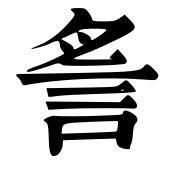
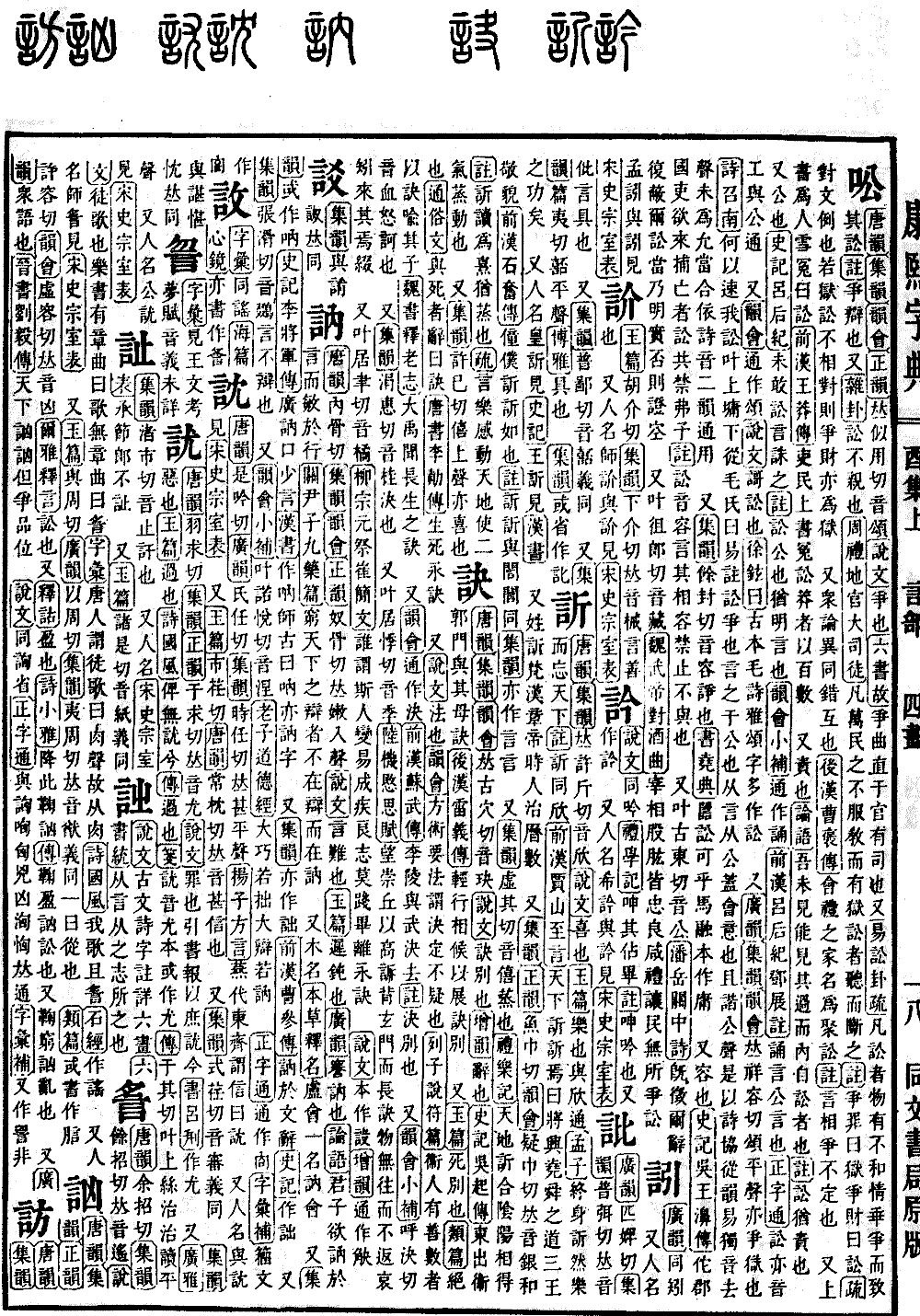
"Yu zhao" is used as a fanqie for the pronunciation in "Tang Yun" (Tang Yun), and "yu zhao" is used as a fanqie in "Ji Yun" (Ji Yun). The pronunciation is the same as "yao" (yao). "Shuowen Jiezi" (Shuowen Jiezi) explains it as singing without instrumental accompaniment. In music books, it is recorded that pieces with musical scores and melodies are called "ge" (ge), and those without are called "ju" (ju). "Zihui" (Zihui) mentions that people in the Tang Dynasty called singing without accompaniment "rou sheng" (rou sheng), hence the character is from "rou" (rou). There is a sentence in "Book of Odes" (Shijing), "Wo ge qie ju" (Wo ge qie ju). In "Shi Jing" (Shi Jing), it is written as "yao" (yao).
It is also used in personal names. For example, Shi Ju (Shi Ju), found in "History of Song" (Song Shi), "Imperial Family Table" (Zongshi Biao).
Additionally, "yu zhou" (yu zhou) is used as a fanqie in "Yupian" (Yupian), "yi zhou" (yi zhou) is used in "Guangyun" (Guangyun), and "yi zhou" (yi zhou) is used in "Ji Yun" (Ji Yun). The pronunciation is the same as "you" (you). The meaning is the same. Another interpretation is the meaning of "to follow." "Leipian" (Leipian) records that it is sometimes written as "".