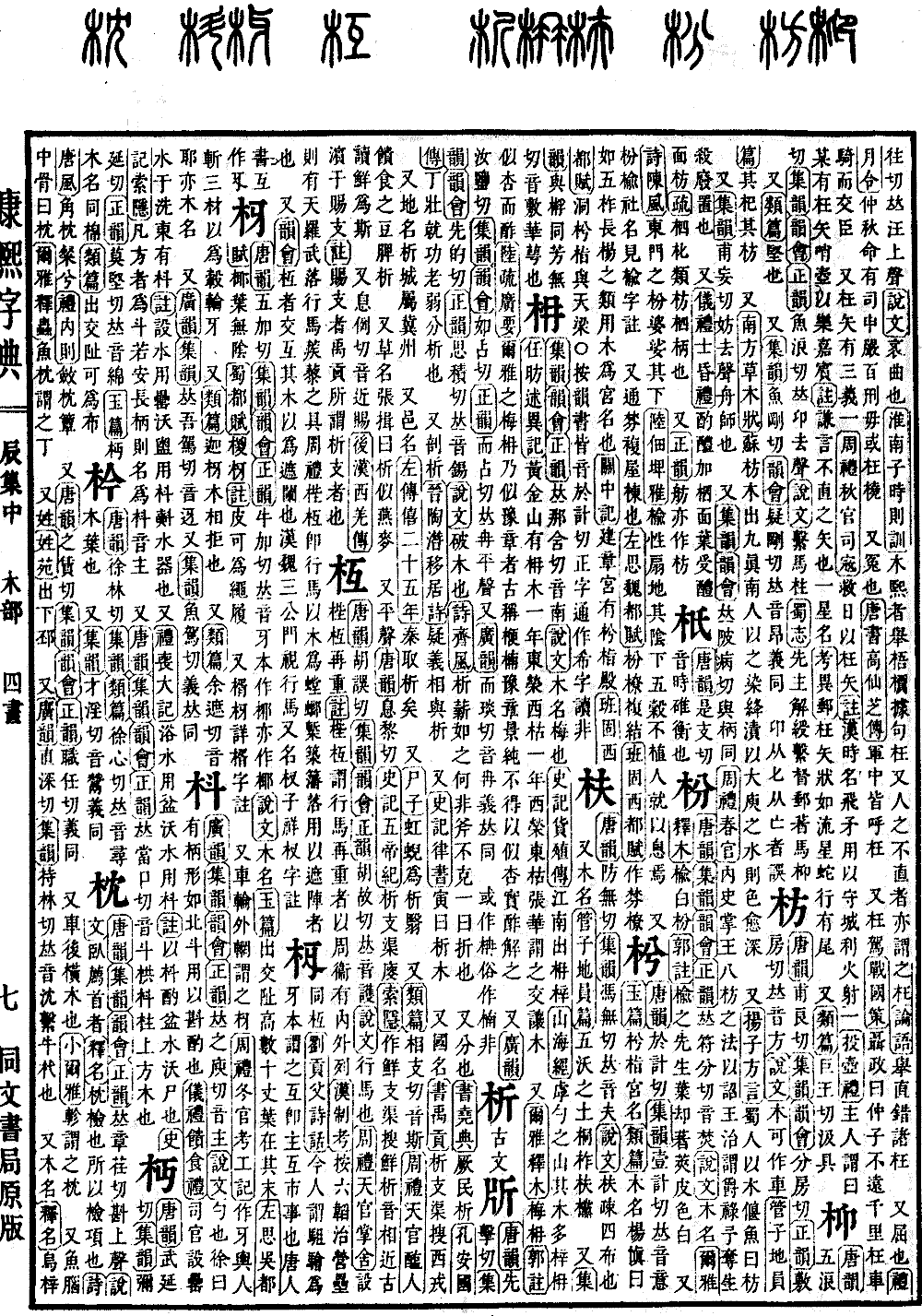
Chen Collection, Middle Volume
Radical: Wood (mù)
Page 515, Entry 12
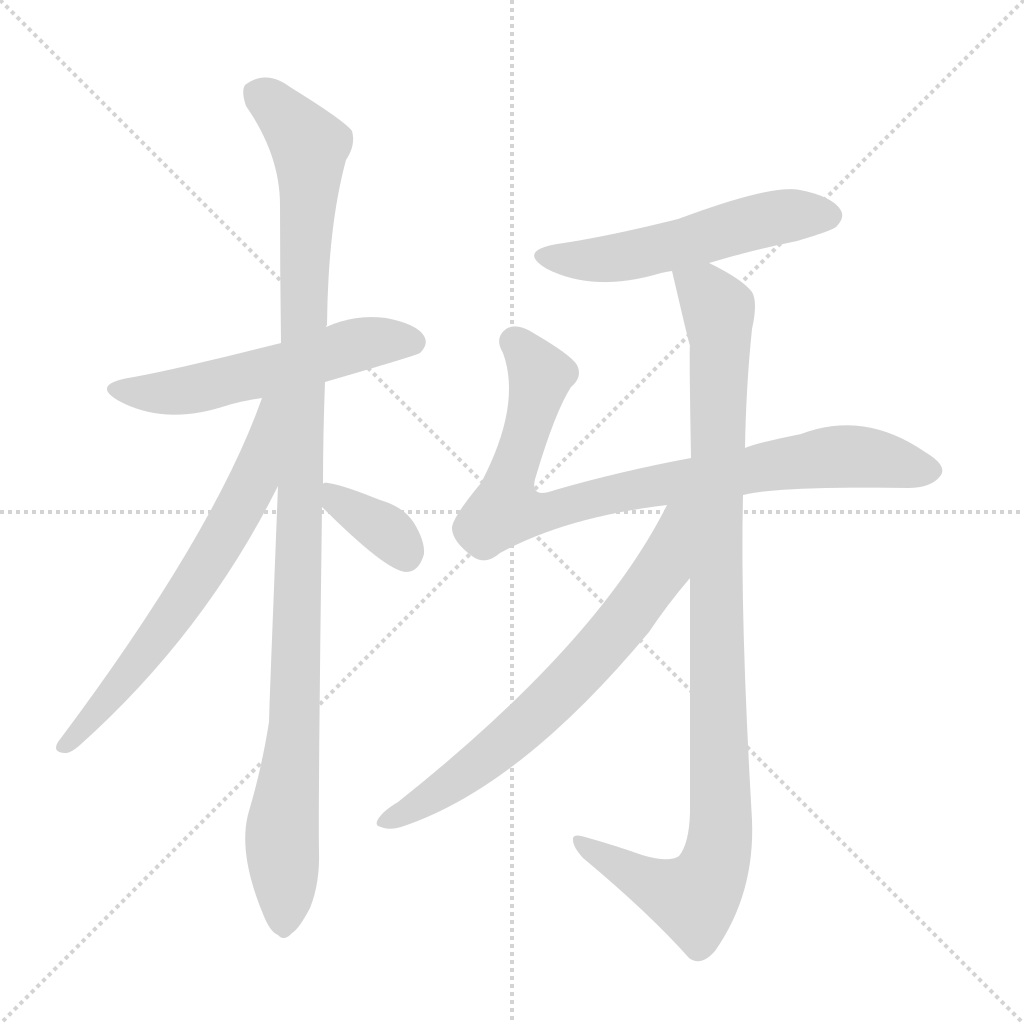
Pronounced ya. Originally written in a variant form. Also written as ye.
Shuowen Jiezi (Explanation of Characters and Analysis of Words): This is the name of a type of tree.
Yupian (Jade Chapters): Originates from Jiaozhi, reaching heights of several tens of zhang, with leaves growing at the tips of the branches.
Zuo Si, Wu Capital Rhapsody (Wudu Fu): The leaves of the coconut tree cast no shade.
Shu Capital Rhapsody (Shudu Fu): Zongya.
Annotation: The bark of the tree can be used to make ropes and shoes. Also appears as xuya. Refer to the entry for the character xu for detailed notes.
Additionally, the outer rim of a carriage wheel is called ya.
Rites of Zhou (Zhouli), Winter Officials, Record of Tradesmen (Kaogong Ji): Written as ya; the wheelwright carves three types of wood to fashion wheel hubs, spokes, and felloes.
Also, Lei Pian (Classified Chapters): Jiaya, referring to the appearance of trees bumping against each other.
Also, Lei Pian (Classified Chapters): Pronounced ye. This is also the name of a type of tree.
Also, Guangyun (Broad Rhymes) and Jiyun (Collected Rhymes): Pronounced ya (falling tone).
Also, Jiyun (Collected Rhymes): Pronounced ya (falling tone), with the same meaning.
Textual Research: In the Rites of Zhou (Zhouli), Winter Officials, Record of Tradesmen (Kaogong Ji), it is written as ya; the carriage maker carves three types of wood to fashion wheel hubs, wheels, and felloes. Note: In the original text, the character for carriage maker was changed to wheel maker, and the character for wheel was changed to spoke.