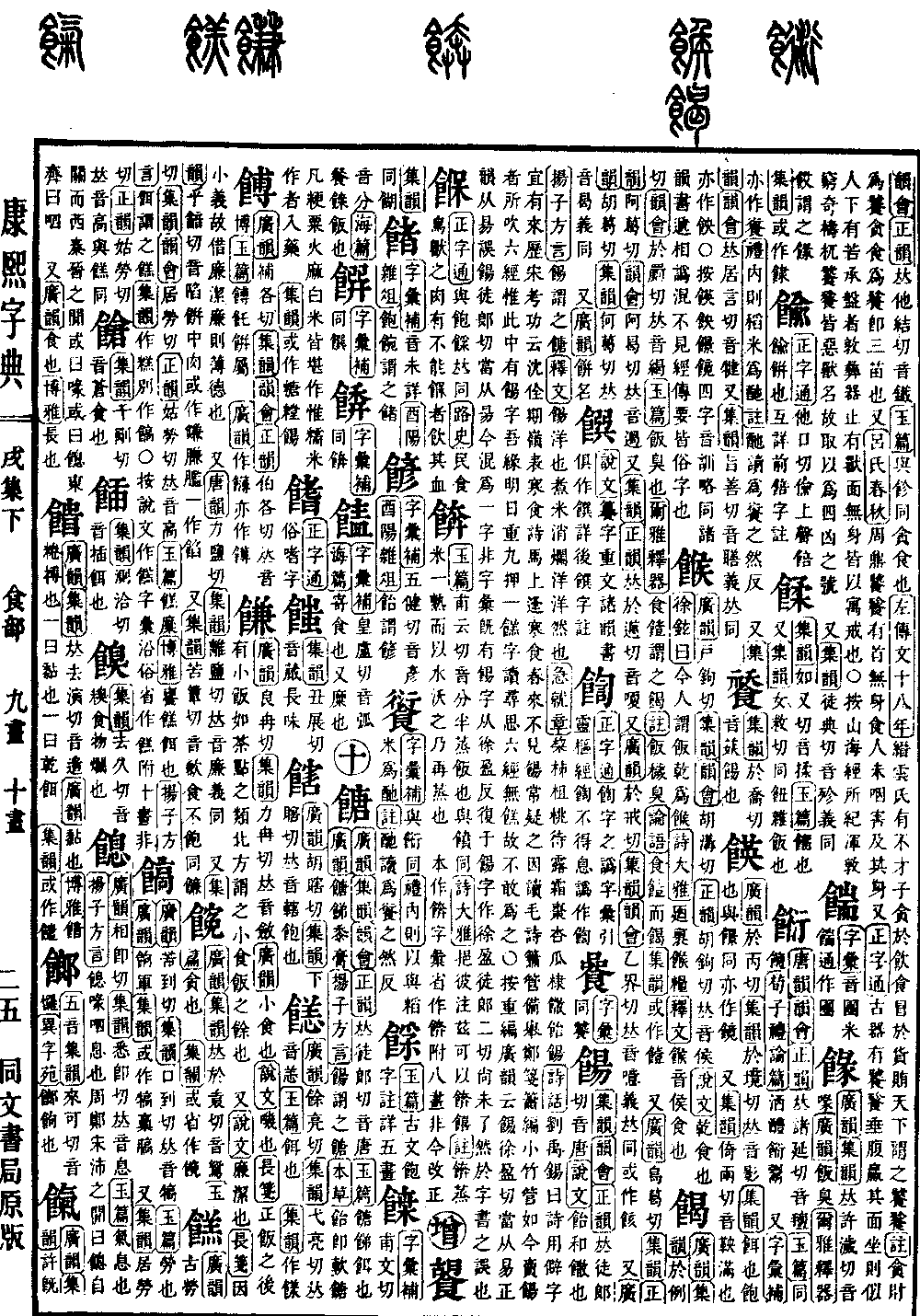
Xu Collection, Lower Volume
Radical: Food (shí)
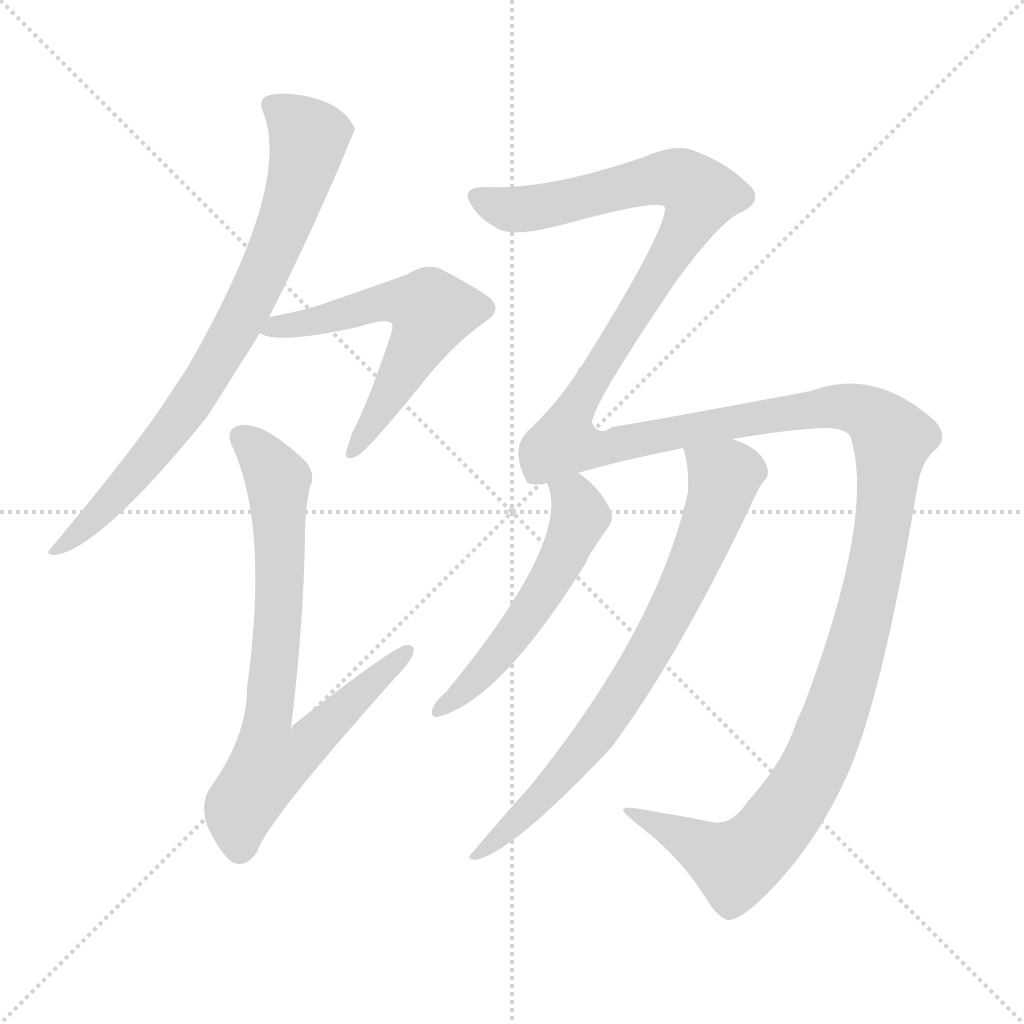
Character: tang
Kangxi stroke count: 18
Page 1423, Entry 06
According to Jiyun, Yunhui, and Zhengyun: pronounced tang.
According to Shuowen Jiezi: a confection made of maltose mixed with fried dough twists.
According to Yang Xiong’s Dialects (Fangyan): tang is also called tang.
According to Shiwen: tang means to melt. It refers to rice boiled until soft and in a molten state.
According to Jijiuzhang: Pears, crabapples, peaches waiting for frost and dew; dates, apricots, melons, cherries, maltose, and tang.
According to Shihua: Liu Yuxi said: When using obscure characters in poetry, there should be a source. Song Kaogong said: In Shen Quanqi’s poem Lingshang Hanshi, he wrote: Encountering the Cold Food Festival on horseback, spring arrives but I do not see tang. I have often questioned this. Then I read the Mao Commentary on the Book of Odes (Shijing) and saw the phrase "flutes and pipes are all prepared." Zheng Xuan annotated it: The xiao is a bundle of small bamboo pipes, like those blown by people who sell tang today. In the Six Classics, the character tang appears only here. Because tomorrow is the Double Ninth Festival, I wanted to use a rhyme for cake (gao) to write a poem, but I recalled that the character for cake does not appear in the Six Classics, so I dared not use it.
Editorial note: The revised Guangyun states: the character pronounced xu should be formed with the yang component; the Zhengyun is incorrect to use the yi component. The character tang, pronounced tang, should be formed with the yi component. Now they are conflated into one character, which is incorrect. Since Zihui includes the character and provides the pronunciation xu, but also provides both xu and tang pronunciations under the entry for tang, it fails to clearly recognize the errors in the dictionaries.
Textual research: In the Jijiuzhang, the text reads: Pears, crabapples, peaches waiting for frost and dew; dates, apricots, melons, cherries, maltose, and tang. I have corrected the original text from zha to nai to read nai peaches.