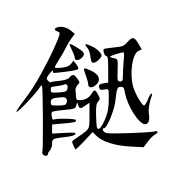
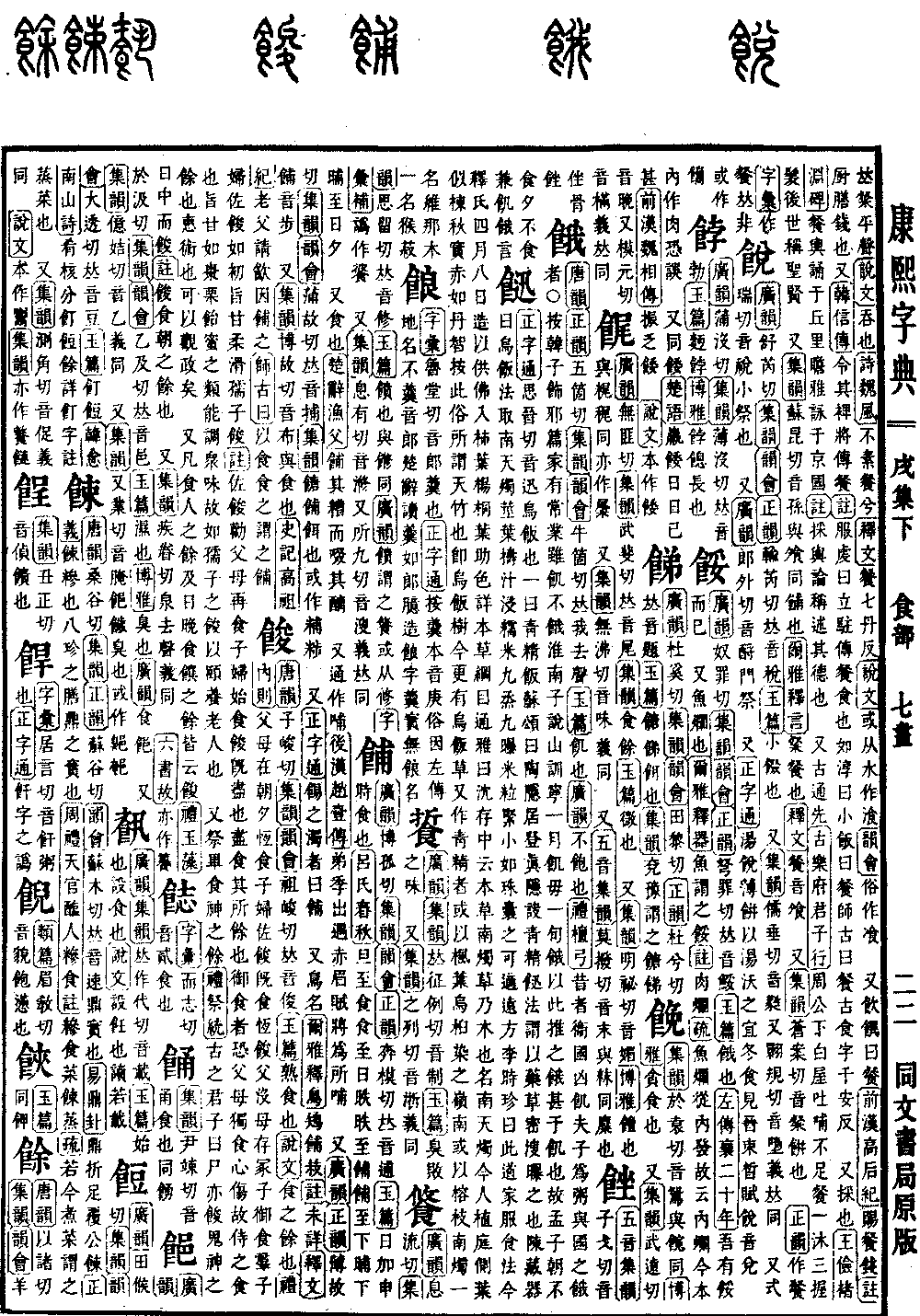
Zi Collection, Page Position: Upper, Radical: Person (rén), Pronounced xùn (falling tone). Refers to dark-colored rice. Also called green essence rice. Su Song stated: The method for green essence rice recorded by Tao Yinjū in "Dēng Zhēn Yǐn Jué" involves soaking rice in herbal juice and then drying it. Chen Cangqi stated: The method for making dark-colored rice is to pound the stems and leaves of the Southern Heavenly Candle plant to extract juice, use it to soak glutinous rice, and then steam and sun it nine times each. The rice grains become firm and small like pearls, and can be stored for transport over long distances. Li Shizhen stated: This is a method of consuming food practiced by Taoists. Nowadays, Buddhists prepare it on the eighth day of the fourth lunar month for offerings to Buddha, adding the leaves of the Yangtong tree for coloring. Detailed accounts are found in "Bencao Gangmu." "Tong Ya" stated: Shen Cunzhong (Shen Kuo) mentioned: The Southern Candle grass in "Bencao" is actually a tree, called the Southern Heavenly Candle. People now plant it beside their courtyards. Its leaves resemble those of the Chinaberry tree, and it bears fruit in autumn, which are as red as cinnabar. Fang Yizhi commented: This is what is commonly called the Heavenly Bamboo, also known as the dark-colored rice tree. Nowadays, there is also dark-colored rice grass, which is also made into green essence rice. Some people use maple leaves or the Chinese tallow tree for coloring. In the Lingnan region, some people use banyan tree branches. Southern Candle also has the name Weinamu and Hou Shu.