Zi Collection, Page Position: Lower
Radical: Wrap (bāo)
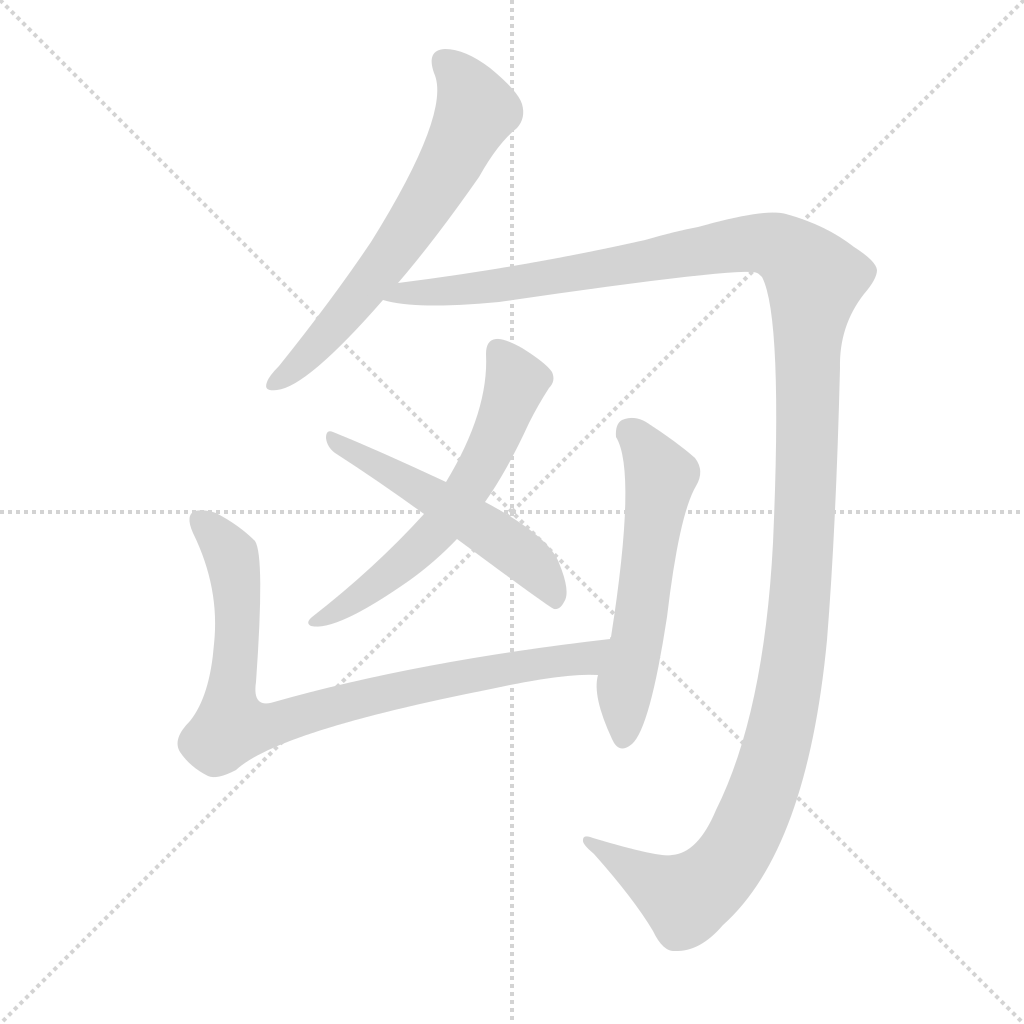
xiōng
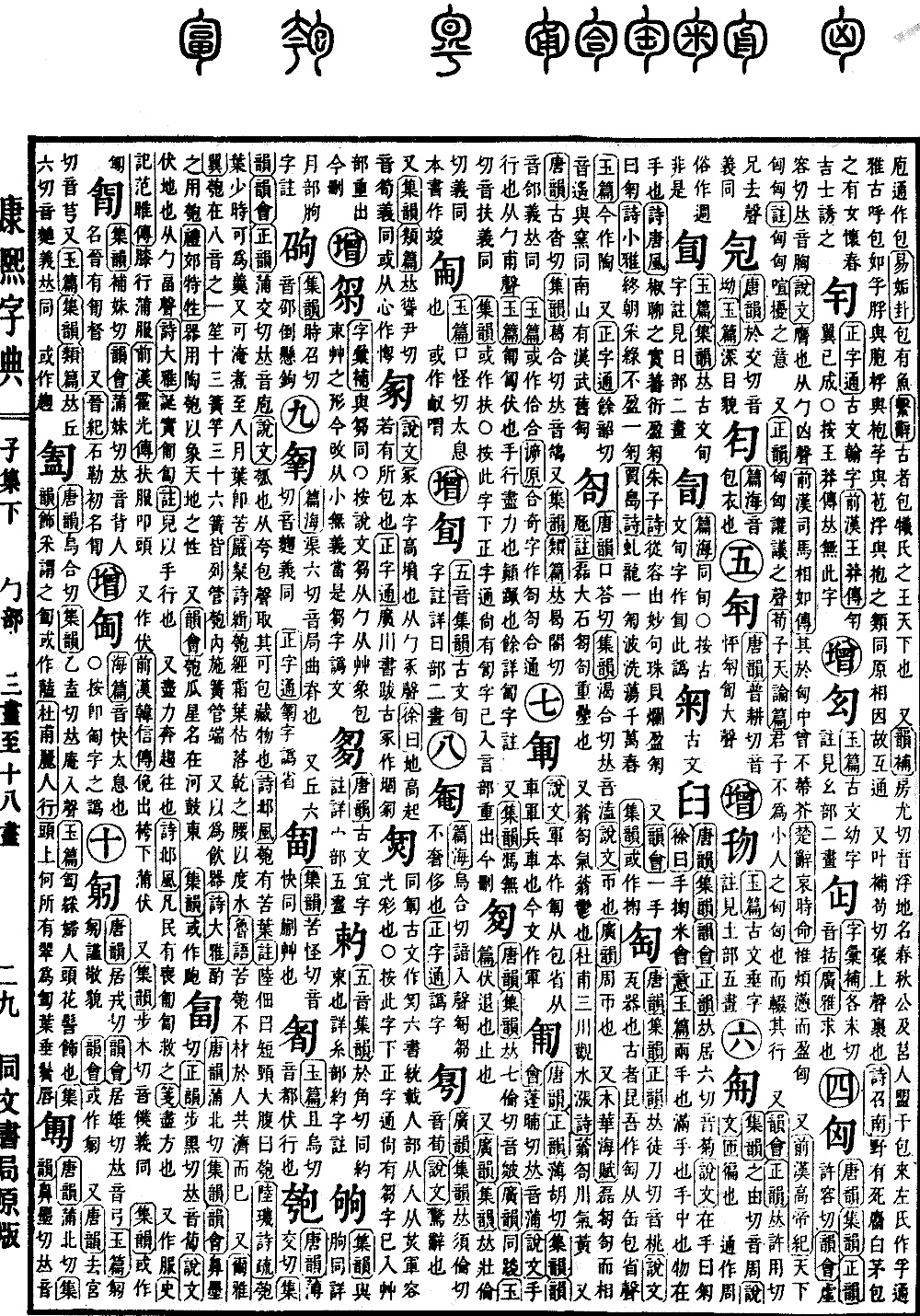
Kangxi Dictionary strokes: 6
Page 151, Number 04
In the Tang Rhymes (Tangyun), Collected Rhymes (Jiyun), and Standard Rhymes (Zhengyun), the phonetic notation is xǔ róng qiè; in the Rhyme Meeting (Yunhui), the phonetic notation is xū róng qiè. It is pronounced the same as the character for chest.
The Explaining Graphs and Analyzing Characters (Shuowen Jiezi) explains it as the chest; the character form is composed of the wrap radical (bāo) and the phonetic element ominous.
Within the chest, there is not the slightest bit of resentment — History of the Former Han (Qian Han Shu), Biography of Sima Xiangru.
Only depression fills the chest — Songs of Chu (Chu Ci), Lamenting the Fate of the Times.
Also, the world is in a state of turmoil — History of the Former Han, Annals of Emperor Gaozu.
Note: The term xiōngxiōng refers to a state of clamor and disturbance.
Also, in the Standard Rhymes, the term xiōngxiōng refers to the sound of clamorous discussion.
A gentleman does not cease his actions because of the clamorous discussions of petty men — Xunzi (Xunzi), Treatise on Heaven.
Also, in the Rhyme Meeting and Standard Rhymes, the phonetic notation is xǔ yòng qiè, pronounced like the departing tone of the character for elder brother. The meaning is the same.