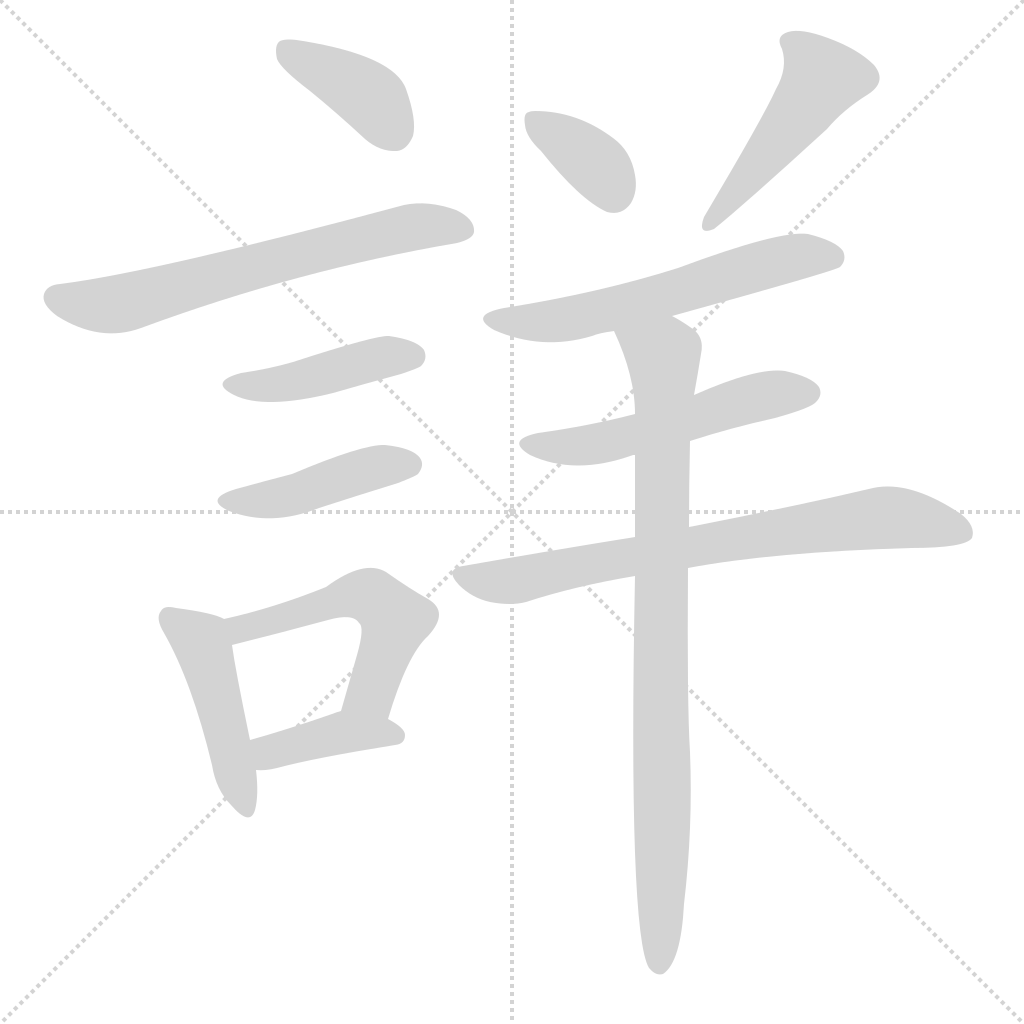
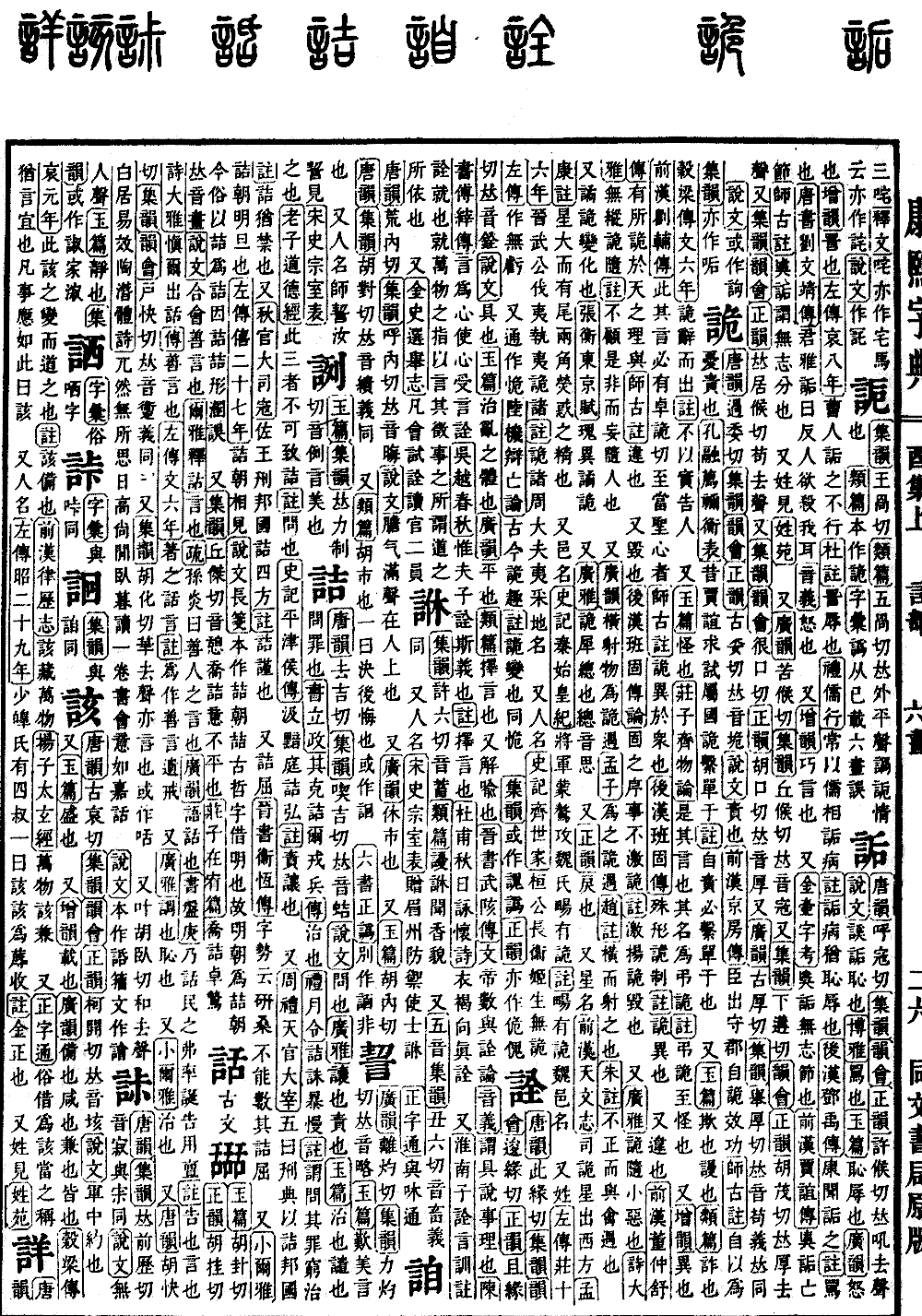
You Collection, Upper Volume
Radical: Speech (yán)
Kangxi Strokes: 13
Page 1158, Entry 17
Pronounced xiáng.
Shuowen Jiezi: To deliberate carefully.
Yupian: To examine; to discuss; to verify.
Zengyun: To provide a complete account.
Classic of History (Shangshu): "Deliberate carefully on your observations and listening." Commentary: To examine.
Book of Odes (Shijing): "The words spoken in the inner chambers cannot be recounted in detail." Commentary: To speak of it in detail.
Guliang Zhuan: "To detail the events, honoring the elder sister."
Records of the Grand Historian (Shiji): "The details could not be obtained or recorded."
Book of Han (Hanshu): "Extensively invited scholars of the empire who possessed broad knowledge." Commentary: To detail means to be thorough.
Also means good.
Book of Changes (Yijing): "Unable to retreat, unable to advance; this is not good." Commentary: To be detailed means to be good. Hesitating in advance and retreat is not considered good.
Shiwen: Wang Su wrote this as the character meaning auspicious.
Zuo Zhuan: "Use care and detail to serve the spirits." Commentary: To be detailed means to be auspicious.
Also, to use one's mind well is called being detailed.
Gongyang Zhuan: "Not to pardon is not auspicious."
Also a title for an official.
History of Song (Songshi): Inspection and deliberation officials, established in the fourth year of the Xining era.
History of Jin (Jinshi): Officials who pacify frontier people were called xiangwen, inheriting the official titles of the Liao Dynasty.
Also commonly written as a variant form (xiáng).
Book of Han (Hanshu): "The distances of the roads are accurate and detailed." Commentary: This variant is synonymous with the standard form; it is a phonetic loan.
Pronounced yáng.
Deceitful. Commonly written as a variant form (yáng).
Records of the Grand Historian (Shiji): "Jizi feigned madness and became a slave."
Shuowen Jiezi: Originally written as the variant form.
Zihui: Erroneously written as the standard form, listed under the six-stroke radical. This is incorrect.