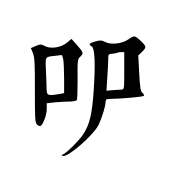
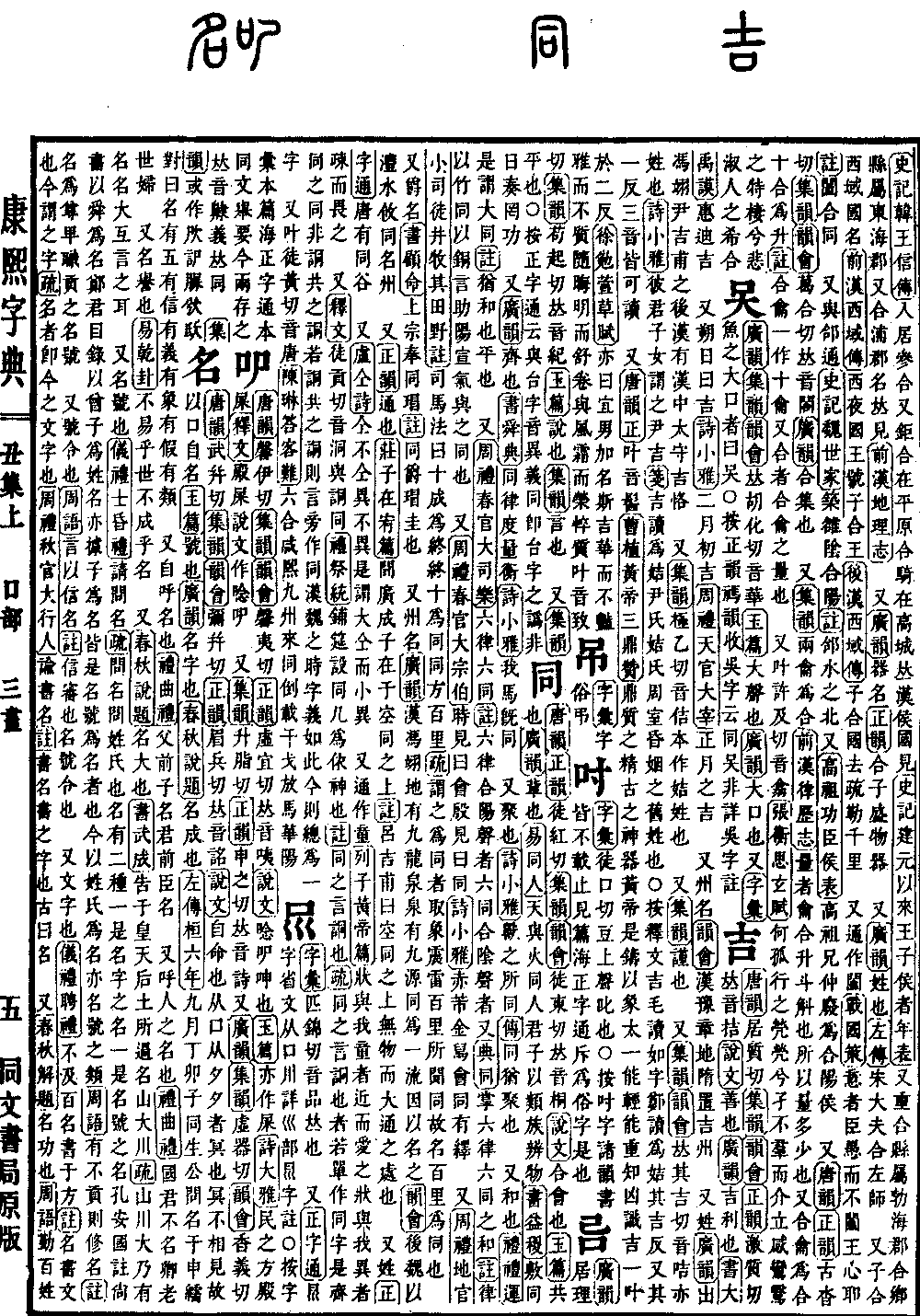
Tang Rhymes (Tangyun) indicates the pronunciation as xin. Collected Rhymes (Jiyun) and Rhyme Collection (Yunhui) indicate the pronunciation as xin. Correct Rhymes (Zhengyun) indicates the pronunciation as xu, with a reading identical to yi. Explaining Graphs and Analyzing Characters (Shuowen Jiezi) defines it as nian-qi, meaning to groan. The Jade Chapters (Yupian) also writes it as shi. There is a line in the Book of Odes (Shijing), Greater Odes (Daya) that states: The people are currently in a state of groaning (dianshi). The Explanation of Text (Shiwen) explains dianshi by noting that in Explaining Graphs and Analyzing Characters (Shuowen Jiezi) it is written as nian-qi.
Additionally, Collected Rhymes (Jiyun) indicates the pronunciation as sheng, and Correct Rhymes (Zhengyun) indicates the pronunciation as shen, with a reading identical to shi.
Furthermore, Broad Rhymes (Guangyun) and Collected Rhymes (Jiyun) indicate the pronunciation as xu, and Rhyme Collection (Yunhui) indicates the pronunciation as xiang, with a reading identical to hui. The meaning is the same. Collected Rhymes (Jiyun) sometimes writes it as a variant form (zhuan).