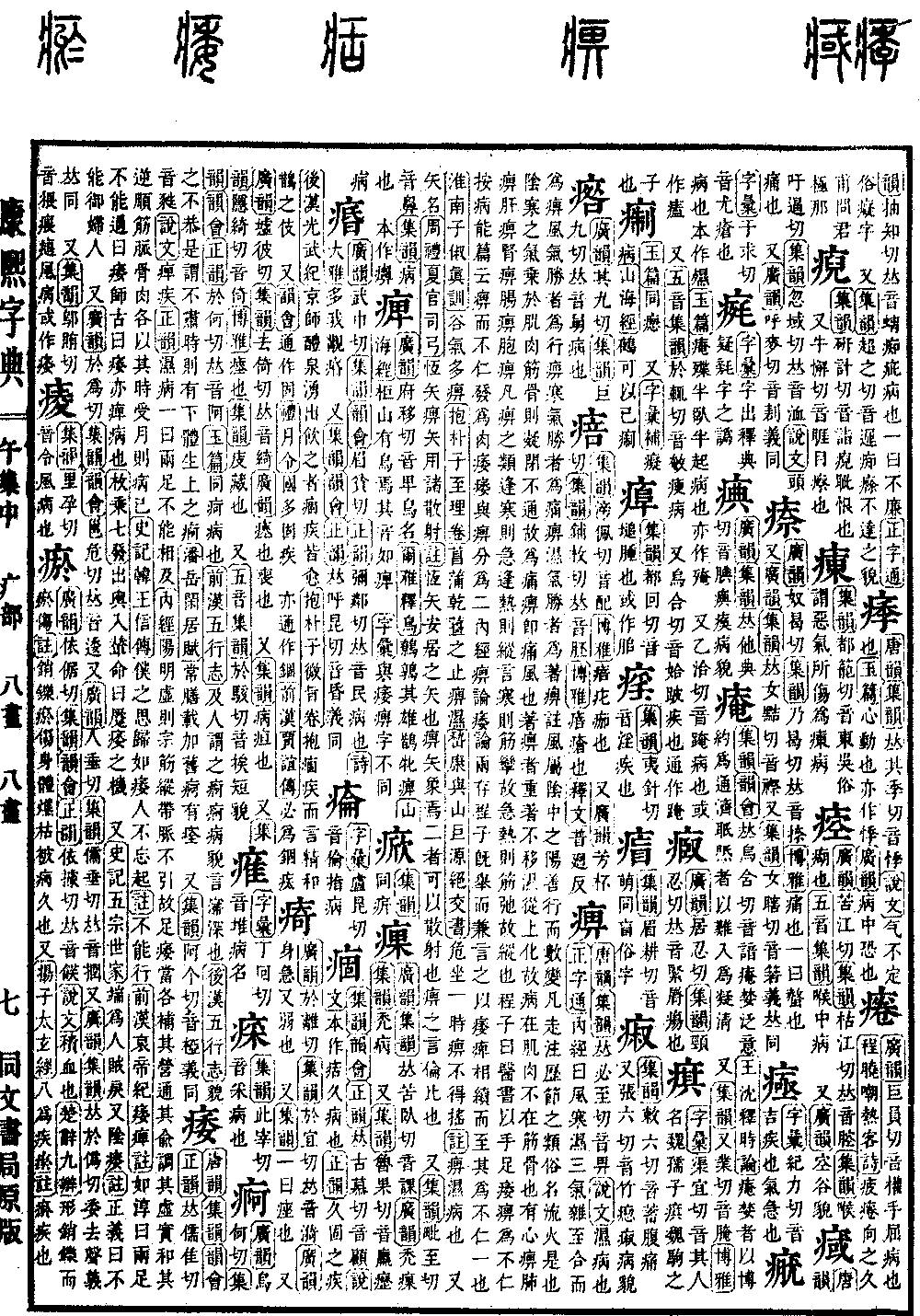
Wu Collection, Middle Volume
Radical: Sickness (bì)
Kangxi Strokes: 13
Page 775, Entry 33
Pronounced rui.
Shuowen Jiezi (Explanation of Simple and Compound Characters): A paralytic ailment.
Zheng Yun (Correct Rhymes): A dampness-induced illness. Another definition is an inability to bring the two feet together.
Huangdi Neijing (Inner Canon of the Yellow Emperor): If the Yangming meridian is deficient, the main sinews will relax; because the Belt meridian does not pull, the feet become withered. One should nourish the nutritive qi, open the transport points, regulate the deficiency and excess, harmonize the counterflow and proper flow, and treat the sinews, vessels, bones, and flesh, each according to its season. Once the treated month is reached, the illness will be cured.
Records of the Grand Historian (Shiji): My longing to return is like a withered man who never forgets wanting to rise. Commentary: Unable to walk.
History of the Former Han (Qian Hanshu), Annals of Emperor Ai: Commentary by Ru Chun: That which prevents the two feet from crossing is called wei. Yan Shigu states: Wei is also a paralytic disease.
Seven Stimuli (Qi Fa) by Mei Cheng: To go out and enter in a carriage is what is called the mechanism of stumbling and paralysis.
Records of the Grand Historian (Shiji), Hereditary House of the Five Families: Duan was a thief-like and perverse man, and furthermore he suffered from impotence. Commentary: The Correct Meaning states: Inability to have sexual relations with women.
Also pronounced wei.
Also pronounced ruan.
Also pronounced wei (falling tone). The meaning is the same.
Also pronounced wei (rising tone). Referring to a wind-induced illness. Sometimes written in a variant form.