Wei Collection, Middle Volume
Radical: Feather (yǔ)
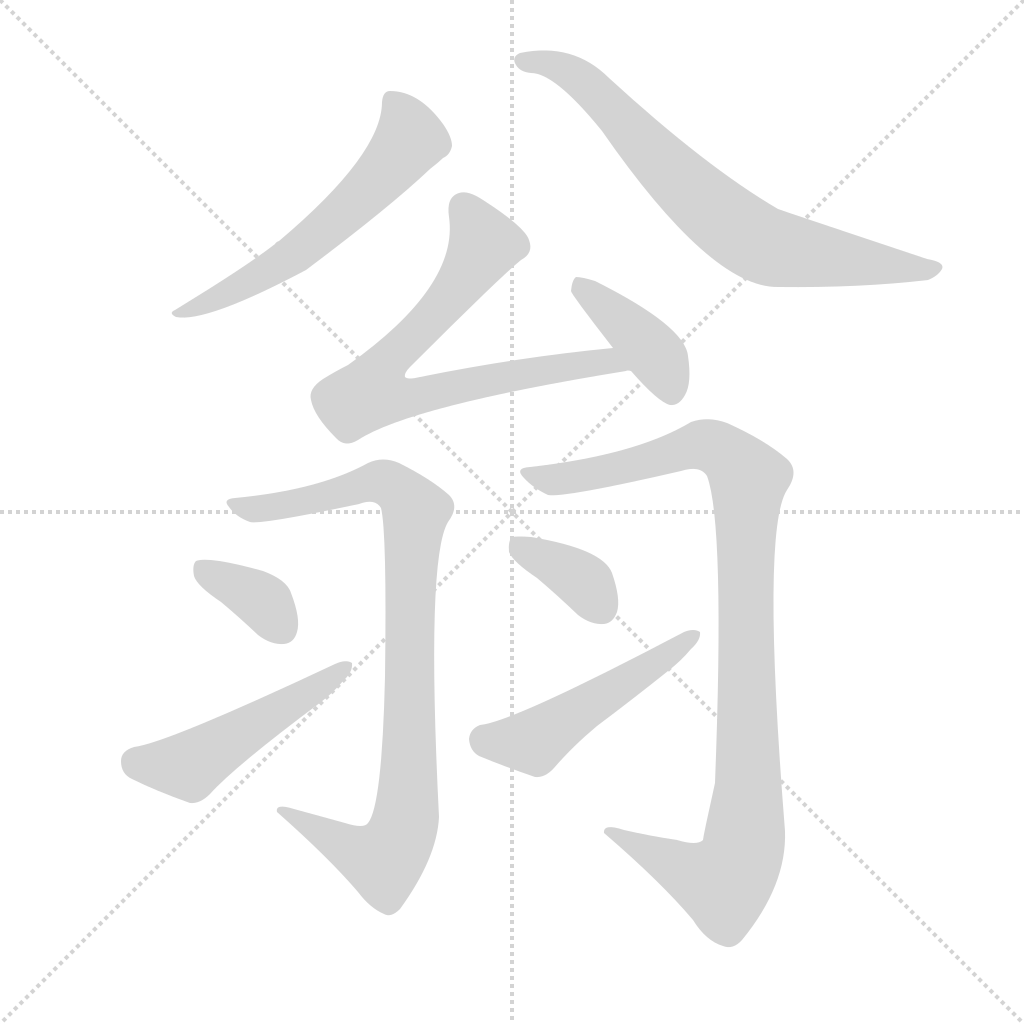
Weng; Kangxi strokes: 10
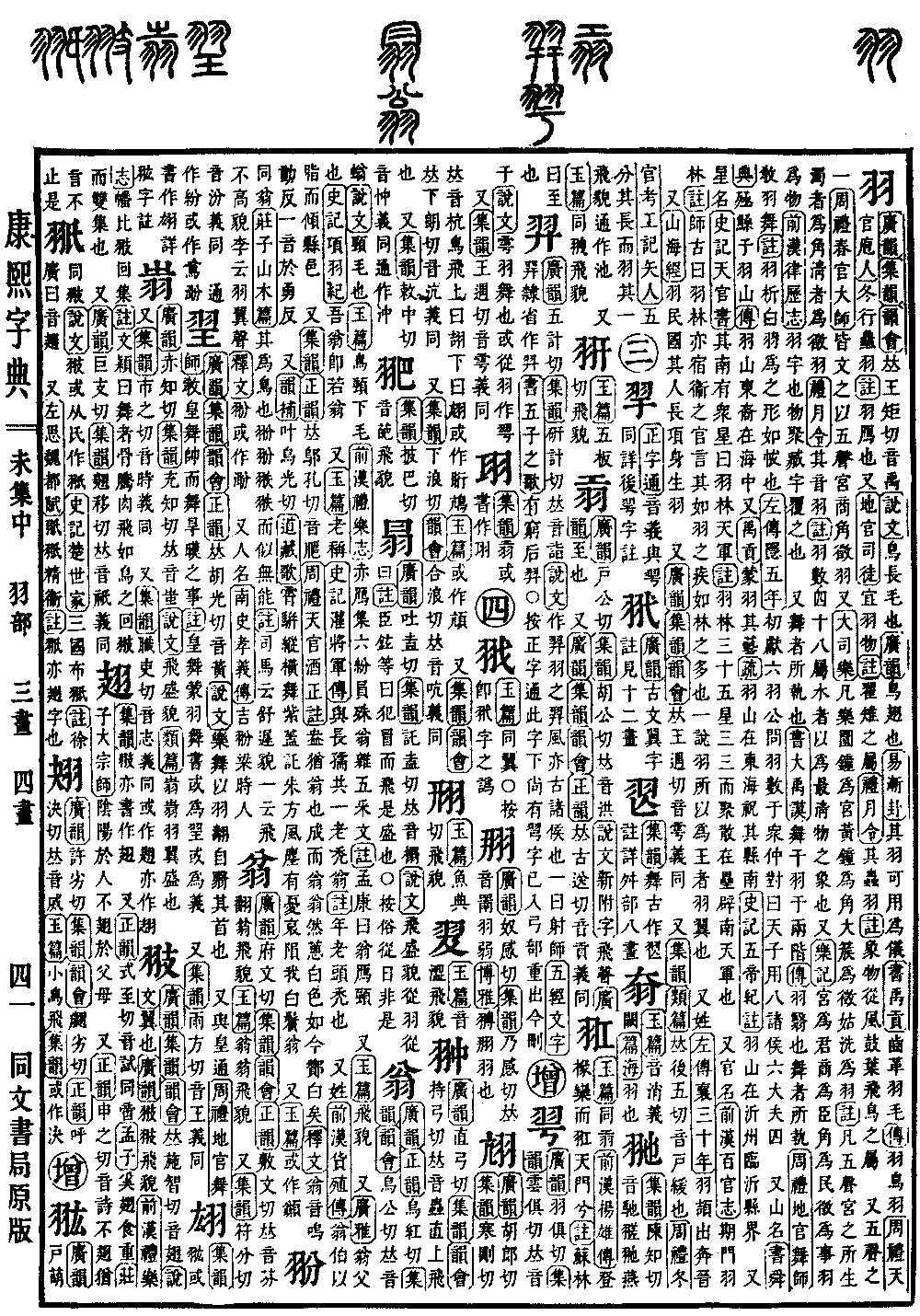
Page 955, Entry 21
Guangyun and Zhengyun: Pronounced weng. Jiyun and Yunhui: Pronounced weng.
Shuowen: The feathers on the neck.
Yupian: The feathers under a bird's neck.
Book of Han (Hanshu), Treatise on Rites and Music: Red geese gather in six fluttering groups, distinguished by various feathers of five-colored patterns.
Annotation: Meng Kang says: Weng means the neck of a goose.
Also: Yupian: The appearance of flying.
Also: Guangya: Weng means father.
Records of the Grand Historian (Shiji), Annals of Xiang Yu: My father is your father.
Also: Yupian: A term for an old man.
Records of the Grand Historian (Shiji), Biography of General Guan: Together with Changru, shared one old bald man.
Annotation: An elderly person who is bald.
Also: A surname.
Book of Han (Hanshu), Treatise on Goods and Merchants: Weng Bo, through the sale of lard, acquired the wealth of an entire district.
Also: Jiyun and Zhengyun: Pronounced weng.
Zhou Rites (Zhouli), Official of Heaven, Wine Administrator, Annotation: Ang is similar to weng. When fermented, it is weng-weng-like (effervescent), with a green-white color, similar to current cu-white wine.
Shimen: Weng is pronounced wu-dong. Another pronunciation is yu-yong.
Also: Yunbu: Rhymes with weng.
Daozang Ge: The carriage of the heavens dances in crisscross patterns. The purple canopy supports the cinnabar direction. In the wind and dust there is sorrow and lament, which has aged me into a white-haired old man.
Also: Yupian: Sometimes written as a variant form.