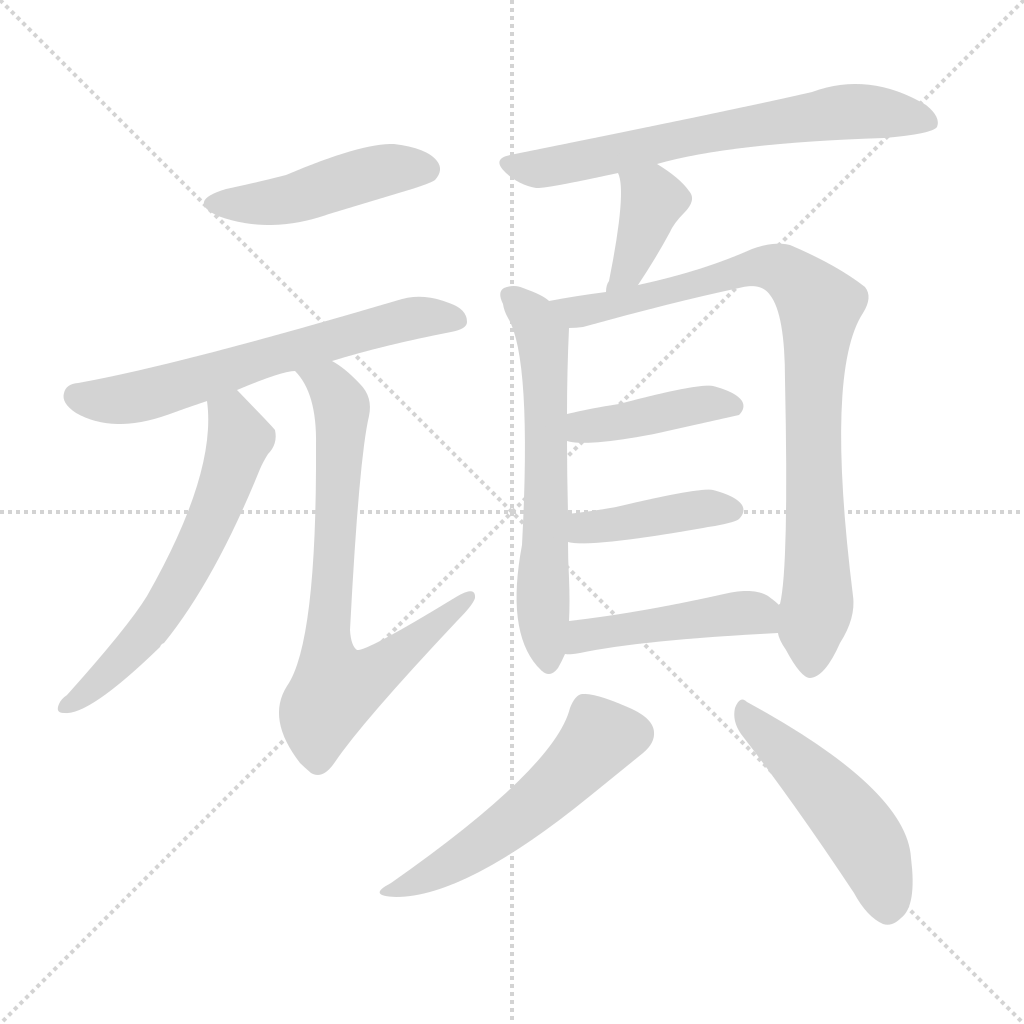
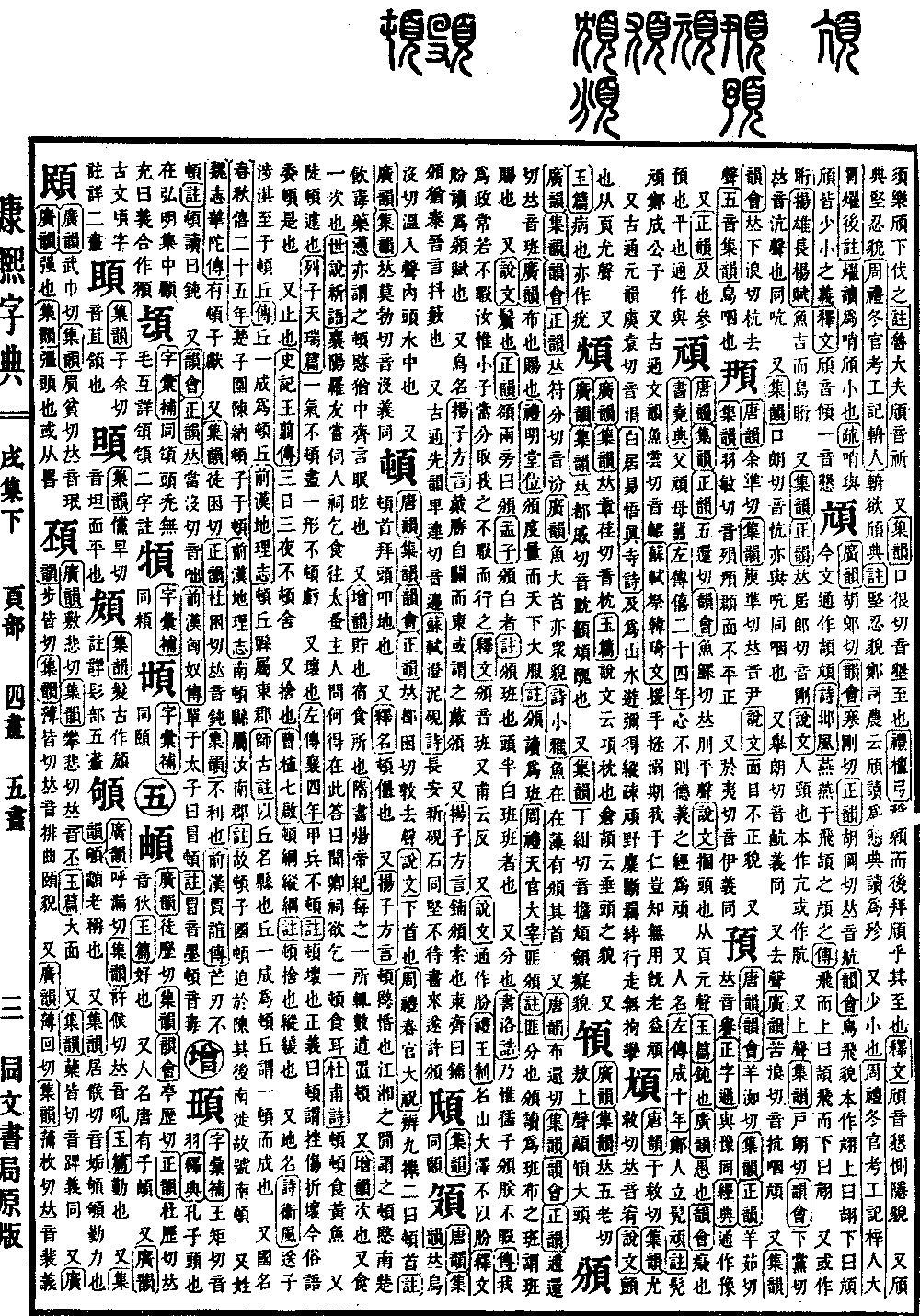
Xu Collection, Lower Volume
Radical: Head (yè)
Kangxi Strokes: 13
Page 1401, Entry 04
Pronounced wan (level tone).
Shuowen Jiezi (Explaining Graphs and Analyzing Characters): A skull. Derived from the radical for head, with yuan serving as the phonetic component.
Yupian (Jade Chapters): Dull-witted.
Guangyun (Broad Rhymes): Stupid.
Yunhui (Collection of Rhymes): Foolish.
Book of Documents (Shangshu): A father who is foolish and stubborn, a mother who is treacherous.
Zuo Tradition (Zuo Zhuan): To be internally uncompliant with the principles of virtue is called being stubborn.
Also a personal name.
Zuo Tradition (Zuo Zhuan): The people of Zheng established Kunwan as their ruler.
Commentary: Kunwan was the son of Duke Cheng of Zheng.
Also, in ancient times it rhymed with the wen category, pronounced qun (level tone), sounding the same as the word for a carriage cover.
Su Shi, Eulogy for Han Qi: Extending a hand to save the drowning, hoping to achieve benevolence. Little did I know it would be of no use, and as I grow older, I become increasingly dull and stubborn.
Also, in ancient times it rhymed with the yuan category, pronounced juan (level tone), sounding the same as the word for a trickle.
Bai Juyi, Poem on Wuzhen Temple: When wandering through mountains and waters, one can indulge in being idle and unconstrained. The wild deer sheds its tether, walking without restraint.