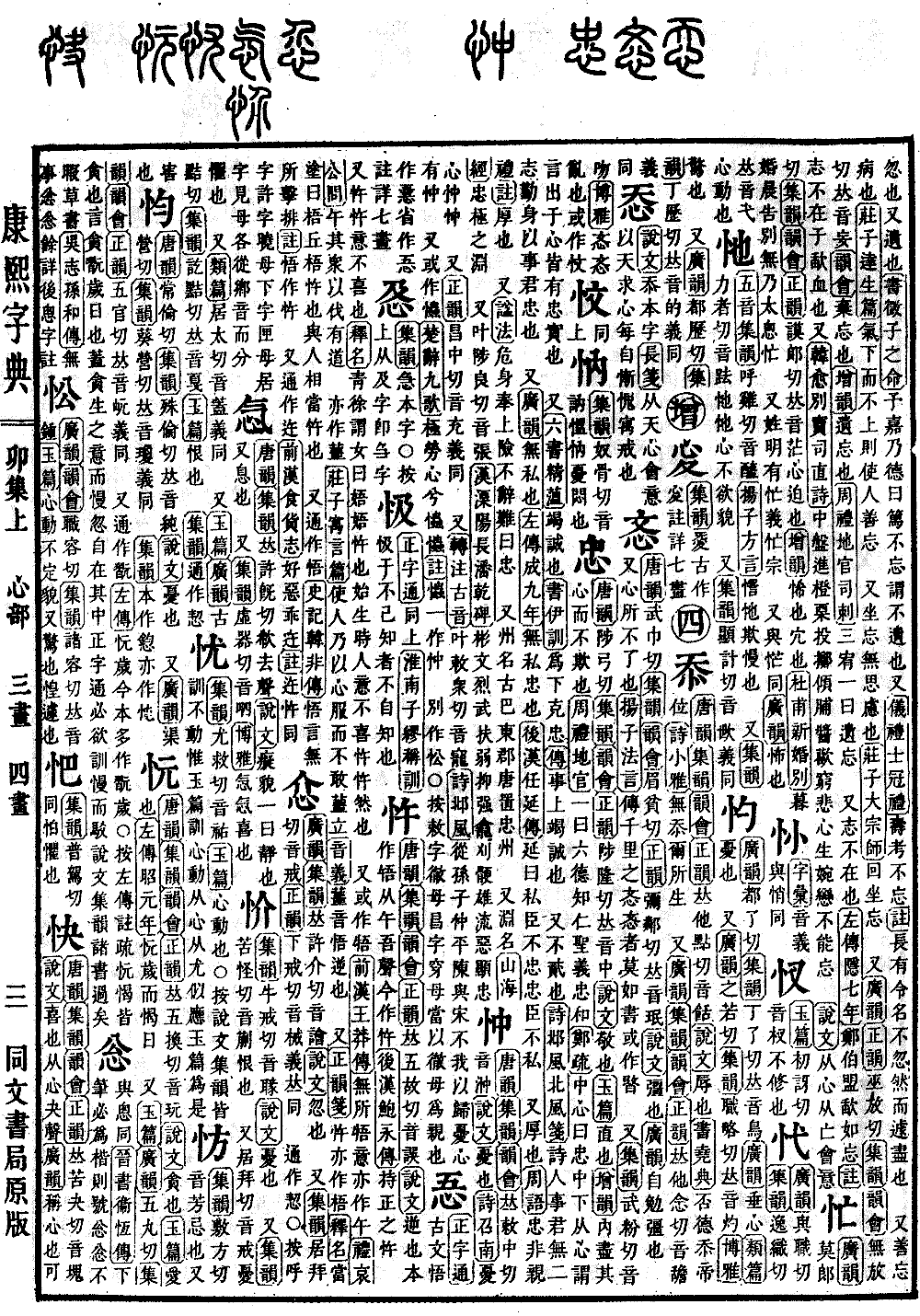
Mao Collection, Upper Volume
Radical: Heart (xīn)
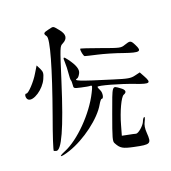
Character: Wan
Kangxi Stroke Count: 8
Page 377, Entry 25
Pronounced wan (falling tone) according to Tang Rhyme (Tangyun), Collected Rhymes (Jiyun), Rhyme Compendium (Yunhui), and Correct Rhymes (Zhengyun). According to Explaining Graphs and Analyzing Characters (Shuowen), it means to be greedy. According to Jade Chapters (Yupian), it means to love. In the Commentary on the Zuo Tradition (Zuo Zhuan), Year 1 of Duke Zhao, it appears in the phrase, passing time greedily and idling away the days.
Additionally, according to Jade Chapters (Yupian) and Extensive Rhyme (Guangyun), pronounced wan (level tone) according to Collected Rhymes (Jiyun), Rhyme Compendium (Yunhui), and Correct Rhymes (Zhengyun). The meaning is the same. It is also used interchangeably with the variant form wan (enjoy). In the Zuo Tradition (Zuo Zhuan), the phrase regarding passing time greedily is often written with the variant form in modern editions. According to the Commentary on the Zuo Tradition (Zuo Zhuan Zhushu), both the primary character and the second character signify greed, referring to the greedy enjoyment of one's time and days. This conveys the meaning of clinging to life, while also implying a sense of laxity and ease. The Correct Guide to Characters (Zhengzitong) insists on defining it as laxity, but it is a mistake to refute the definitions found in Explaining Graphs and Analyzing Characters (Shuowen), Collected Rhymes (Jiyun), and other such works.