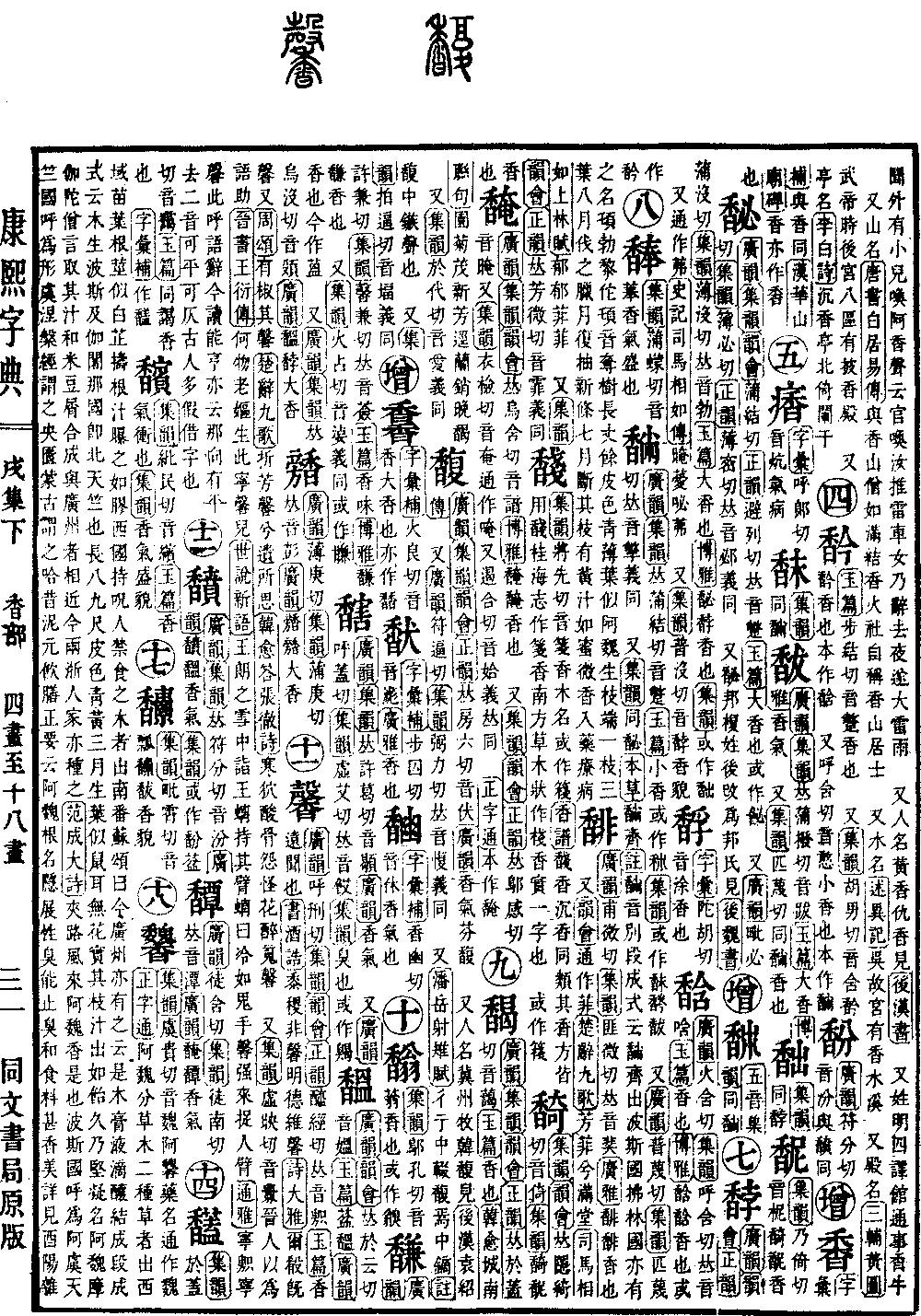
Zi Collection, Page Position: Upper, Radical: Mouth (kǒu), Page 94, Entry 01
Pronounced wei (falling tone). A medicinal name. Also written as Wei.
The *Zhengzitong* states that asafoetida is divided into two types, herbaceous and woody. The herbaceous type comes from the Western Regions. Its seedlings, leaves, roots, and stems resemble *Angelica dahurica*. The root is pounded, and the sap is dried into a胶-like substance. Those who practice incantations in Western countries are forbidden from eating it. The woody type comes from Southern Fan. Su Song states that it is also found in Guangzhou today, and it is said to be a woody sap that drips and solidifies. Duan Chengshi states that it grows in Persia and the country of Gāndhāra, which is northern India. It grows eight to nine chi tall, with greenish-yellow bark. In the third month, it sprouts leaves resembling mouse ears, without flowers or fruit. Its branches exude a sap like maltose, which hardens over time. It is called asafoetida. Monks from Magadha say that its sap, mixed with rice and bean flour, is similar to that found in Guangzhou. Today, it is also cultivated in homes in both Zhejiang provinces.
"The wind coming from the roadside carries the fragrance of asafoetida" — *Poems of Fan Chengda* (Fanchengda Shi).
The country of Persia calls it A'yu, the country of India calls it Xingyu, the *Nirvana Sutra* calls it Yangkui, and the Mongols call it Haxini.
The *Yinshan Zhengyao* states that the root of asafoetida is called Yinzhan, it has a pungent odor, and it can stop bad smells. When mixed with food ingredients, it is very fragrant and delicious. See *Youyang Zazu* and *Bencao Gangmu* for details.