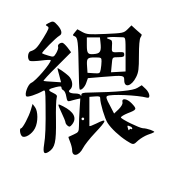
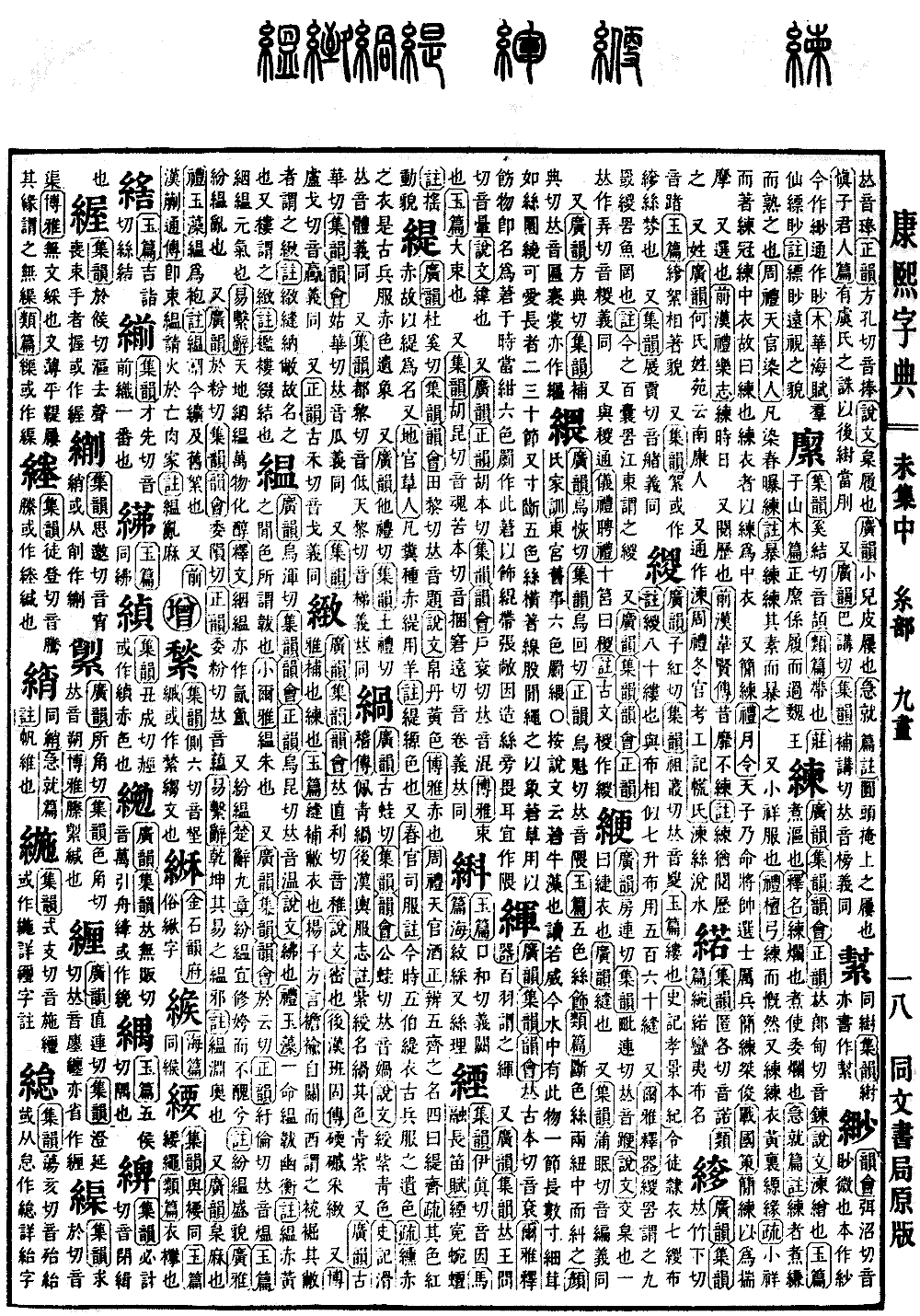
Pronounced wū huī qiè (according to Guangyun), wū huí qiè (according to Jiyun), and wū kuī qiè (according to Zhengyun), with the same pronunciation as "wēi". "Yùpiān" explains it as an ornament made of five-colored silk. "Lèipiān" states it is the winding of broken colored silk threads between two rope loops. "Yánshì Jiāxùn" records an old practice of the Eastern Palace mentioning "six-colored jī wēi".
According to "Shuowen Jiezi", "jūn" refers to water algae, pronounced like "wēi". This plant still exists in water today; each segment is several inches long, with fine fuzz resembling silk threads, forming a pleasing round shape, and can be twenty to thirty segments long. Additionally, five-colored silk threads are cut into small pieces and attached horizontally between strands of thread, woven to imitate the appearance of "jūn" grass, used to adorn objects, and this is called "jūn". At that time, it should have been made from six-colored fabric with deep blue and reddish hues, to create this "jūn" for decorating woven belts. Zhang Chang therefore created the character "wēi" (with the silk radical and "wèi"). It should be written as "wēi".