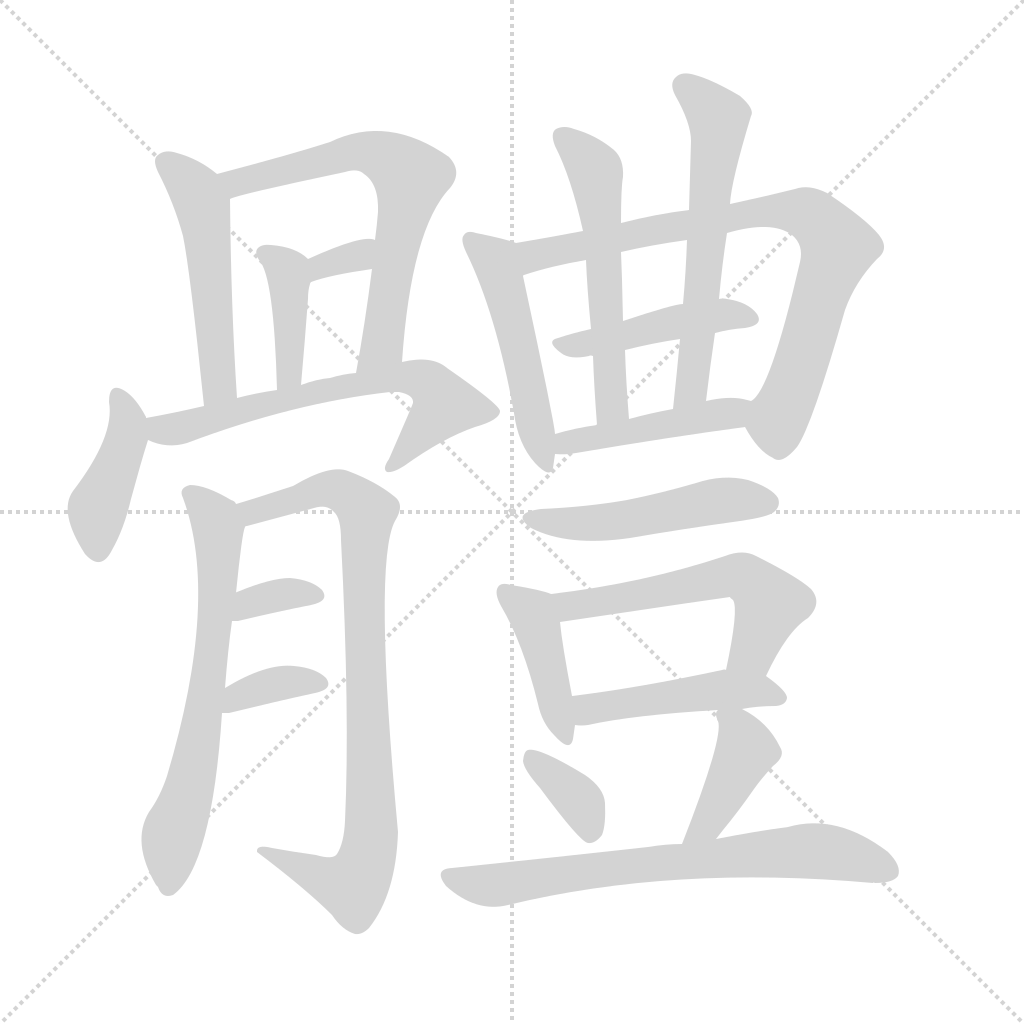
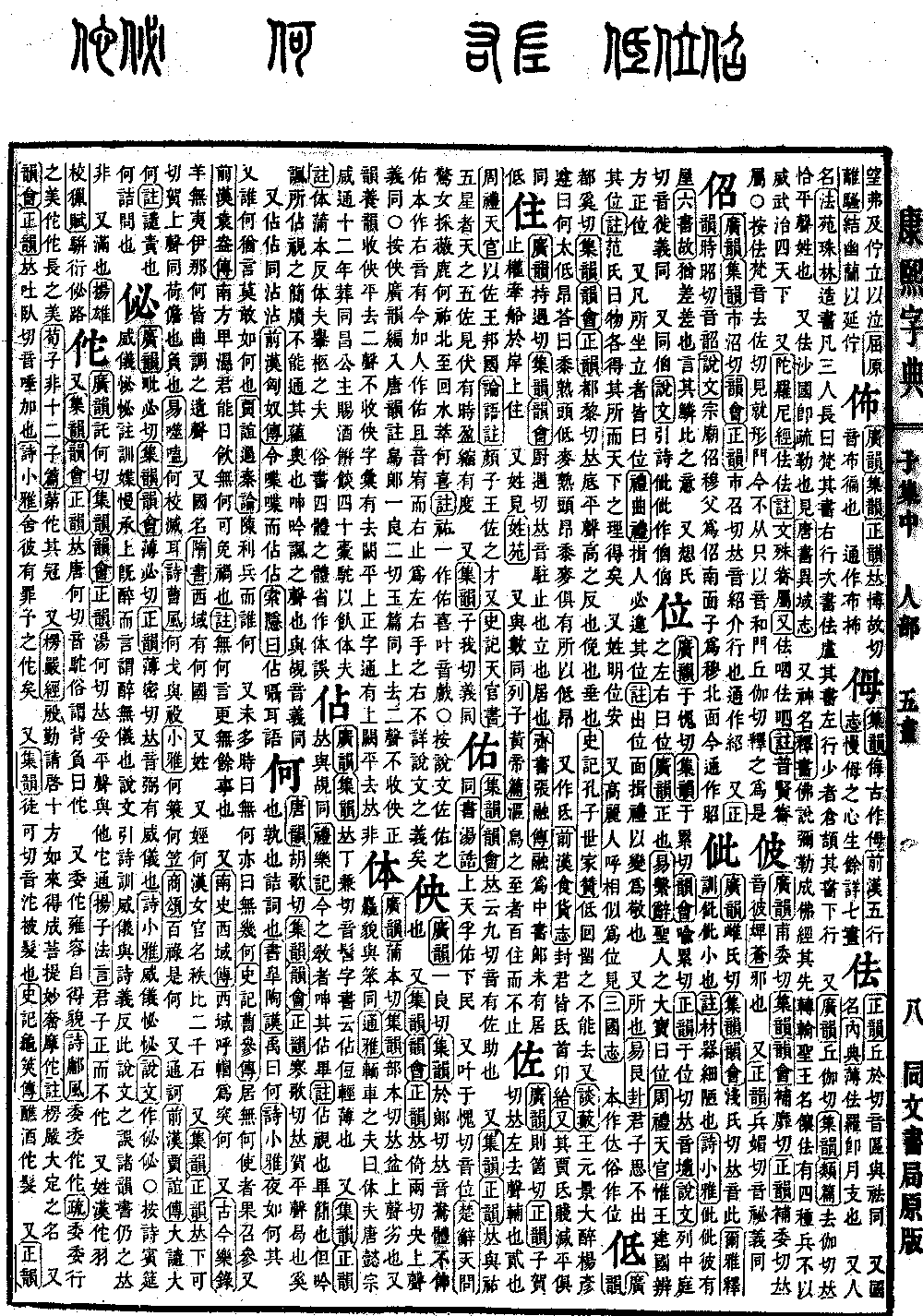
Hai Collection, Upper Volume
Radical: Bone (gǔ)
Page 98, Entry 02
Ancient script. Pronounced ti (rising tone).
Shuowen Jiezi (Explanation of Simple and Compound Characters): Refers to the collective name for the twelve parts of the human body.
Shiming (Explanation of Names): Body (ti) signifies order. It refers to the sequential arrangement of bones, flesh, hair, blood, exterior, interior, large, and small parts.
Guangyun (Broad Rhymes): Refers to the four limbs.
Book of Rites (Liji), Doctrine of the Mean (Zhongyong): To move and act through the four limbs.
I Ching (Yijing), Wenyan Commentary: The noble person considers benevolence the foundation, which is sufficient to become the leader of the masses. Commentary: One's own body contains the way of benevolence.
Book of Documents (Shujing), Bi Ming: Literary composition values being substantial and concise. Commentary: Literary composition takes substantial content as its essential purpose.
Book of Odes (Shijing), Wei Feng: You perform divination, you calculate the lots; there is no omen in the divination that is not auspicious. Commentary: Body (ti) refers to the signs or patterns displayed by the tortoise shell or yarrow stalks during divination.
Book of Odes (Shijing), Da Ya: Just budding, just taking form; the leaves are lush and supple. Commentary: Body (ti) refers to the growth of a physical form.
Rites of Zhou (Zhouli), Offices of Heaven: Dividing the capital city and measuring the fields. Commentary: Body (ti) is like the meaning of dividing.
Rites of Zhou (Zhouli), Offices of Heaven, Nei Yong: Distinguishing the names of the various parts of the sacrificial animal and the categories of its meat. Commentary: Names of the body refer to parts such as the spine, ribs, arms, and forelegs.
Book of Rites (Liji), Wen Wang Shizi: Using official positions to connect clans of different surnames in the outer court. Commentary: Body (ti) is like the meaning of connecting.
Book of Rites (Liji), Xueji: To be close to the virtuous, to be close to those from afar. Commentary: Body (ti) is like the meaning of being close.
Book of Rites (Liji), Doctrine of the Mean (Zhongyong): To transform and produce the myriad things without omission. Commentary: Like the meaning of transforming and producing.
Book of Rites (Liji), Doctrine of the Mean (Zhongyong): To accept and receive the various officials. Commentary: Like the meaning of accepting and receiving.
Zuo Tradition (Zuo Zhuan), Year 20 of Duke Zhao: Sound is also like flavor; it is composed of the qi of the universe and the two types of dance, civil and martial. Commentary: In music, that which allows the body to move is only dance. Dance has two forms: civil dance and martial dance.
Guangyun (Broad Rhymes): The popular variant character is written as "ti".
Jiyun (Collection of Rhymes): Written as "ti".
Zengyun (Augmented Rhymes): The popular form "ti" is incorrect.