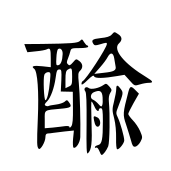
"Yú" (榆) is used as the upper character in the fanqie for "dòu" (豆) in the "Tang Yun" (Tang Yun), and "dà tòu" (大透) is used in the "Ji Yun" (Ji Yun), with the pronunciation sounding like "dòu". "Shuowen Jiezi" (Shuowen Jiezi) explains it as "yú". "Yupian" (Yupian) states: "yú" is a sauce made from elm. "Shiming" (Shiming) says: "yú" means to agree with each other. Flavors that agree with each other form it. "Qimin Yaoshu" (Qimin Yaoshu) records: in the second month, elm pods are collected and dried, and can be made into "yú".
Additionally, in "Fan Shu" (Fan Shu), deliciousness is called "me yú" (么䤅).
Also, the heavenly wine is named "yú yú" (䤅䤅).
Furthermore, "dù hóu" (度侯) is used as the upper character in the fanqie for "tóu" (头) in the "Guang Yun" (Guang Yun), and "tú hóu" (徒侯) is used in the "Ji Yun" (Ji Yun), with the pronunciation sounding like "tóu".
Moreover, "tóng dū" (同都) is used as the upper character in the fanqie for "tú" (徒) in both the "Guang Yun" (Guang Yun) and "Ji Yun" (Ji Yun), with the pronunciation sounding like "tú".
Additionally, "tōng dū" (通都) is used as the upper character in the fanqie for "tú" (瑹) in the "Ji Yun" (Ji Yun), with the pronunciation sounding like "tú". The meanings are all the same.