Hai Collection, Upper Volume
Radical: Horse (mǎ)
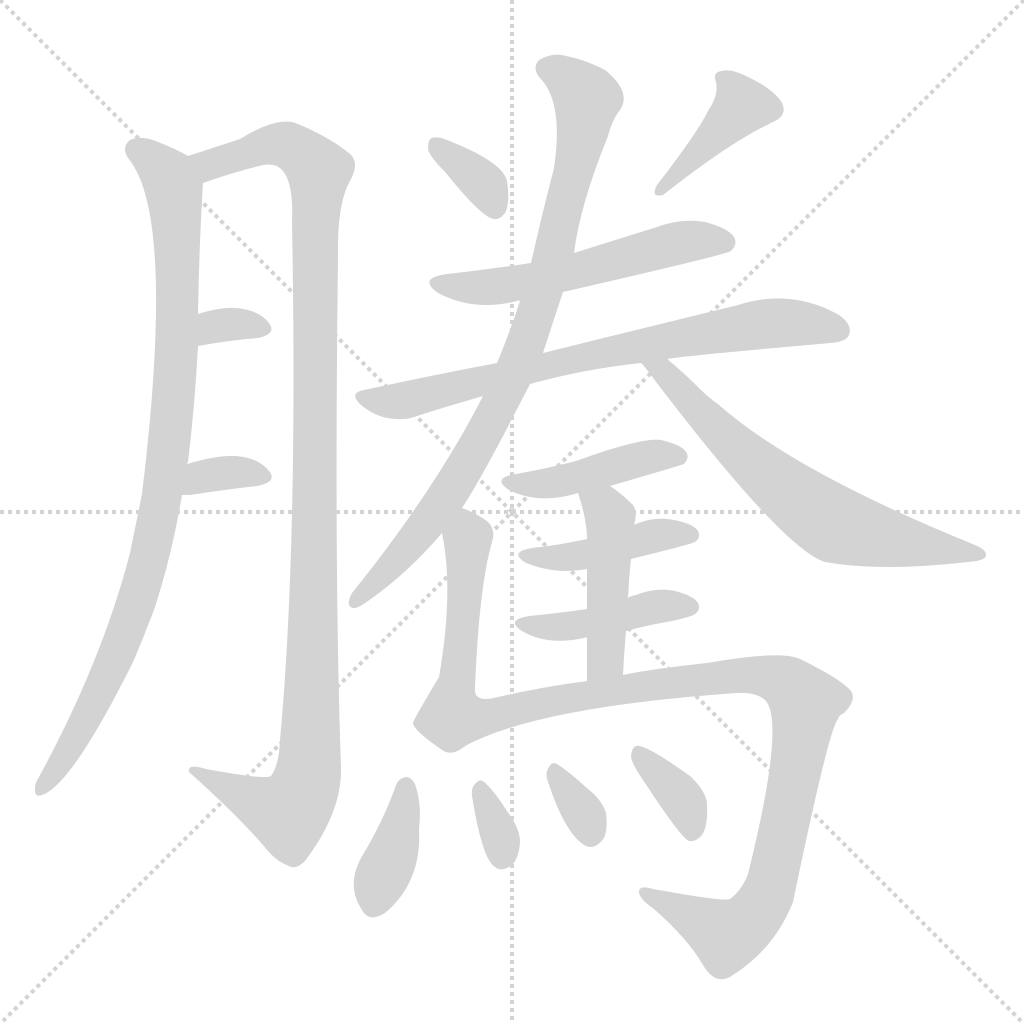
Teng; Kangxi stroke count: 20
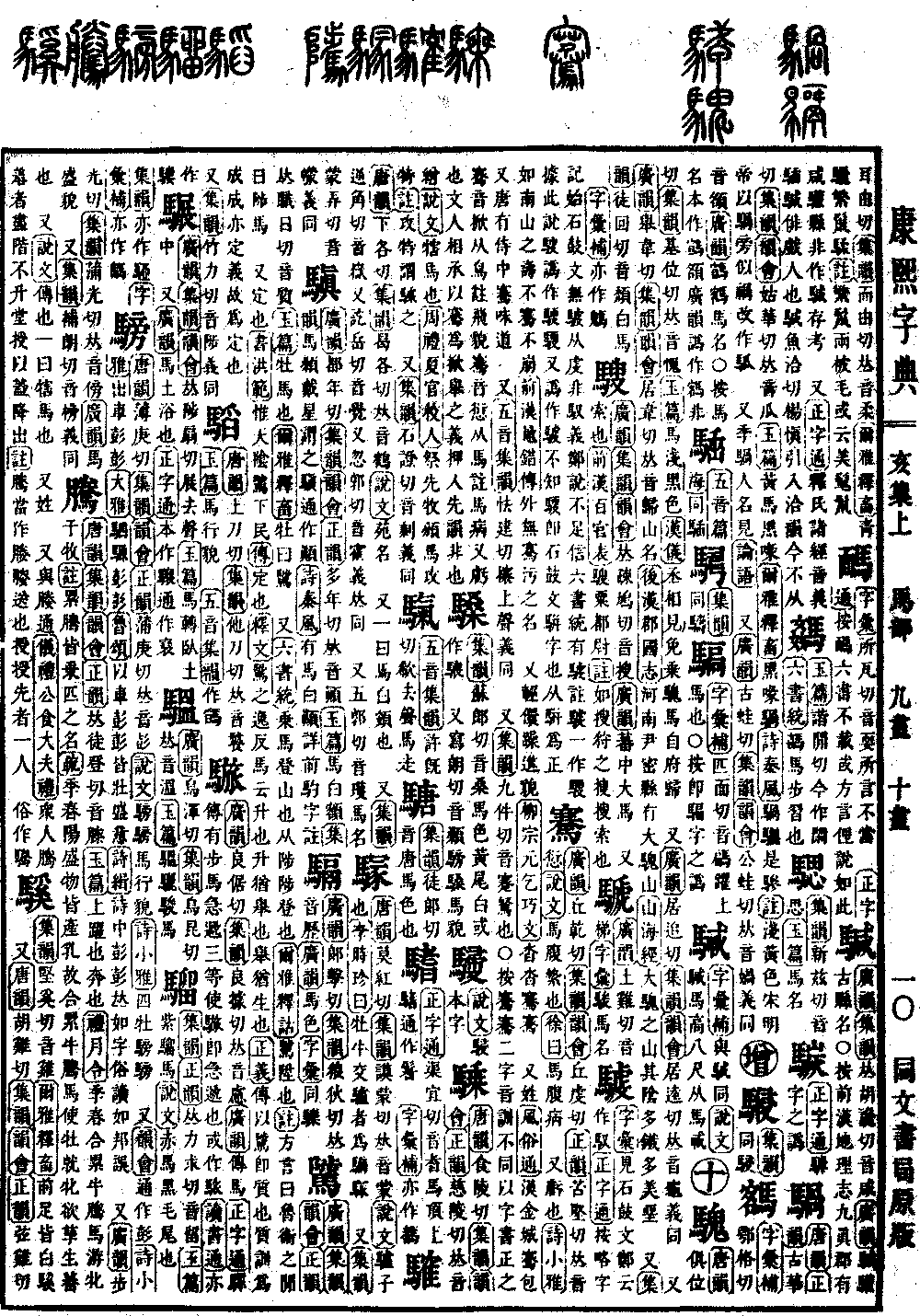
Page 1442, Entry 35
Tang Yun, Jiyun, Yunhui, and Zhengyun all provide the pronunciation as teng; it is pronounced the same as teng.
Yupian defines it as leaping upward or galloping.
Book of Rites (Liji), Monthly Ordinances (Yueling) records: In the last month of spring, pair the lei cattle with the teng horses, allowing the female horses to mate with the male horses in the pasture.
Note: Both lei and teng are names of livestock used for breeding.
Commentary: In the last month of spring, the yang energy is vigorous and animals enter their breeding period; therefore, lei cattle are paired with teng horses, allowing the female to approach the male to ensure the prosperity of their offspring.
Also, Shuowen Jiezi defines it as to transmit. Another interpretation defines it as a gelded horse.
Also used as a surname.
Also used as a loan character for ying.
Book of Etiquette and Ceremonial (Yili), Gongshi Dafu Li records: When the attendants pass the dishes, they walk to the end of the stairs, do not enter the hall, hand them to a designated person, cover them, and retire.
Note: The character teng here should be read as ying. Ying means to transmit or deliver. Shou refers to handing over to the leader of the group. The common variant form is written as teng.
Textual research: Regarding the phrase allow the female to approach the male to ensure the prosperity of their offspring, I note that in the original text of the Monthly Ordinances (Yueling) commentary, the phrase allow the male to approach the female has been corrected to allow the female to approach the male.