Chen Collection, Middle Volume
Radical: Tree (mù)
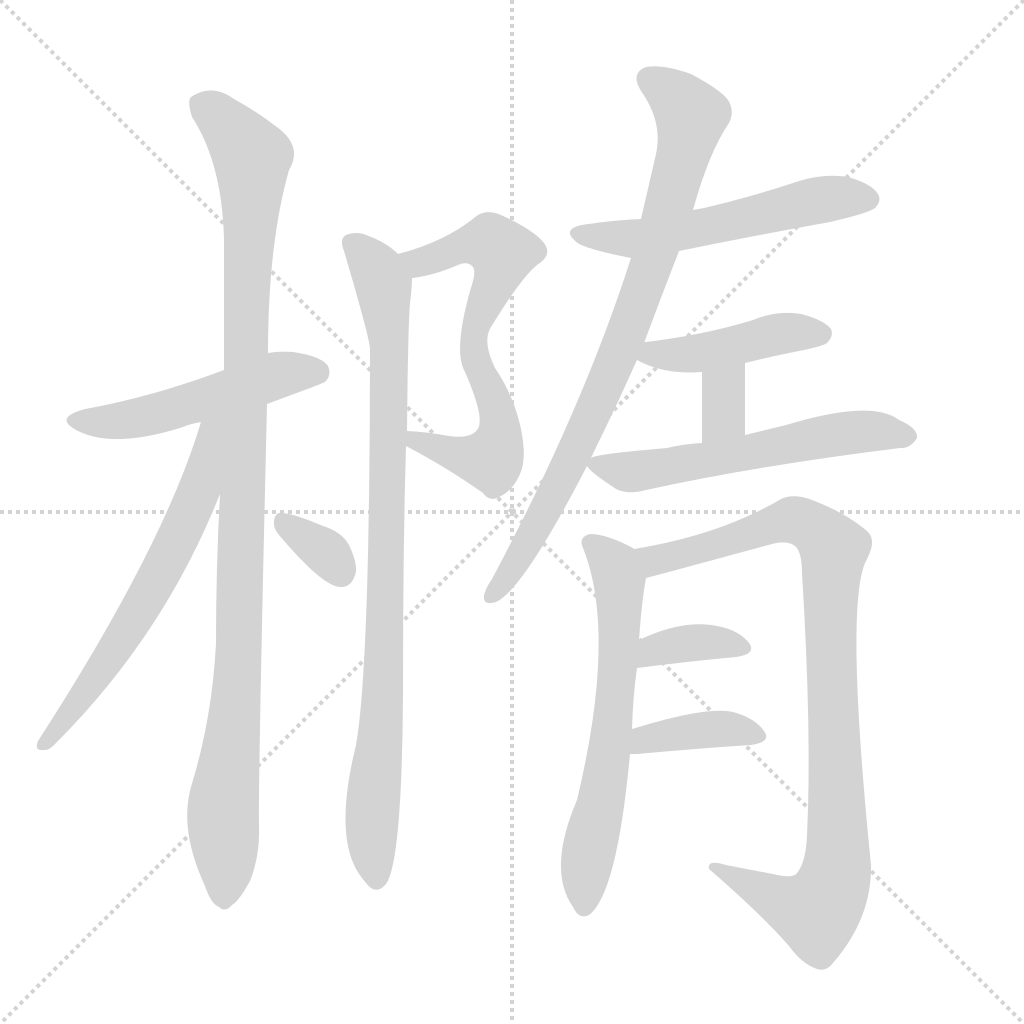
橢
Kangxi stroke count: 16
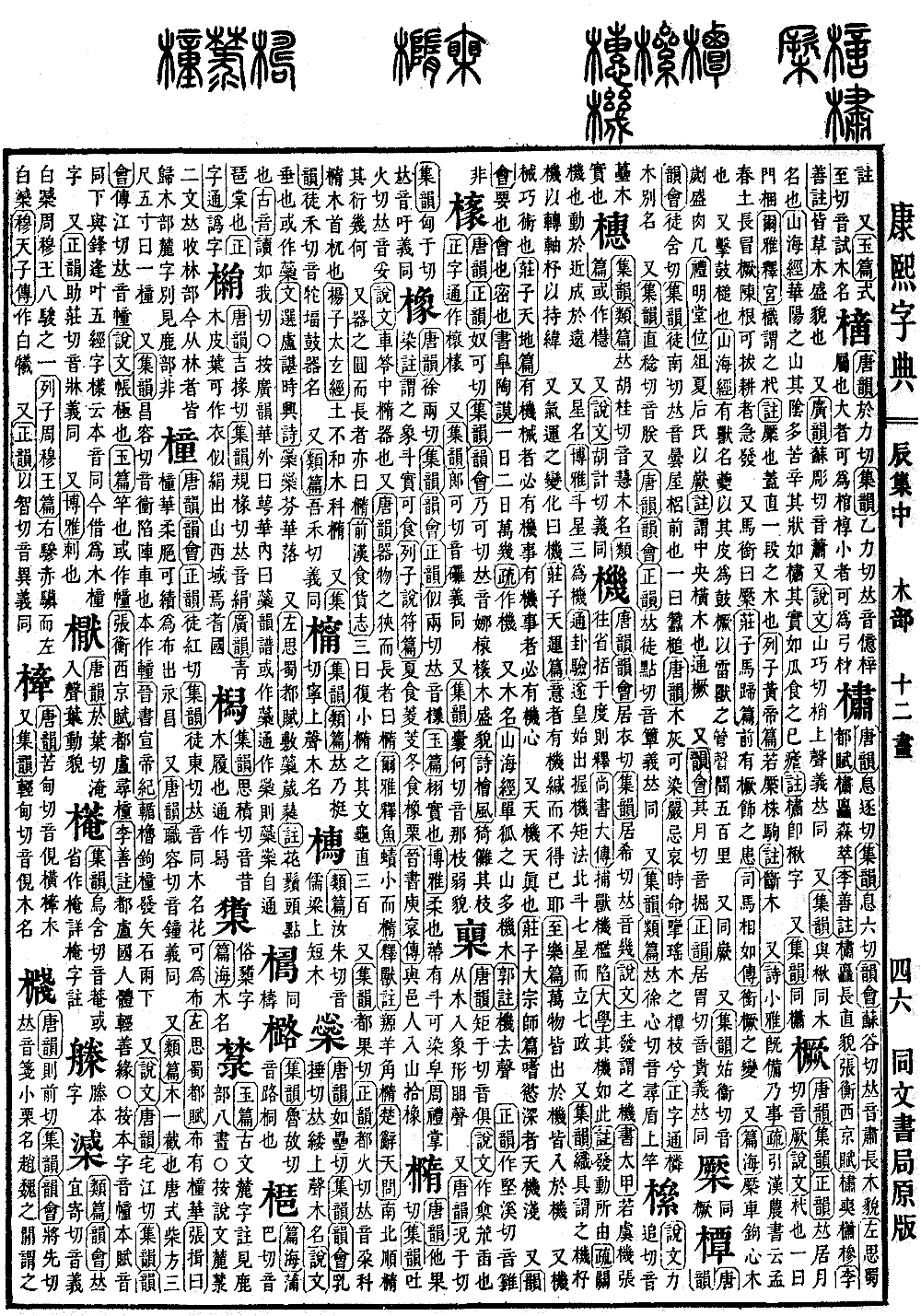
Page 554, Entry 12
Pronounced tuo.
According to the Explaining Graphs and Analyzing Characters (Shuowen Jiezi), it refers to a long container within the carriage frame.
According to the Tang Rhymes (Tangyun), items that are narrow and long are called tuo.
In the Er Ya, Explanation of Fish (Er Ya, Shiyu), it describes something small and long.
In the Commentary on Explaining Beasts (Shishou Zhu), it notes that the horns of the Siberian ibex are long.
In the Songs of Chu, Questions of Heaven (Chuci, Tianwen), it asks: North to south, it follows a long shape; how vast is its extent?
Also refers to objects that are round and long.
In the History of the Former Han, Treatise on Food and Money (Qianhan, Shihuozhi), it mentions: Third is to make it smaller and long; its pattern resembles a tortoise, worth three hundred.
Also pronounced duo.
Ketuó refers to the head of a tree that is bare and stunted.
In Yangzi’s Great Mystery (Yangzi Taijing), it states: The soil is not harmonious, and the tree is stunted.
Also pronounced tuo.
Bigou is the name of a vessel.
Also pronounced he.
The meaning is the same.