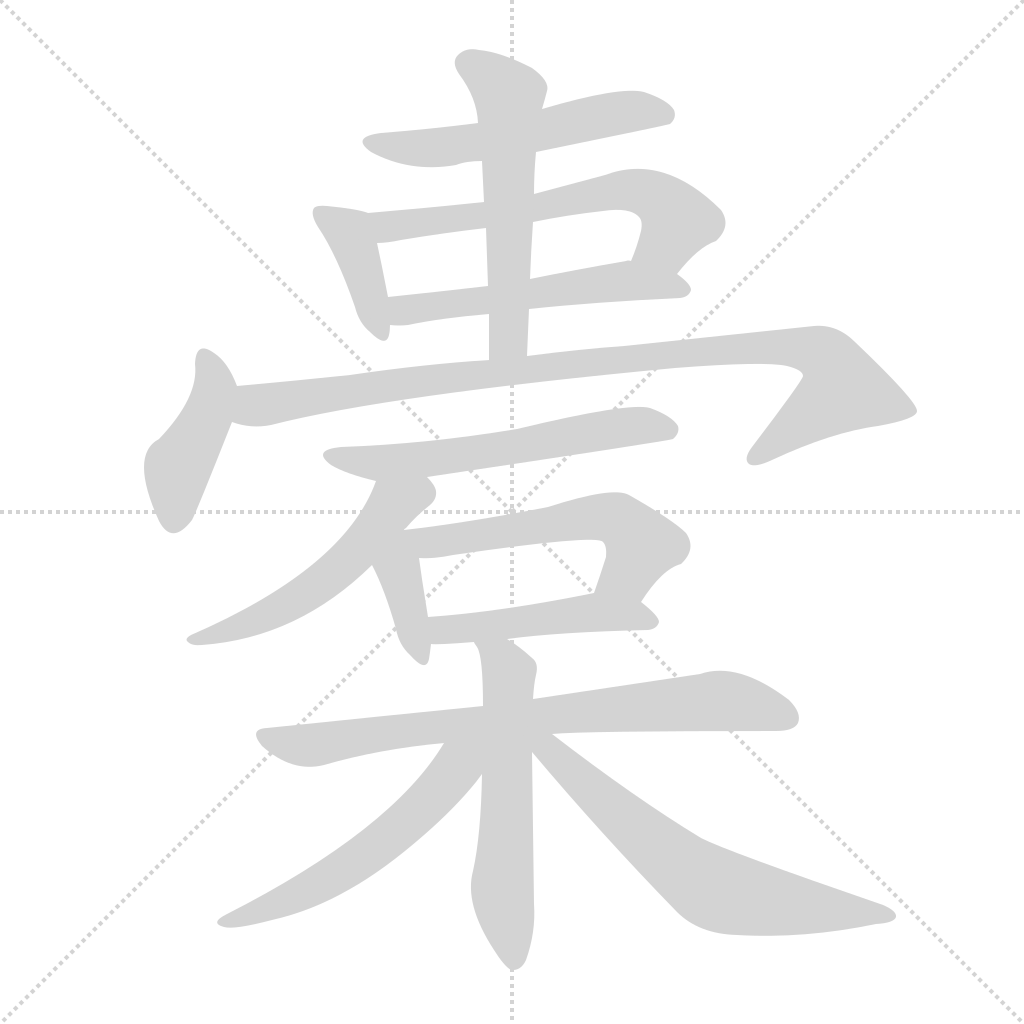
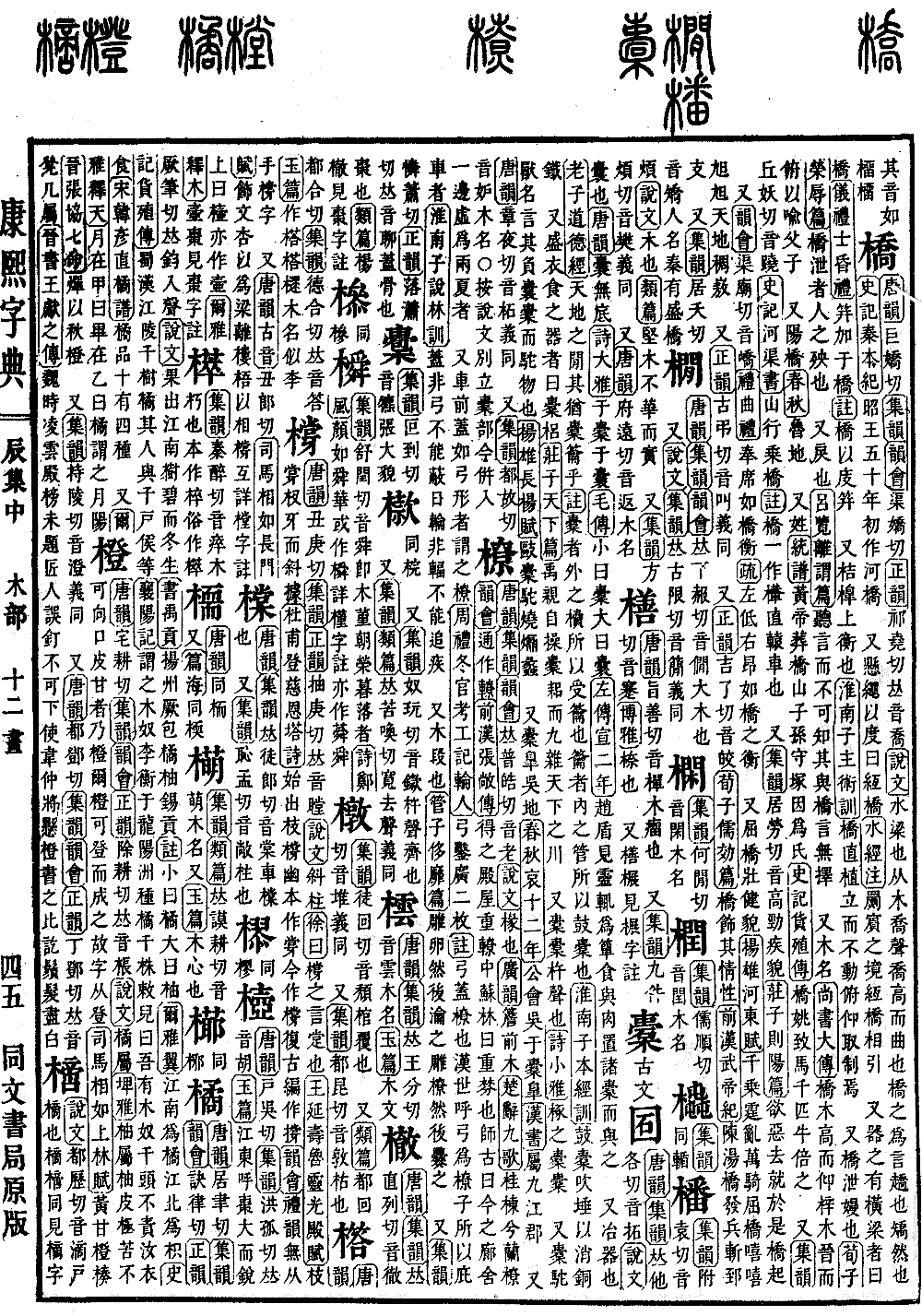
Chen Collection, Middle Volume. Radical: Tree (mù). Kangxi stroke count: 16. Page 553, Entry 08.
Ancient script. According to Tang Rhymes (Tangyun) and Collected Rhymes (Jiyun), it is pronounced tuo. According to Explaining Graphs and Analyzing Characters (Shuowen), it is a sack. Tang Rhymes defines it as a sack without a bottom. In the Book of Odes (Shijing), it says, in the small sack and in the large sack. Mao's Commentary states that the small one is called tuo and the large one is called nang. In the Zuo Tradition (Zuo Zhuan), it is recorded that Zhao Dun saw Ling Zhe, prepared a basket of rice and meat, placed it in a sack, and gave it to him. It also refers to a tool for smelting. In the Classic of the Way and Virtue (Daodejing), it says, is the space between heaven and earth not like a bellows? The commentary explains that the tuo is the outer casing that receives the flute-like pipe, and the flute-like pipe is the inner tube used to pump the bellows. In the Huainanzi, it says to pump the bellows and blow into the furnace to melt copper and iron. It also refers to a vessel for storing clothing and food called a tuolü. In the Zhuangzi, it says that Yu personally wielded the sack and the spade to channel the rivers of the world. It also refers to tuotuo, the sound of a pestle. In the Book of Odes (Shijing), it says, pounding it with the sound of tuotuo. It also refers to the camel, an animal named for its ability to carry sacks and burdens. In Yang Xiong's Rhapsody on the Long Yang Palace (Changyang Fu), it says, driving camels and burning shells. It also refers to Tuogao, a place in the state of Wu. In the Spring and Autumn Annals (Chunqiu), it says, the Duke met with Wu at Tuogao. The Book of Han (Hanshu) states it belonged to Jiujiang Commandery. Also, according to Tang Rhymes, it is pronounced zhe, with the same meaning. According to Collected Rhymes, it is pronounced du, meaning the name of a tree. Note: In Explaining Graphs and Analyzing Characters (Shuowen), a separate radical for this character was established, but it has now been merged here.