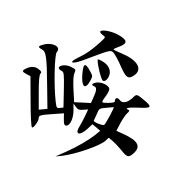
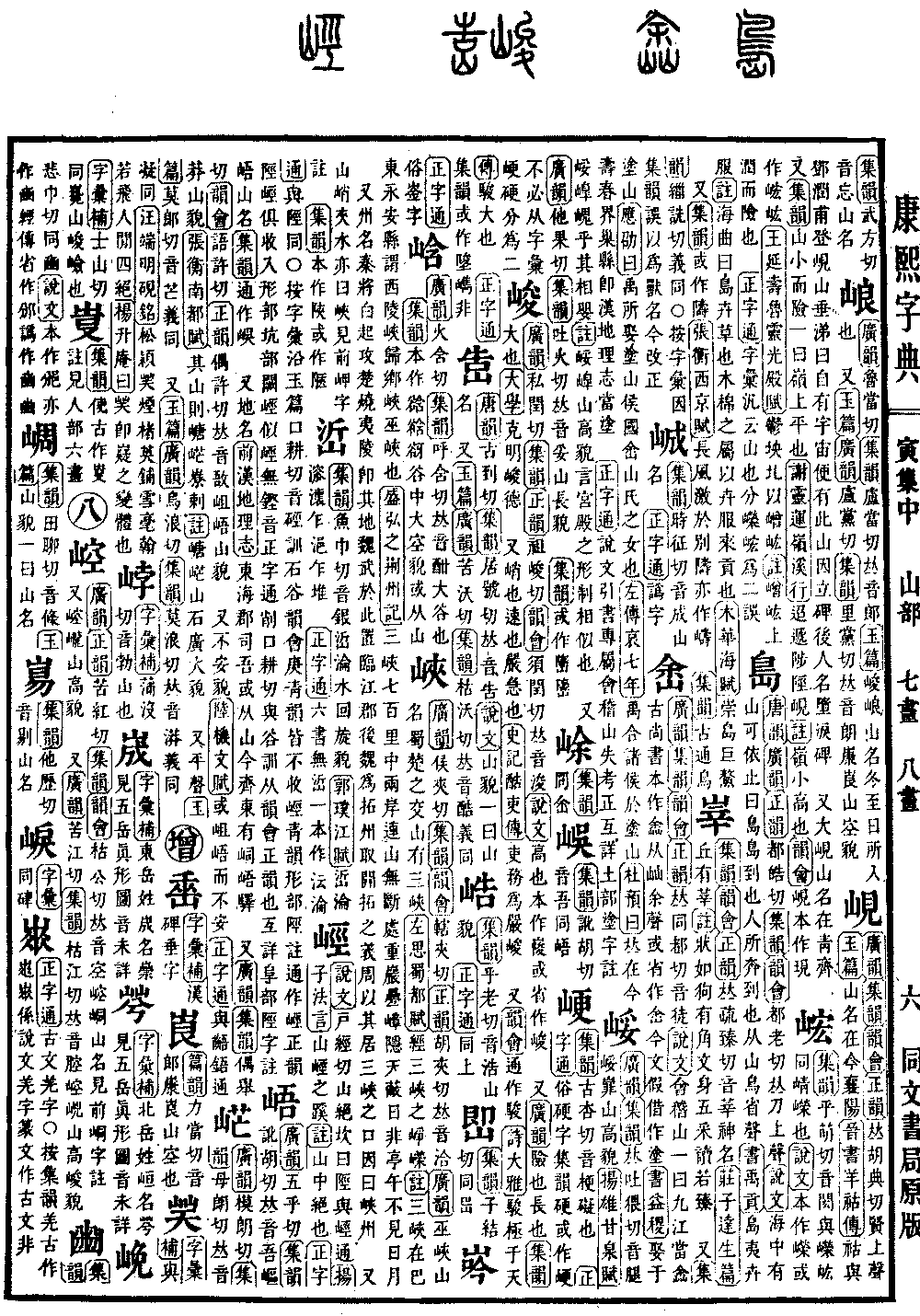
Guangyun (Broad Rhymes) and Jiyun (Collected Rhymes) both provide a pronunciation of tui (third tone). Wei-wei describes the appearance of a mountain that is high and towering. From Yang Xiong’s Rhapsody on the Sweet Springs (Ganquan Fu): Towering and winding as they entwine. The commentary states: Wei describes the appearance of a mountain that is high and towering; here it refers to the architectural form of a palace being similar to such a mountain.
Also, according to Guangyun, pronounced tuo (third tone), and according to Jiyun, pronounced tuo (third tone). This describes the appearance of a mountain as it stretches out in a long, continuous line. Jiyun notes it is sometimes also written in a variant form (duo).
Textual Research: In the citation from Yang Xiong’s Rhapsody on the Sweet Springs, the text has been corrected in accordance with the original source; the character has been emended from the original to read wei.