Wei Collection, Lower Volume
Radical: Meat (ròu)
Kangxi Strokes: 19
Page 996, Entry 05
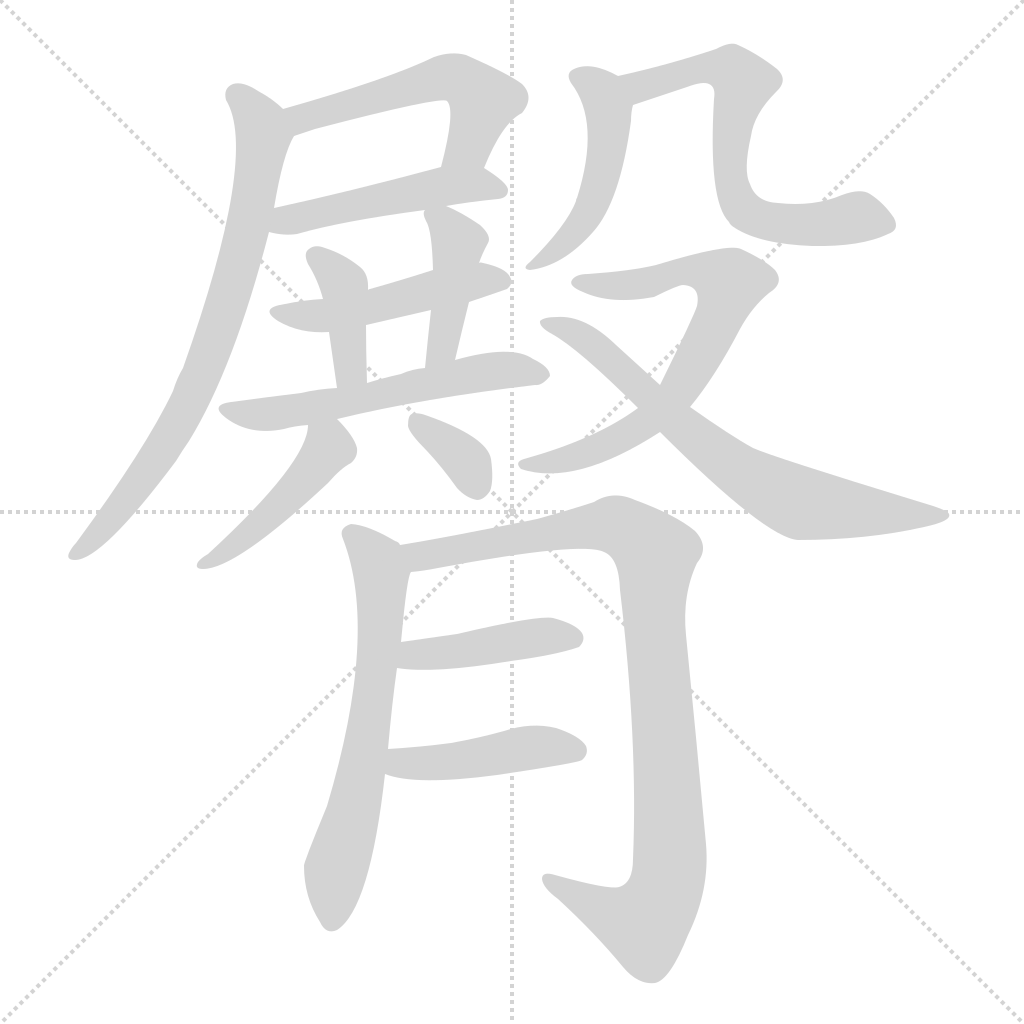
Pronounced tun.
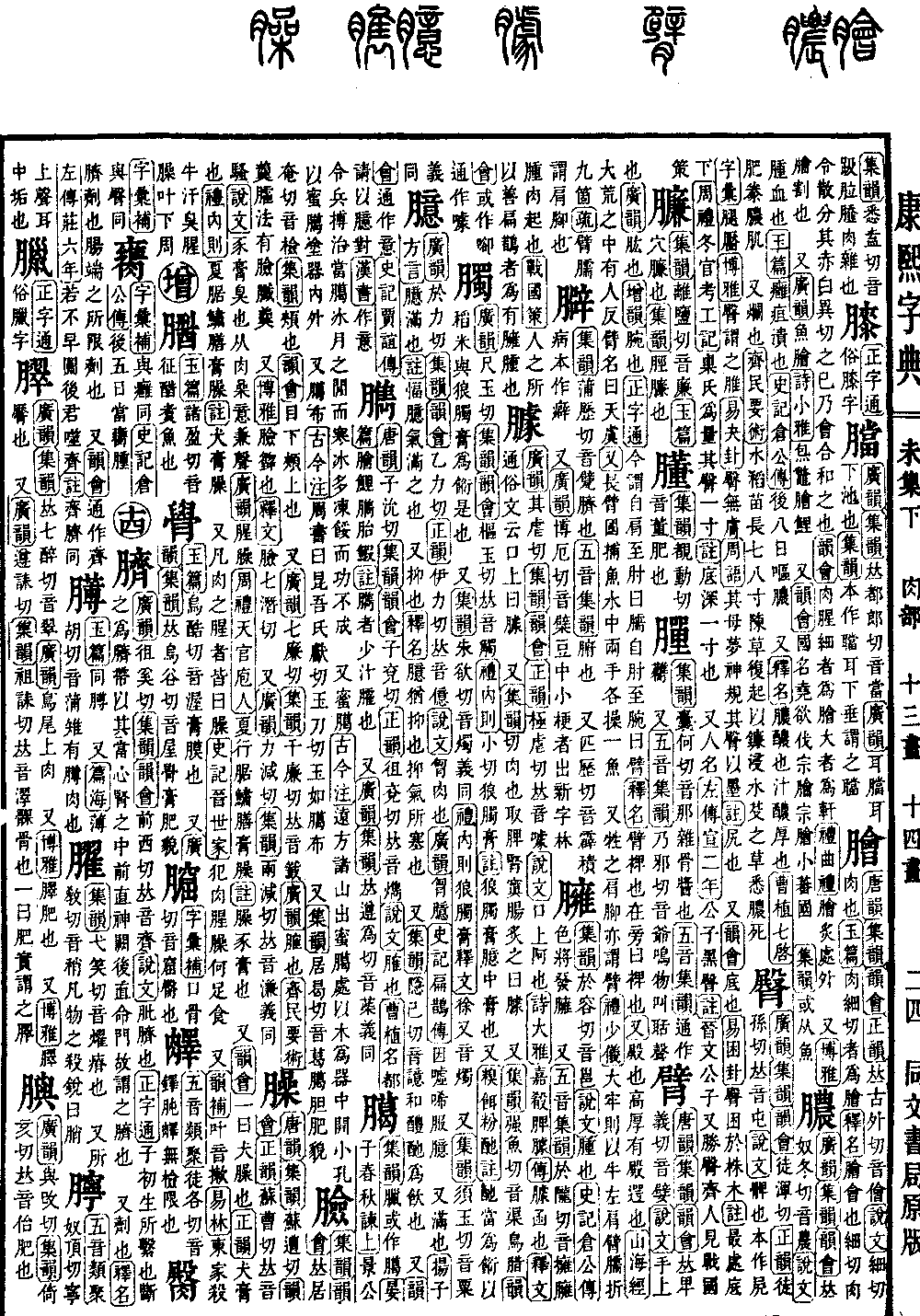
According to the Shuowen Jiezi (Shuowen), it refers to the buttocks. Originally written as a variant form. According to the Zihui, it refers to the dimple of the thigh. According to the Guangya, the buttocks are called the shou. In the Book of Changes (Yijing), within the Guai hexagram, it states: The buttocks have no skin. In the Discourses of the States (Guoyu), it states: His mother dreamed of a spirit, who marked his buttocks with ink. The commentary states: This refers to the kào (buttocks). Also, according to the Yunhui, it means the bottom. In the Book of Changes (Yijing), within the Kun hexagram, it states: The buttocks are pressed against a withered tree. The commentary states: This is the position at the very bottom. In the Rites of Zhou (Zhouli), in the section Winter Offices, Record of Trades (Kaogongji), it discusses the shigong (measurement maker), noting: Its buttock is one inch. The commentary states: This means the bottom depth is one inch. Also, a name of a person. In the Zuo Tradition (Zuo Zhuan), second year of Duke Xuan, it mentions Prince Heitun. The commentary states: This was a son of Duke Wen of Jin. Also, Shengten, a person from Qi, found in the Strategies of the Warring States (Zhan Guo Ce).