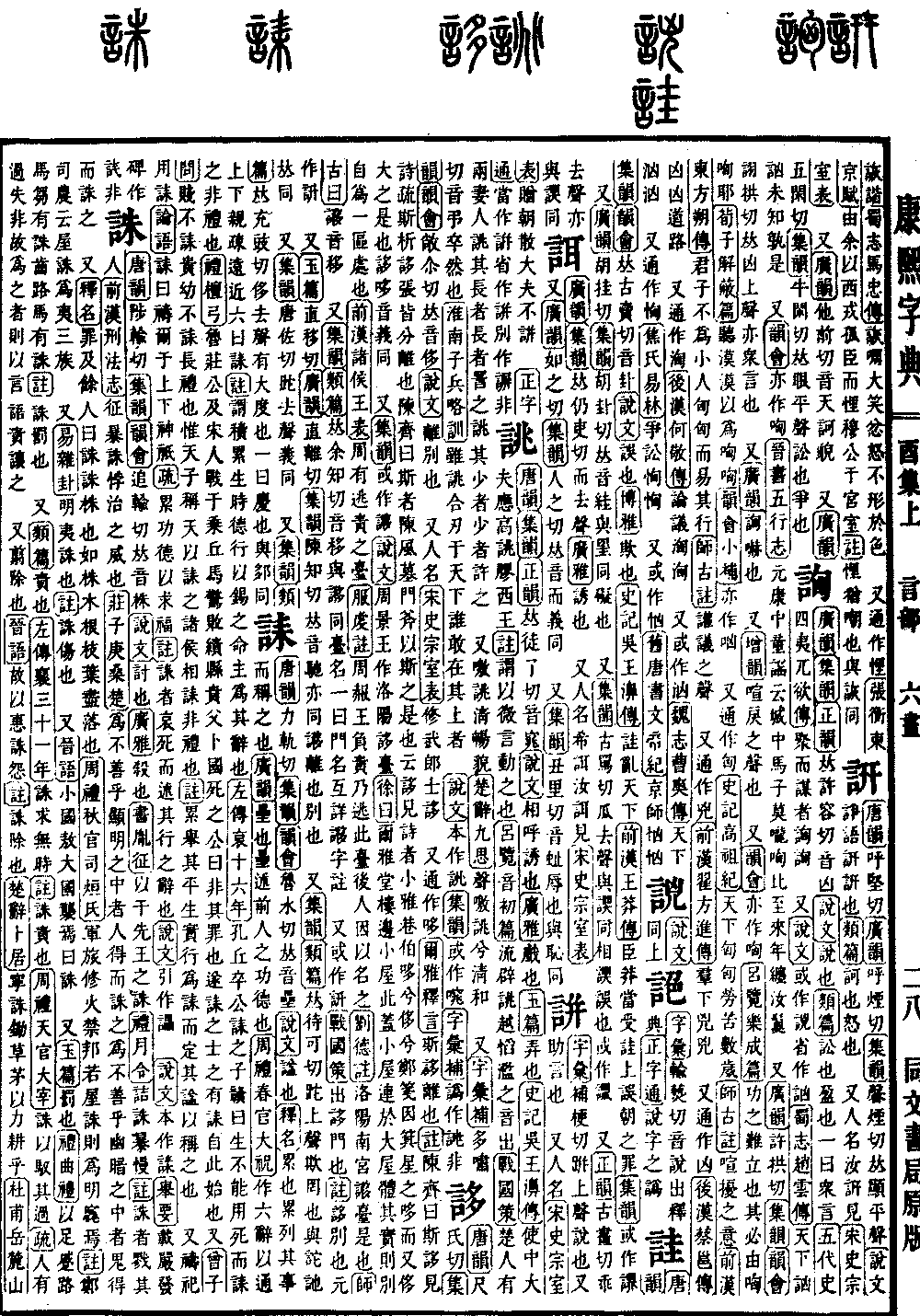
You Collection, Upper Volume
Radical: Speech (yán)
Kangxi Strokes: 13
Page 1160, Entry 08
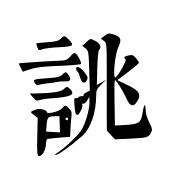
Pronounced tiǎo (rising tone).
Shuowen Jiezi (Shuowen): To call out and entice one another.
Guangya: To tease.
Yupian: To play with.
Records of the Grand Historian (Shiji), Biography of King Bi of Wu: Employed Middle Grand Master Ying Gao to entice the King of Jiaoxi. Note: This means to use subtle words to influence him.
Lüshi Chunqiu (Lüshi Chunqiu), Chapter on the Origins of Music: The sounds of wandering, deviating, enticing, surpassing, and excessive dissipation emerged.
Strategies of the Warring States (Zhancheng Ce): A man of Chu had two wives. A person teased the elder, and the elder scolded him. He teased the younger, and the younger consented.
Also, jiaotiao, the appearance of being clear and flowing.
Songs of Chu (Chu Ci), Nine Longings: The voice is clear and flowing, harmonious.
Also, pronounced diào (falling tone). Suddenly.
Huainanzi, Summary of Military Strategy: Although one may suddenly join battle throughout the world, who would dare to be above it.
Shuowen: Originally written as the character with the radical for speech.
Jiyun: Sometimes written as a variant form.
Zihui Bu: Incorrectly written as a different character; this is erroneous. The character was originally formed from the radical for speech and the character for omen. The character with the radical for speech and the character for omen is an ancient form of the character for omen.