Wu Collection, Upper Volume
Radical: Sweet (gān)
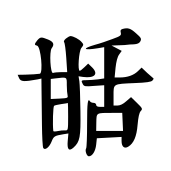
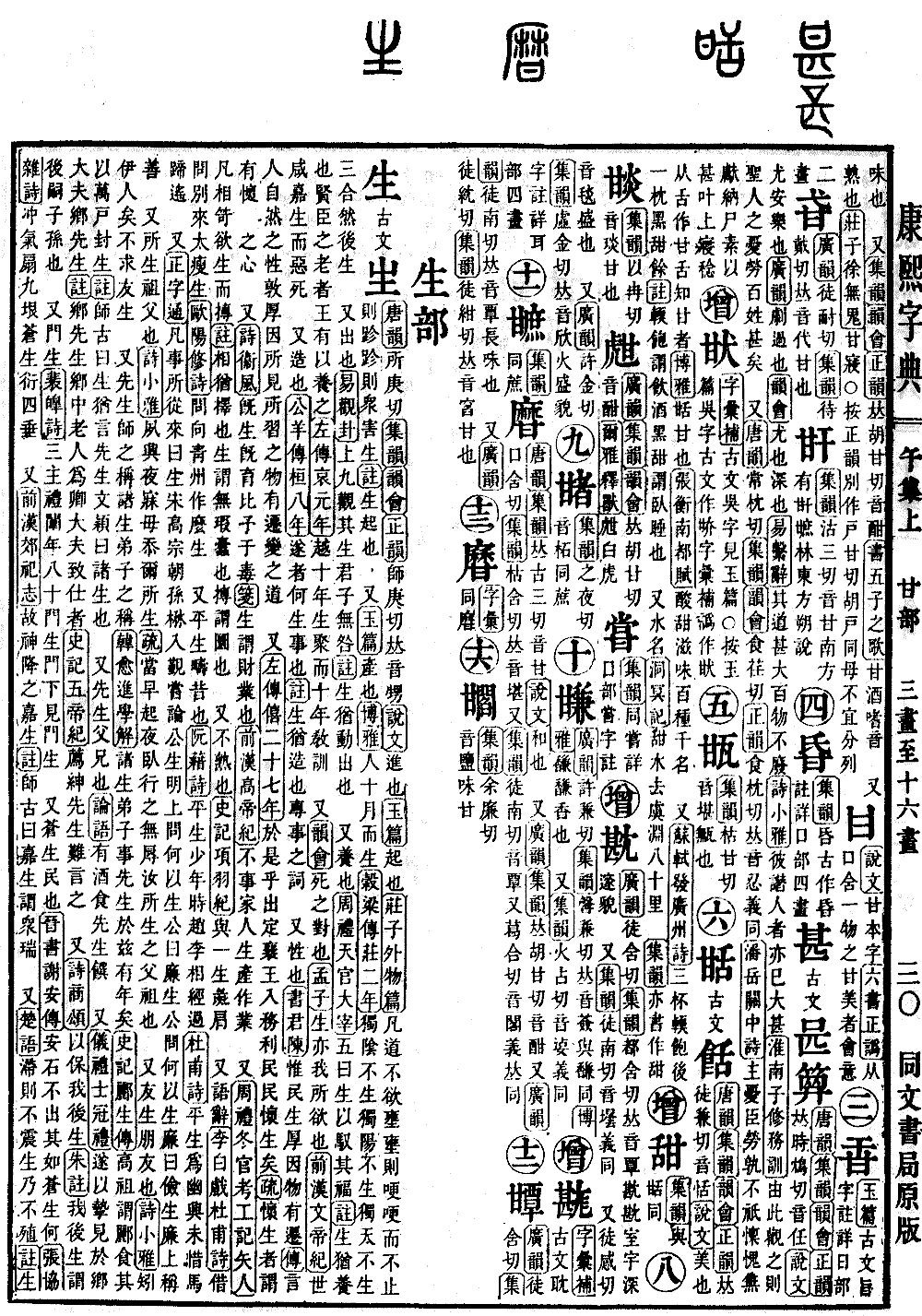
Tian; Kangxi stroke count: 11; Page 754, Entry 11
In ancient script written as tian. According to the Tang Rhyme (Tangyun), Collection of Rhymes (Jiyun), Rhyme Compilation (Yunhui), and Orthodox Rhymes (Zhengyun), it is pronounced tian, with the same sound as tian. The Explaining Graphs and Analyzing Characters (Shuowen Jiezi) defines it as a pleasant taste. The character shape is derived from tongue, written as tian. The tongue is the organ capable of sensing sweet flavors. The Polishing Refinements (Boya) explains: Tian means sweet. Zhang Heng's Southern Capital Rhapsody (Nan Du Fu) writes: Sour flavors and sweet flavors of various kinds have hundreds and thousands of names. Also seen in Su Shi's Poem on Departing Guangzhou (Fa Guangzhou Shi): After three cups of wine, slightly intoxicated and satisfied, one sleeps soundly in the land of sweet dreams, with the lingering flavor of the dream remaining. Note: Softly satisfied refers to drinking wine; black sweet refers to sleeping. Also the name of a body of water. The Record of Penetrating the Darkness (Dongming Ji) records: Sweet Water is located eighty li away from the Abyss of the Setting Sun (Yuyuan). The Collection of Rhymes (Jiyun) also writes it as tian.