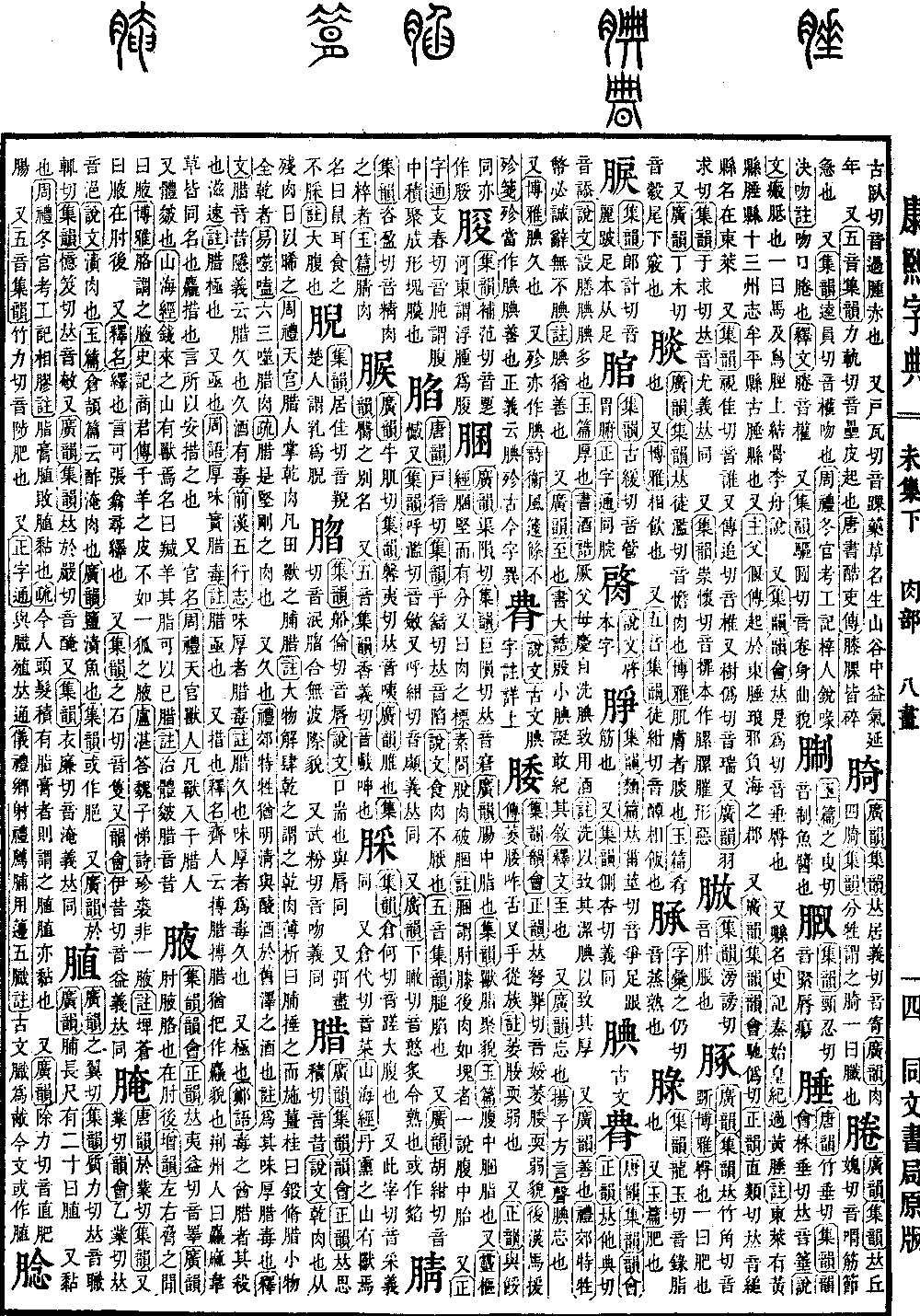
Wei Collection, Lower Volume
Radical: Meat (ròu)
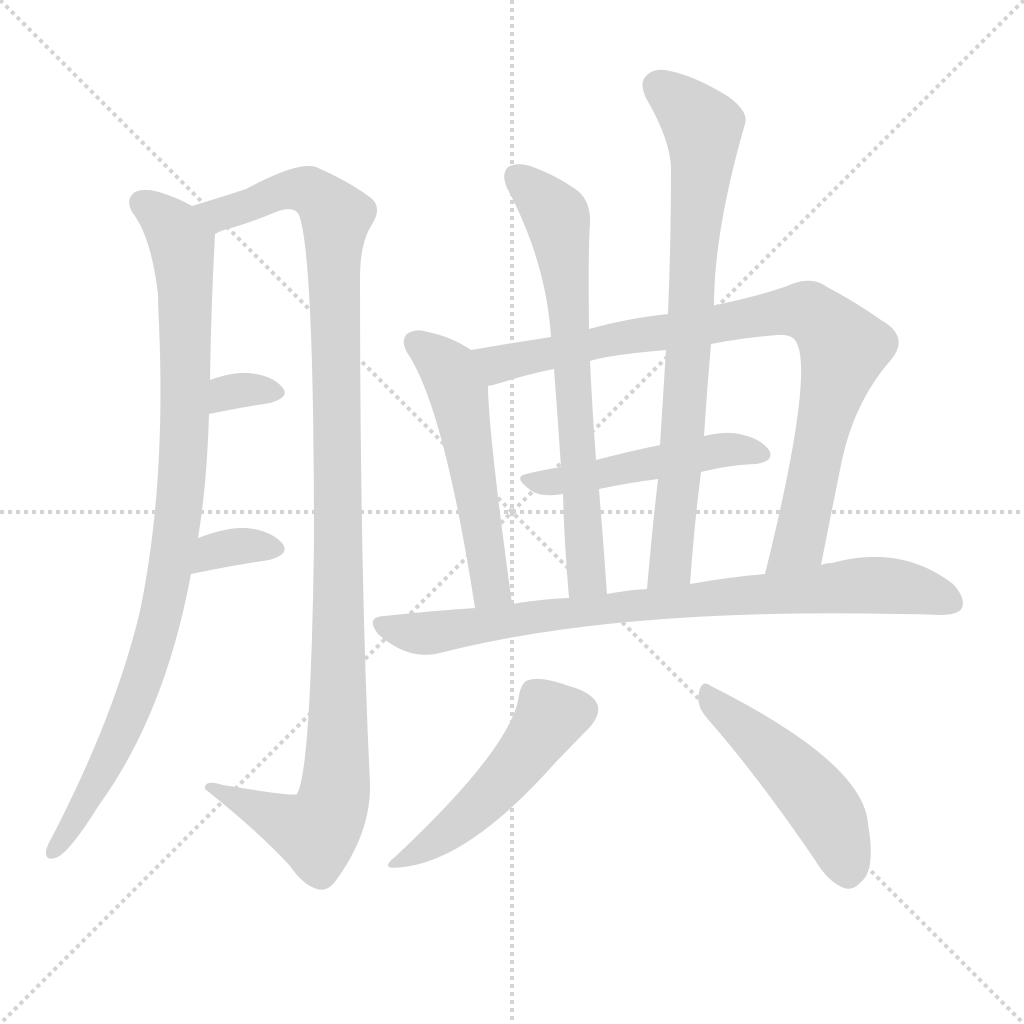
腆
Kangxi stroke count: 14
Page 986, Entry 15
Ancient form. According to Tang Rhymes (Tangyun), Collected Rhymes (Jiyun), Rhyme Compendium (Yunhui), and Orthodox Rhymes (Zhengyun), pronounced tian (rising tone). According to Explaining Graphs and Analyzing Characters (Shuowen), it refers to the abundance of prepared food. In Jade Chapters (Yupian), it means thick. In Book of Documents (Shujing), specifically in the Wine Announcements (Jiugao) chapter: Their parents congratulate them, performing ablutions and preparing thick offerings to use wine. The commentary explains: Ablutions are performed to achieve purity, and thickening is done to achieve richness.
Additionally, in Wide Rhymes (Guangyun), it means good. In Book of Rites (Liji), specifically in the Suburban Sacrificial Offering (Jiaotesheng) chapter: Offerings must be sincere, and words must not be anything but good. The commentary explains: Good is a synonym for excellent.
Additionally, in Wide Rhymes (Guangyun), it means to reach. In Book of Documents (Shujing), in the Great Announcement (Dagao) chapter: The small state of Yin has reached such a point, yet they dare to record their sequence. The explanation of the text states: It means to reach.
Additionally, in Wide Rhymes (Guangyun), it means to forget. According to Master Yang's Dialects (Fangyan): The sound tian means to forget.
Additionally, in Broad Refinement (Boya), tian means long duration.
Additionally, tian is also written as a variant form (tian). In Book of Odes (Shijing), in the Odes of Wei (Weifeng), the commentary on the passage concerning the insincere man notes that the character tian should be written as tian. Tian means good. The sub-commentary states: Tian and tian are variations of the same character used across different eras.