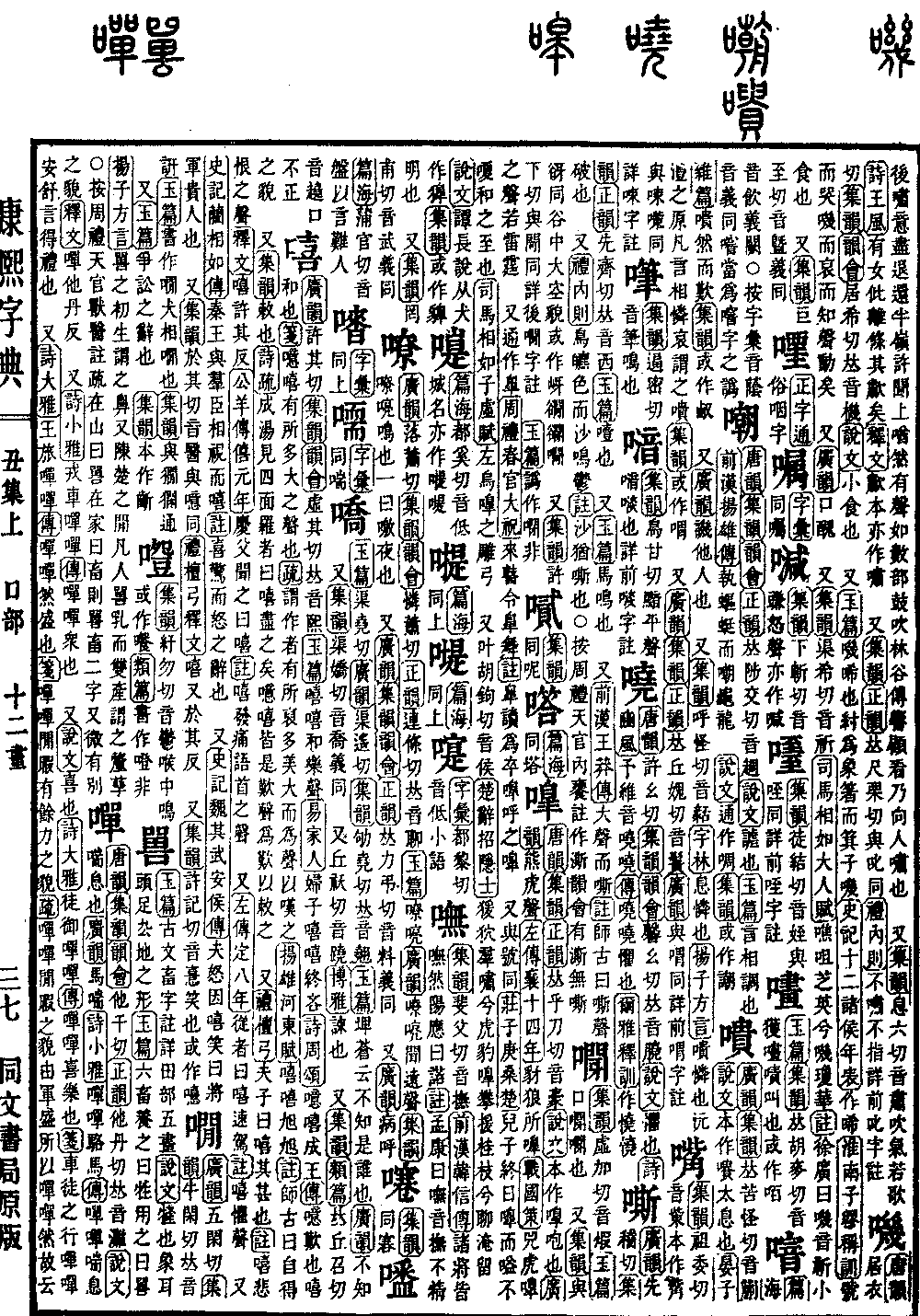
Chou Collection, Upper Volume
Radical: Mouth (kǒu)
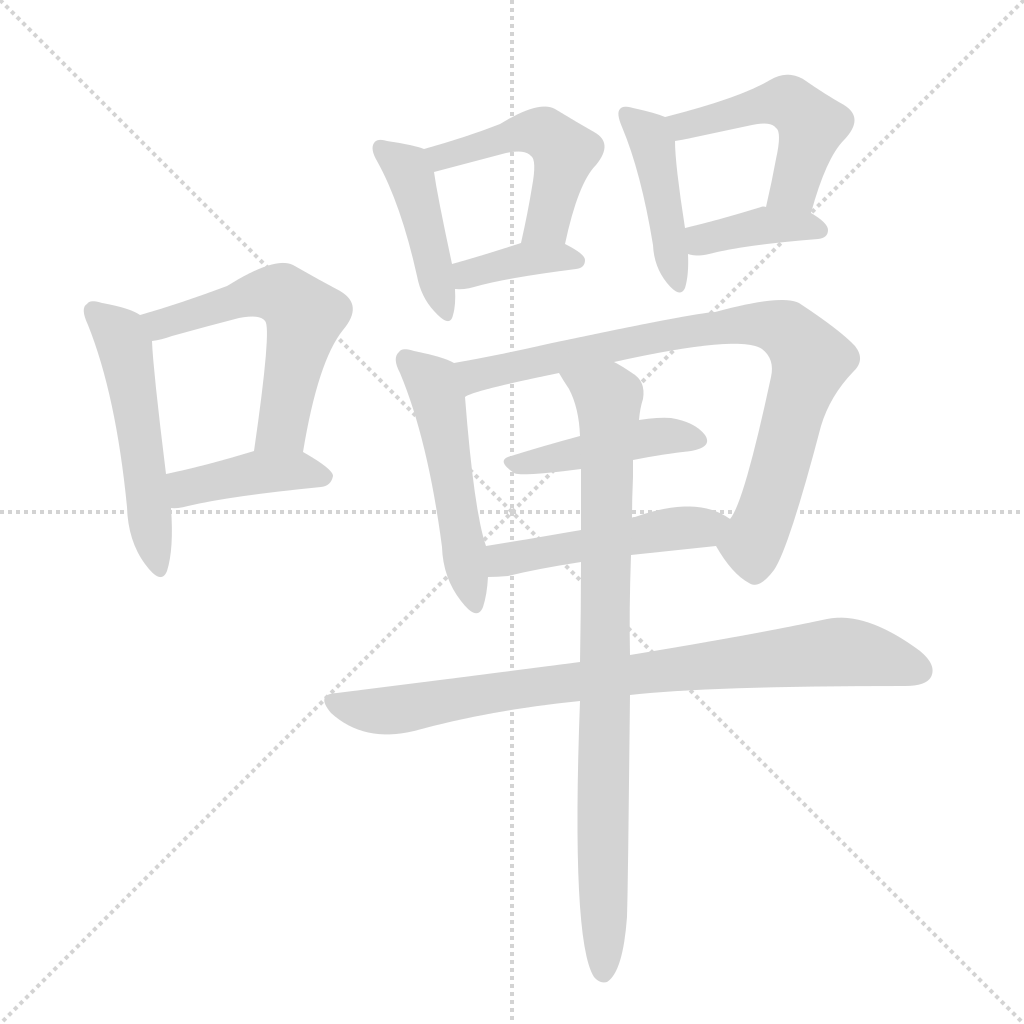
Character: Tan
Kangxi stroke count: 15
Page 207, Entry 34
Tang Dynasty Rhymes (Tangyun), Collected Rhymes (Jiyun), Rhyme Compilation (Yunhui): Pronounced tan. Correct Rhymes (Zhengyun): Pronounced tan.
Explaining Graphs and Analyzing Characters (Shuowen): Panting.
Broad Rhymes (Guangyun): The panting of a horse.
Book of Odes (Shijing): The white horses are panting. Commentary: Panting is the appearance of gasping for breath. Explanation of Texts (Shiwen): Pronounced tan.
Also, Book of Odes (Shijing): The war chariots are numerous. Commentary: Numerous.
Also, Explaining Graphs and Analyzing Characters (Shuowen): Joy.
Book of Odes (Shijing): The footmen and charioteers are happy. Commentary: Happy and joyful. Note: The soldiers and chariots are advancing, appearing happy and comfortable, meaning they are acting in accordance with ritual.
Also, Book of Odes (Shijing): The royal army is grand. Commentary: Grand and magnificent. Note: Appearing calm and having extra strength. Exegesis: Appearing calm. Because the army is grand, it is described this way; thus it signifies grandeur.
Also, Collected Rhymes (Jiyun): Pronounced chan. The term tanxuan refers to a slow and relaxed appearance.
Book of Master Lie (Liezi), Power and Destiny chapter: Mo Chi, Shan Zhi, Tanxuan, and Hu, these four men traveled through the world together.
Also, Yangzi's Regional Speech (Fangyan): Whenever someone is angry or choking, in the Southern Chu, Jiang, and Xiang regions, this is called tanxuan.
Also, Collected Rhymes (Jiyun): Pronounced ta. Appearing numerous.
Also, another explanation suggests tanhuan signifies the appearance of weeping.
Also, Collected Rhymes (Jiyun): Pronounced dan. To tremble or shudder.
Also, pronounced tan. The term tantan signifies a slow and relaxed sound.
Wang Bao, Rhapsody on the Bamboo Flute (Dongxiao Fu): The slow and relaxed sound cautions against negligence.
Also, Broad Rhymes (Guangyun): Pronounced chan. Collected Rhymes (Jiyun), Rhyme Compilation (Yunhui), Correct Rhymes (Zhengyun): Pronounced chan.
Book of Rites (Liji), Record of Music (Yueji): For those who feel happiness within their hearts, their voices are broad and relaxed. Note: Broad and generous appearance.
Collected Rhymes (Jiyun): Sometimes also written in a variant form (dan).
Also, Collected Rhymes (Jiyun): Pronounced dan. Appearing happy and grand.
Textual Research: In the Book of Master Lie (Liezi), Power and Destiny chapter, the names Mo Chi, Shan Zhi, Tanxuan, and Hu are corrected to reflect the original text.