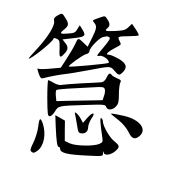
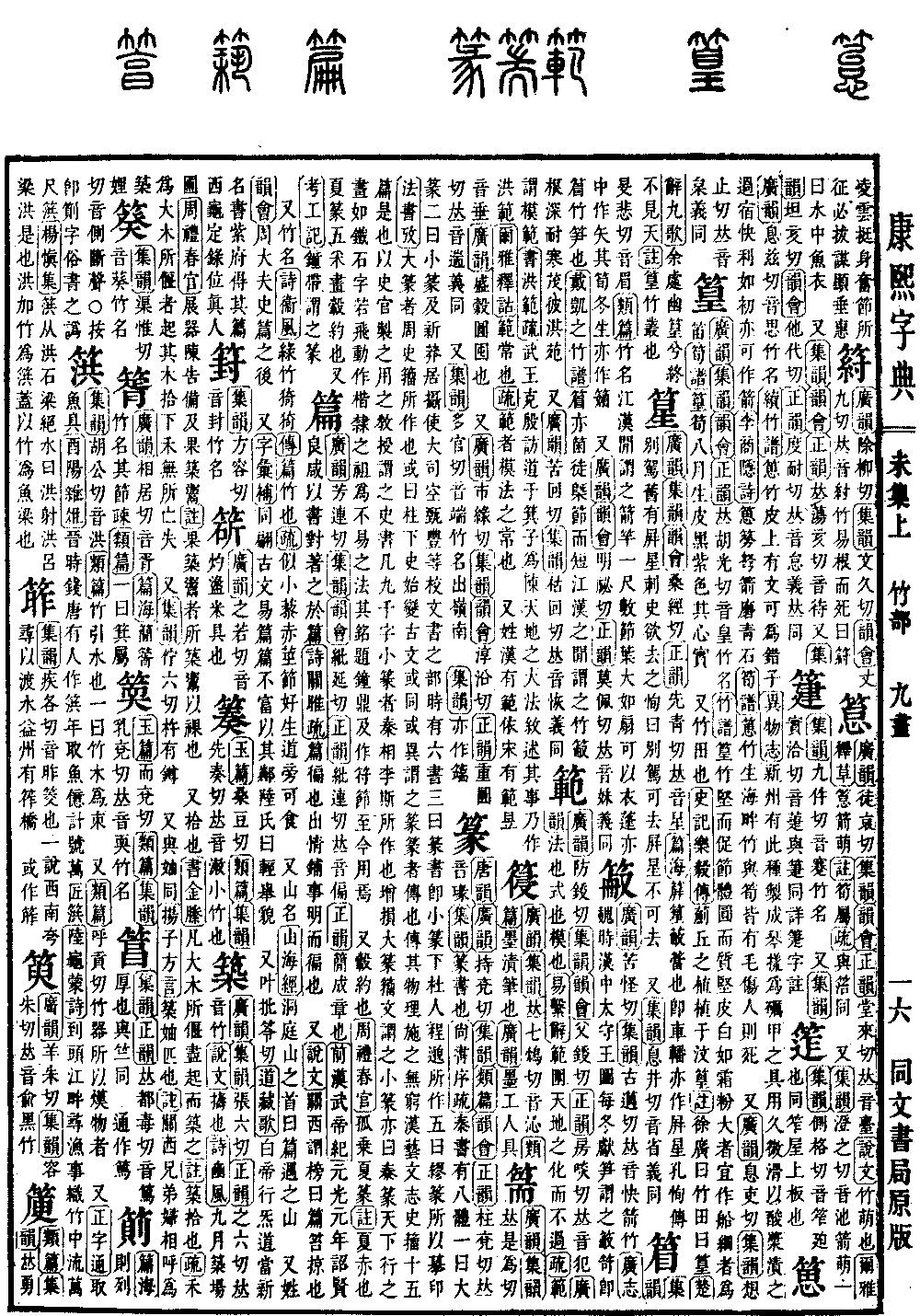
Pronounced tu āi qiè in "Guangyun" (Guangyun), and táng lái qiè in "Jiyun" (Jiyun), "Yunhui" (Yunhui), and "Zhengyun" (Zhengyun), with the same sound as "tai" (台). "Shuowen Jiezi" (Shuowen Jiezi) explains it as a bamboo shoot. "Erya · Shicao" (Erya · Shicao) records: "䈚, jiàn méng." The commentary states it belongs to the bamboo shoot category. The explanation indicates it is the same as the character "箈".
Additionally, in "Jiyun" (Jiyun), it is pronounced chéng zhī qiè, with the same sound as "chi" (池). It refers to a young shoot of an arrow. One interpretation suggests it refers to the scales of fish in water.
Furthermore, in "Jiyun" (Jiyun), "Yunhui" (Yunhui), and "Zhengyun" (Zhengyun), it is pronounced dàng hài qiè, with the same sound as "dai" (待).
Also, in "Jiyun" (Jiyun), it is pronounced tǎn hài qiè, in "Yunhui" (Yunhui) it is pronounced tā dài qiè, and in "Zhengyun" (Zhengyun) it is pronounced dù nài qiè, with the same sound as "dai" (怠). The meaning is the same.