Si Collection, Lower Volume
Radical: Dog (quǎn)
Page 710, Entry 24
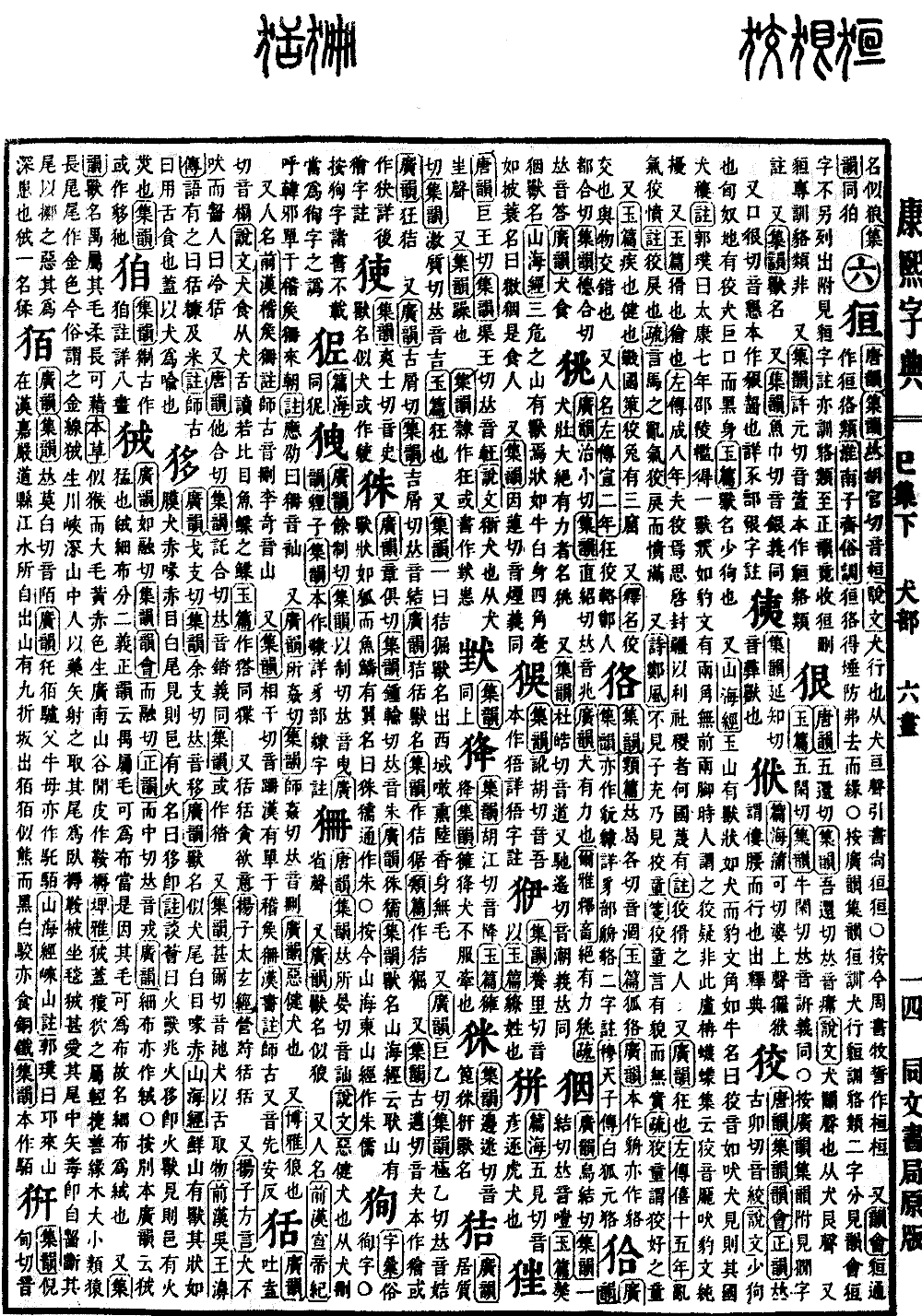
According to the Expanded Rhymes (Guangyun), it is pronounced ta (falling tone). According to the Explaining Graphs and Analyzing Characters (Shuowen), it refers to a dog eating. It is composed of the dog radical and the tongue character. The pronunciation is similar to that of the character die (meaning flatfish). The Jade Chapter (Yupian) writes it as a variant form, and it is the same. It also refers to the appearance of greed. In the Great Mystery (Taixuanjing) by Yangzi, it is written that one hunts greedily. Also, according to the Regional Speech (Fangyan) by Yangzi, when a dog bites without barking, it is called lengta. According to the Tang Rhymes (Tangyun) and the Collected Rhymes (Jiyun), it is pronounced ta (entering tone), and the meaning is the same. The Collected Rhymes (Jiyun) also lists a variant form. According to the Collected Rhymes (Jiyun), it is pronounced er (falling tone), referring to a dog using its tongue to take food. In the History of the Former Han (Qianhan Shu), in the biography of Prince Bi of Wu, there is a saying about licking bran to reach the rice. The commentary by Shigu states: this means to eat using the tongue. It is likely a metaphor using a dog.