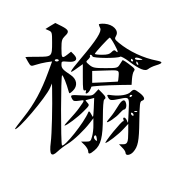
Chen Collection, Middle Volume
Radical: Tree (mù)
tā
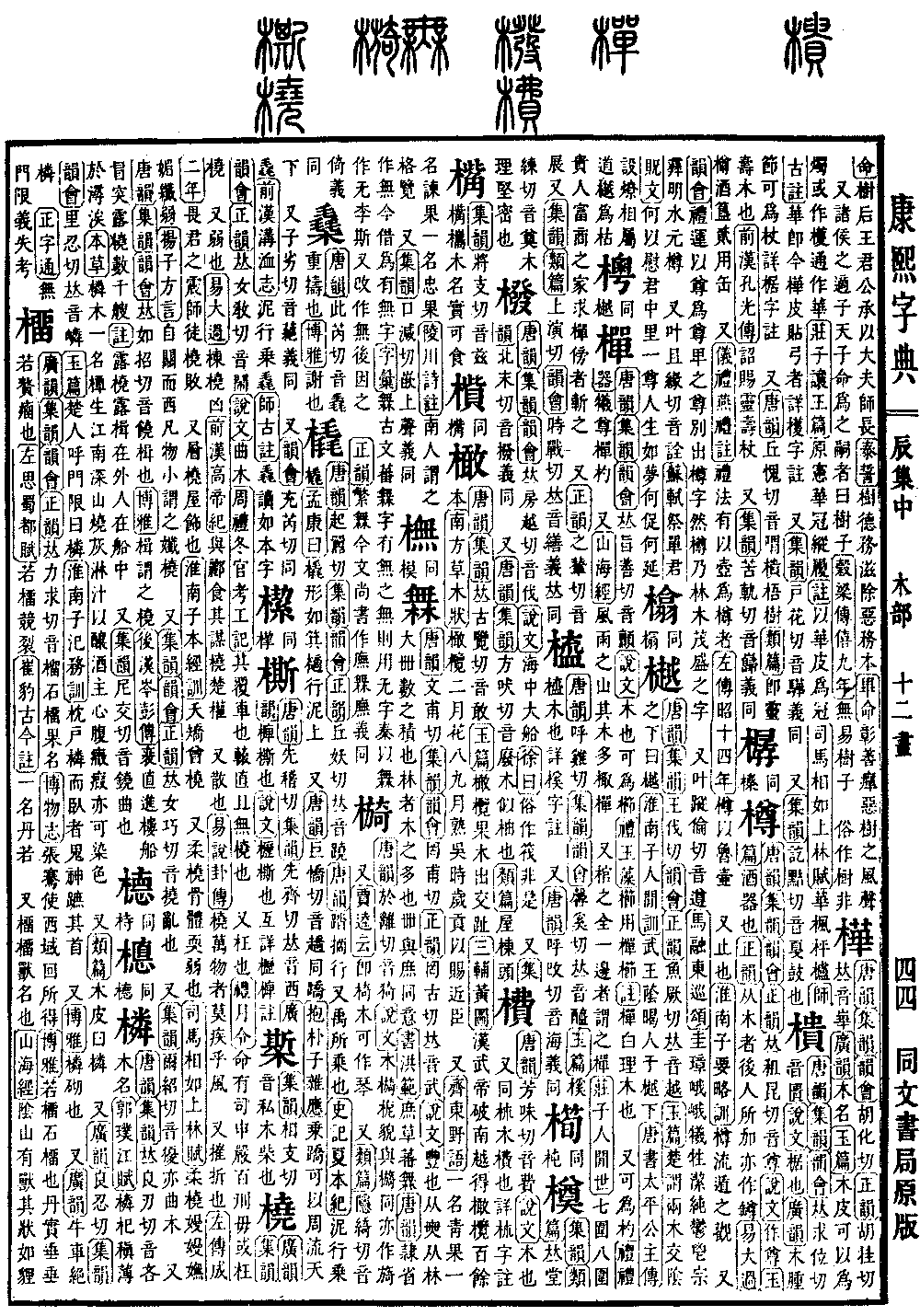
Kangxi Stroke Count: 14
Page 545, Entry 09
Pronounced tā (falling tone) from the Tangyun, Jiyun, and Yunhui.
Pronounced tā (falling tone) from the Zhengyun.
A bed. From the radical "mù" and "yǔ".
A narrow and long bed is called a tā.
"Shiming" states it resembles a quail, being low and close to the ground.
"Book of the Later Han - Biography of Xu Zhi": Chen Fan, while serving as administrator, did not entertain guests. Only when Xu Zhi arrived did he specifically prepare a tā for him.
Also refers to a type of cloth.
"Records of the Grand Historian - Treatise on the Economy": tā cloth and leather, a thousand shi.
"Book of Han - Yinyi": tā cloth is white cotton cloth.
Also rhymes with "yuè" (entering tone), pronounced close to tè.
"Poem on the Pavilion of Prince Teng" by Su Shi: My heart is startled by the gathering of fish and dragons; my eyes follow the disappearing wild geese. The administrator, a scholar from the eastern Lu, has Xu Ru's tā in his residence.