Si Collection, Upper Volume
Radical: Water (shuǐ)
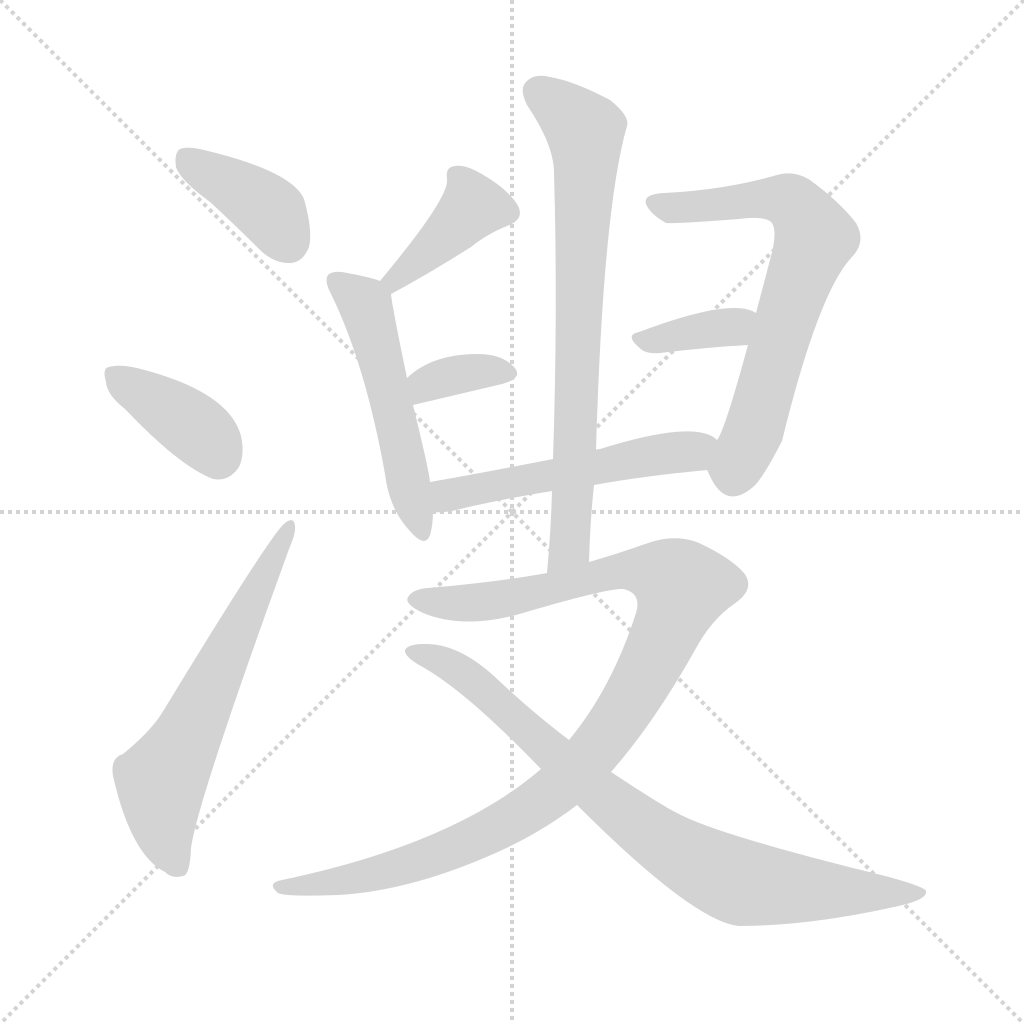
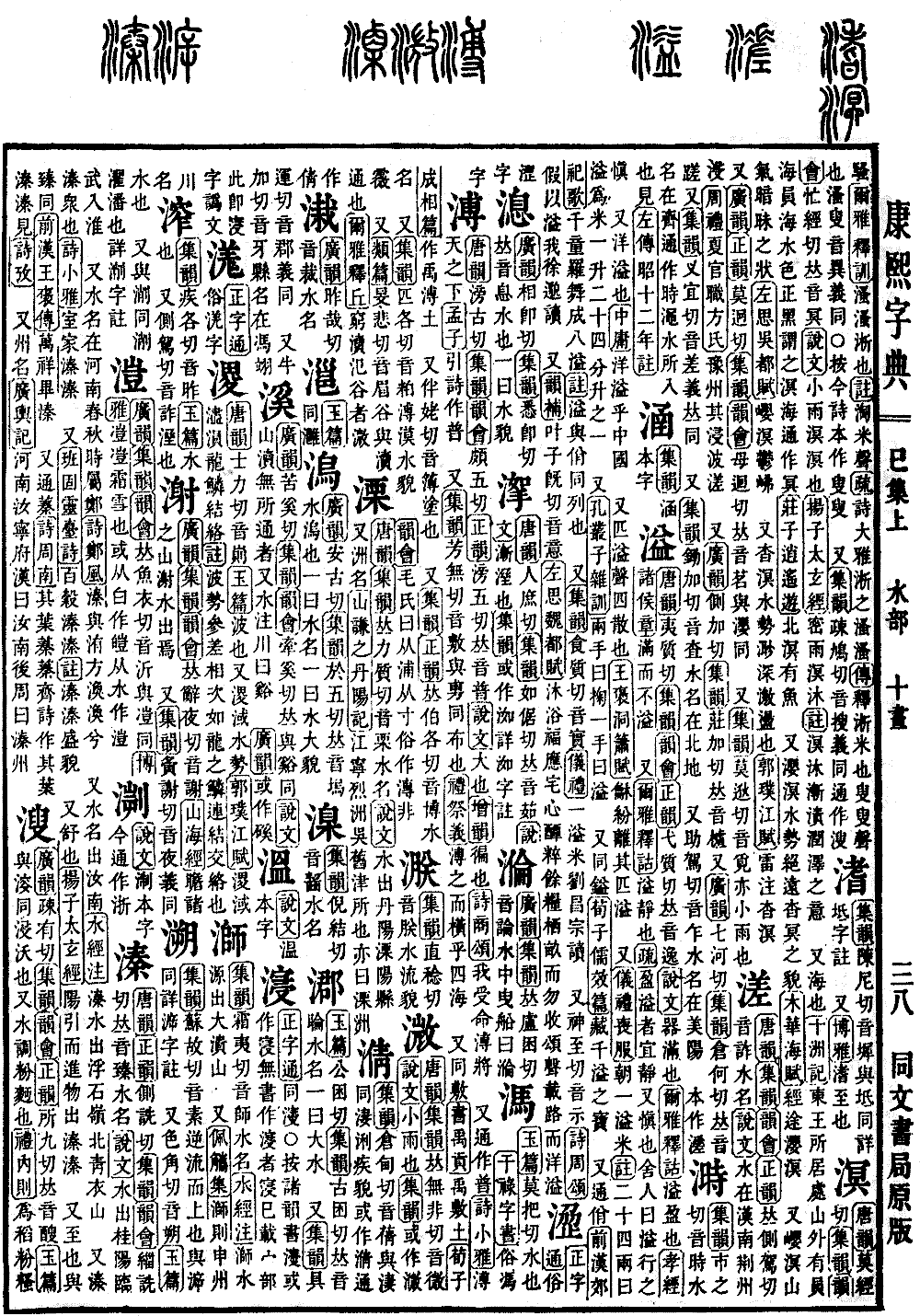
Character: 溲
Kangxi Dictionary Strokes: 14
Page 640, Entry 34
According to the Extensive Rhymes (Guangyun), pronounced sou. According to the Collected Rhymes (Jiyun), Rhyme Meetings (Yunhui), and Orthodox Rhymes (Zhengyun), pronounced sou, sounding the same as the character for fermented wine.
In the Jade Chapter (Yupian), it is the same as another character, meaning to soak and moisten. It also refers to mixing flour with water.
Book of Rites (Liji), Inner Regulations (Neize): Grind rice into powder, add water to mix and knead, used to make a sweet porridge.
Also, according to the Collected Rhymes (Jiyun), Rhyme Meetings (Yunhui), and Orthodox Rhymes (Zhengyun), pronounced sou, sounding the same as the character for search. It is the same as the character for old man. Used in the phrase sou-sou, which is the sound of washing rice.
It is also the same as the character for fermented wine. Book of Etiquette and Ceremonial (Yili), Master's Post-Burial Rites (Shiyu Li): Use clear, freshly drawn water to mix the wine. Commentary: Clear, freshly drawn water refers to newly sourced water. It means using fresh water to mix and brew this type of wine.
It also refers to urination, called sou. History of the Later Han (Hou Hanshu), Biography of Zhang Zhan: To pass waste and urinate.
Also, pao-sou describes something abundant or overflowing. Wang Bao, Rhapsody on the Cave Flute (Dongxiao Fu): The sounds are abundant and overflowing.
It is also the name of a river located in Nanyang. Commentary on the Water Classic (Shuijing Zhu): The Sou River originates from the northern mountains of Huyang.
Also, according to the Collected Rhymes (Jiyun), pronounced sao, also referring to urination.