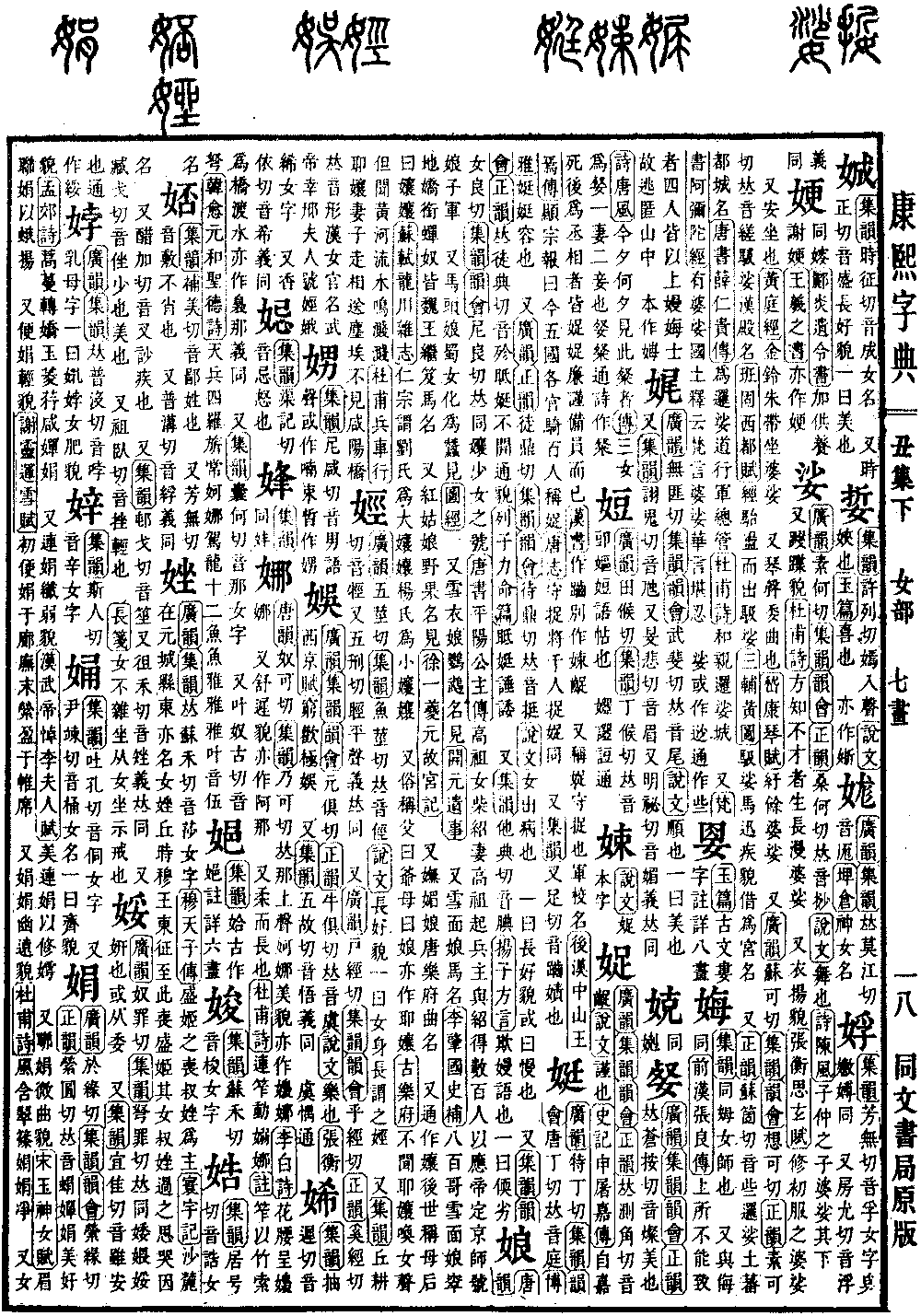
Chou Collection, Lower Volume
Radical: Woman (nǚ)
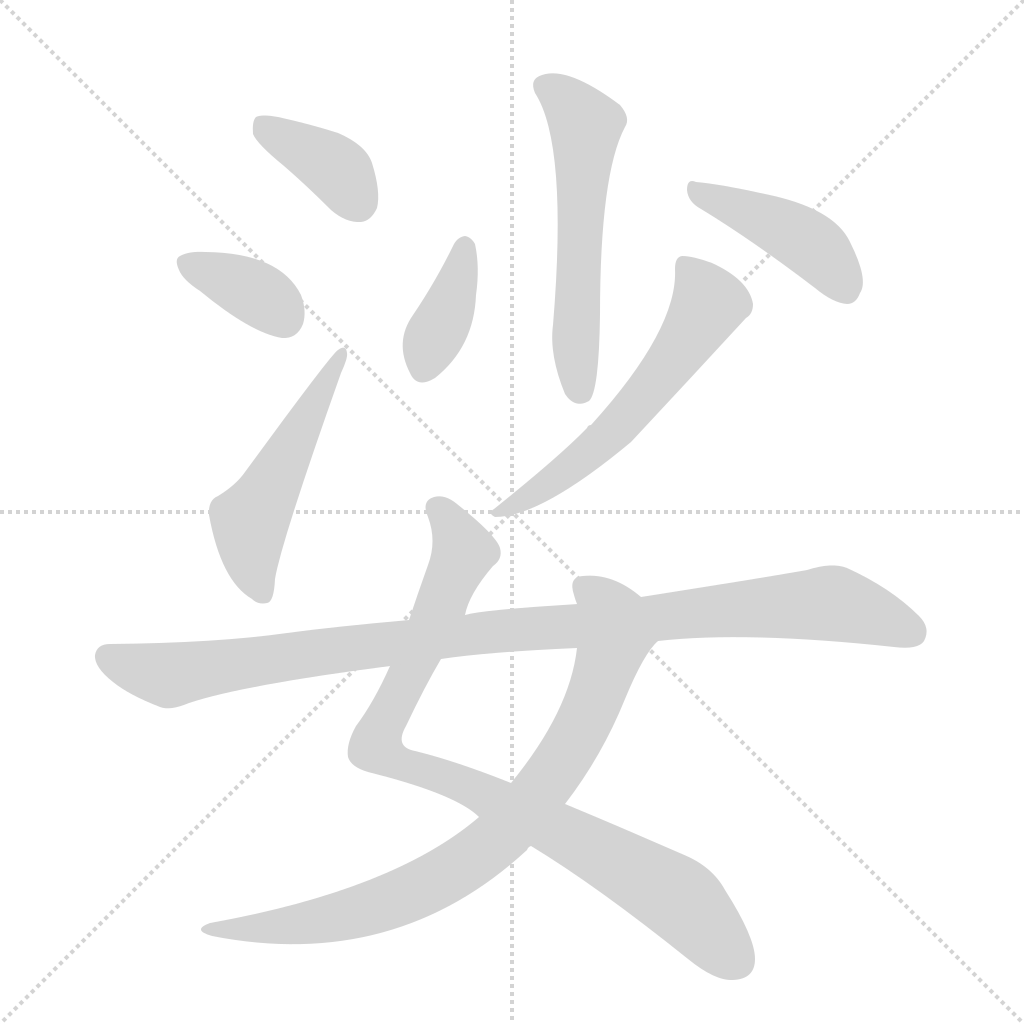
娑
Kangxi strokes: 10
Page 262, Entry 06
Pronounced sa.
Shuowen Jiezi (Explanation of Graphs and Analysis of Characters) defines it as to dance.
Book of Odes (Shijing): The son of Zizhong, dancing (posuo) beneath it.
Also refers to the appearance of walking with short steps.
Du Fu poetry: Only then I knew that one without talent, grows up idly swaying and dancing (posuo).
Also refers to the appearance of clothing fluttering.
Zhang Heng, Rhapsody on Thinking (Si Fu): Adorning the initial robes in a fluttering (posuo) manner.
Also refers to the appearance of sitting peacefully.
Yellow Court Scripture (Huangting Jing): Golden bells and red belts sitting peacefully (posuo).
Also refers to the appearance of zither music that is winding and complex.
Ji Kang, Rhapsody on the Zither (Qin Fu): Winding and complex (yuyu posuo).
Pronounced sa.
Sasa, the name of a Han dynasty palace.
Ban Gu, Rhapsody on the Western Capital (Xidu Fu): Passing through the Taidang Gate and emerging at Sasa.
Records of the Three Auxiliary Capitals (Sanfu Huangtu): Sasa refers to the speed of a horse; it was borrowed as a palace name.
Pronounced suo.
Luosuo, the name of the capital city of the Tibetan Empire.
Book of Tang (Tangshu), Biography of Xue Rengui: Served as the marching general of the Luosuo Route.
Du Fu poetry: Bringing peace to the city of Luosuo.
Also, in Buddhist texts, the Amitabha Sutra mentions the Saha (posuo) world. The commentary states: In the Sanskrit language it is posuo; in Chinese it means able to endure.
娑 is sometimes written as 逤. It is also commonly written as 些.