You Collection, Upper Volume
Radical: Speech (yán)
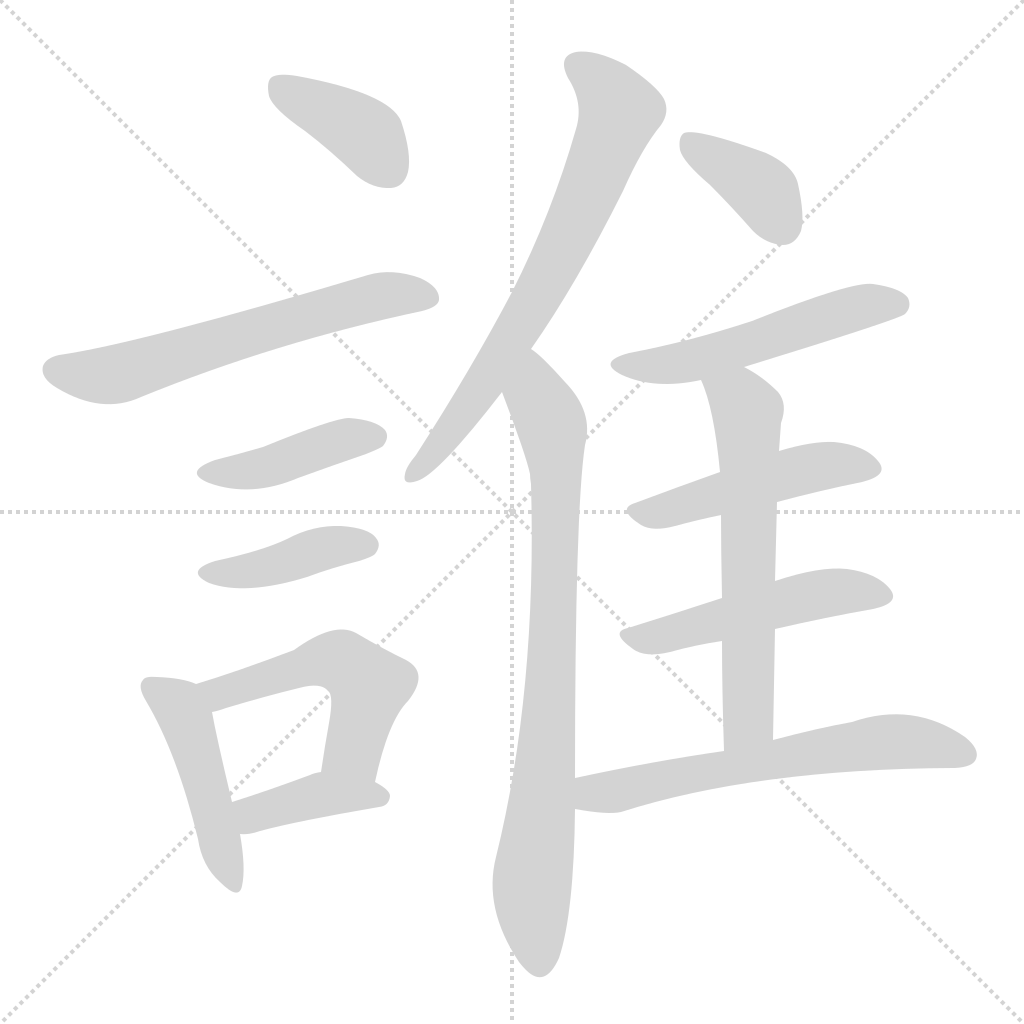
誰
Kangxi strokes: 15
Page 1165, Entry 11
Pronounced chui.
Pronounced chui.
According to the Explaining Graphs and Analyzing Characters (Shuowen Jiezi), it means what.
According to the Jade Chapters (Yupian), it denotes not knowing the name of someone.
Book of Changes (Yijing), section on Fellowship with Men: Going out the gate and finding fellows. Furthermore, who is to blame?
Book of Odes (Shijing), section on Shao Nan: Who is to officiate? There is the chaste young lady.
Zuo Commentary (Zuozhuan), first year of Duke Yin: Who would say it is not so?
Laozi: Way and Virtue Classic (Daodejing): I do not know whose child it is.
Zhuangzi, section on The Revolution of Heaven: You were born and could speak at five months; before you reached childhood, you already knew who. Commentary: Before reaching childhood, you already knew the names of people and who they were.
According to the Literary Expositor (Erya), section on Explaining Teachings: The term shei-xi means formerly.
Book of Odes (Shijing), section on Odes of the States: It was like that formerly. Commentary: It is the same as saying in the past. Guo Pu stated: Shei is a particle used at the beginning of a phrase.
According to the Correct Rhymes (Zhengyun): Shei-he means to interrogate or challenge.
History of the Former Han (Qianhan Shu), biography of Jia Yi: To sharpen weapons and challenge others. Commentary by Shigu: It means to ask who someone is.
History of the Former Han (Qianhan Shu), Treatise on the Five Elements: Great Interrogator soldiers. Commentary by Shigu: They were in charge of questioning unusual people to ask their names. Great Interrogator was originally a title derived from the act of questioning, thus becoming an official title, and there was a Chief of the Great Interrogator. The soldiers were those led by this chief.
Also a surname. According to the Genealogies of Ten Thousand Surnames (Wanxing Tongpu), Sheilong was an administrative official in Jiujiang Prefecture during the Zhengde period of the Ming dynasty.
According to the General Guide to Reading (Dushutong), it is sometimes used interchangeably with shu (who). It cites Zhuangzi, Lie Yukou: Do not awaken, do not enlighten; why be so questioning of one another?
Also used interchangeably with chou (who). It cites the Book of Documents (Shangshu), Canon of Shun: Who can manage my plants, trees, birds, and beasts? This is the same as who is capable of, which is synonymous with shei.
According to the Collection of Rhymes (Yunhui), it is also written as qiao.
Records of the Grand Historian (Shiji), biography of Wei Wan: Did not reprimand or question Wan. Commentary: It means to reproach. Qiao is pronounced shei, and he is pronounced he.
In the Book of Han (Hanshu), it is written as shu-he. Li Qi stated: Shu means who. He means to reprimand. Shigu stated: The phrase not questioning someone is equivalent to saying not asking them anything at all.
According to the Collection of Rhymes (Jiyun), it is sometimes written as wei.