You Collection, Upper Volume
Radical: Speech (yán)
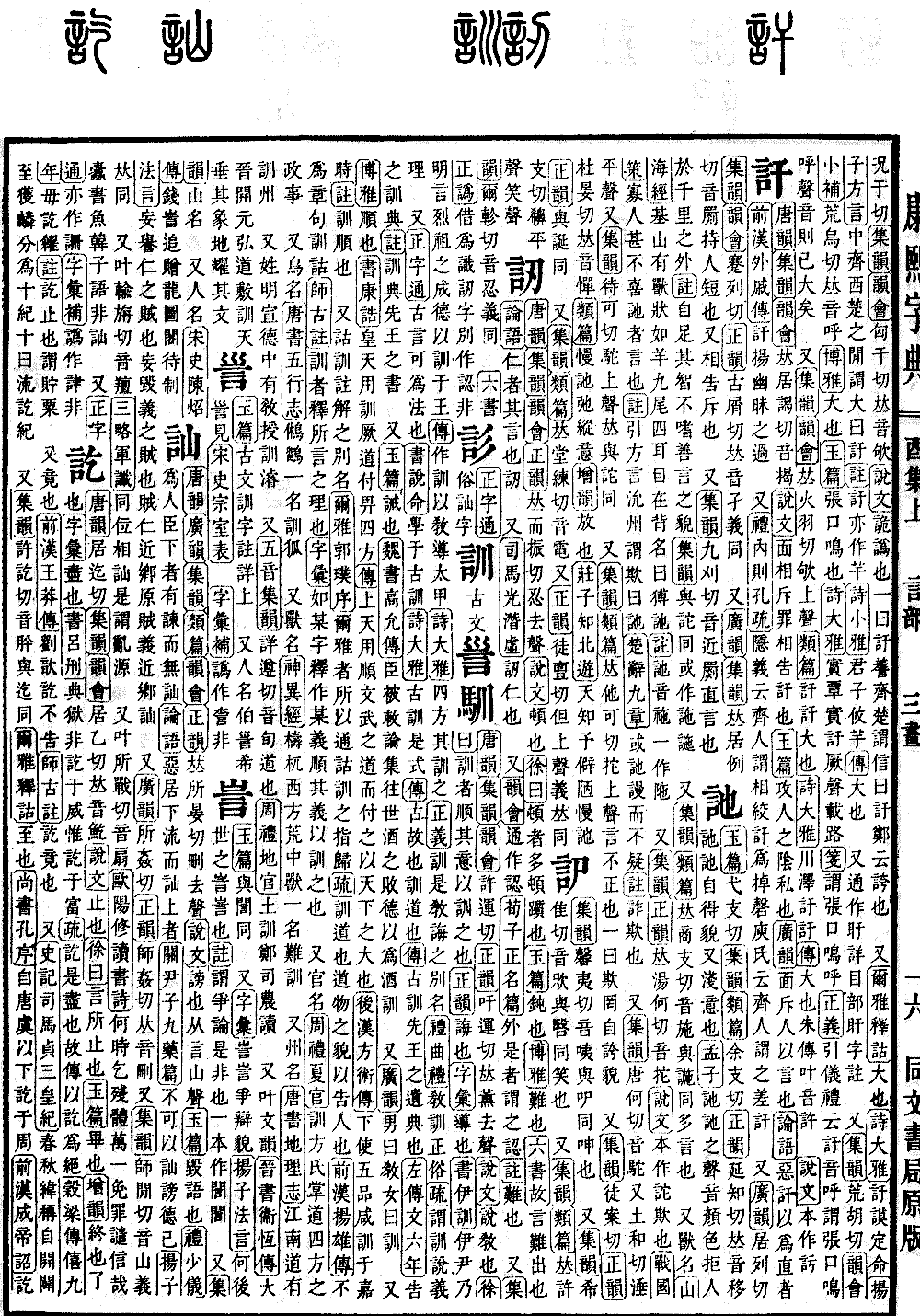
Shan
Kangxi Stroke Count: 10
Page 1148, Entry 11
Tang Rhyme (Tangyun), Broad Rhymes (Guangyun), Collection of Rhymes (Jiyun), Categorized Compilation (Leipian), Rhyme Assembly (Yunhui), Correct Rhymes (Zhengyun): Pronounced shan (falling tone).
Explanation of Graphs and Analysis of Characters (Shuowen): To slander. Composed of the radical for speech and the phonetic component for mountain.
Jade Chapters (Yupian): Defamatory language.
Book of Rites (Liji), Section on Minor Rituals (Shaoyi): Those who are subjects and subordinates should offer remonstrance but not slander.
Analects (Lunyu): I hate those who dwell in inferior positions and slander their superiors.
Guan Yinzi, Nine Medicines Chapter: One must not slander or criticize those of superior virtue.
Yangzi, Model Sayings (Fayan): Reckless praise is the thief of benevolence. Reckless destruction is the thief of righteousness. To betray benevolence approaches the hypocritical village worthy; to betray righteousness approaches the village slanderer.
Also, Broad Rhymes (Guangyun): Pronounced jian (level tone); Correct Rhymes (Zhengyun): Pronounced jian (level tone). Also pronounced shan.
Also, Collection of Rhymes (Jiyun): Pronounced shan. The meaning is the same.
Also rhymes with zhan (level tone), pronounced shan.
Three Strategies Military Prophecies (Sanlue Junchan): When those of equal rank slander one another, it is the source of chaos.
Also rhymes with zhan (falling tone), pronounced shan.
Ouyang Xiu, Reading Poetry: When can I beg for a broken body, so that one in ten thousand I may avoid sin and reproach? It is truly the book-eating silverfish; Han Yu’s words are not slander.
Also, Correct Meaning Guide (Zhengzitong): Also written as a variant form.
Supplement to the Collection of Characters (Zihuibu): Erroneously written as a variant form, which is incorrect.