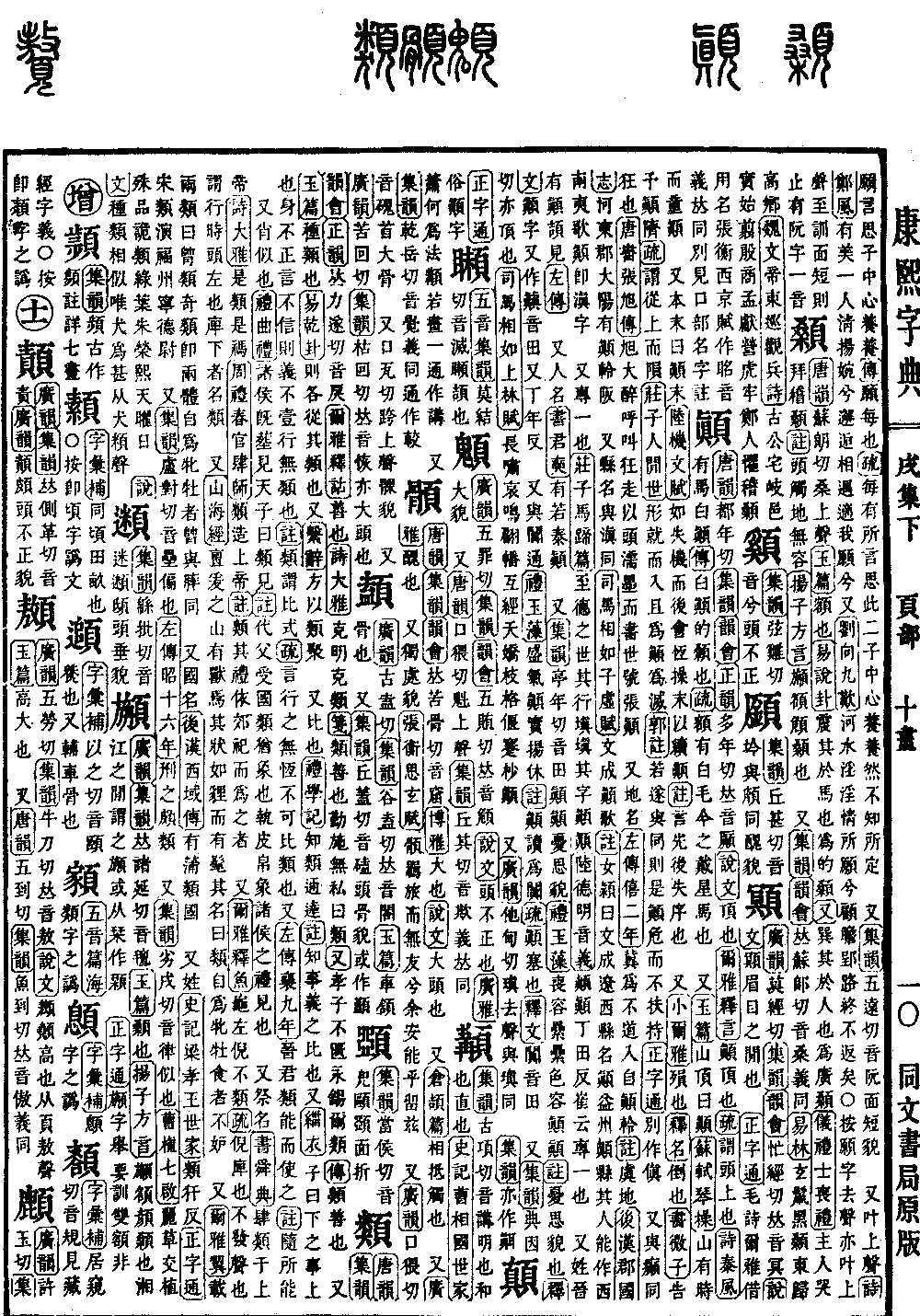
Xu Collection, Lower Volume
Radical: Leaf (yè)
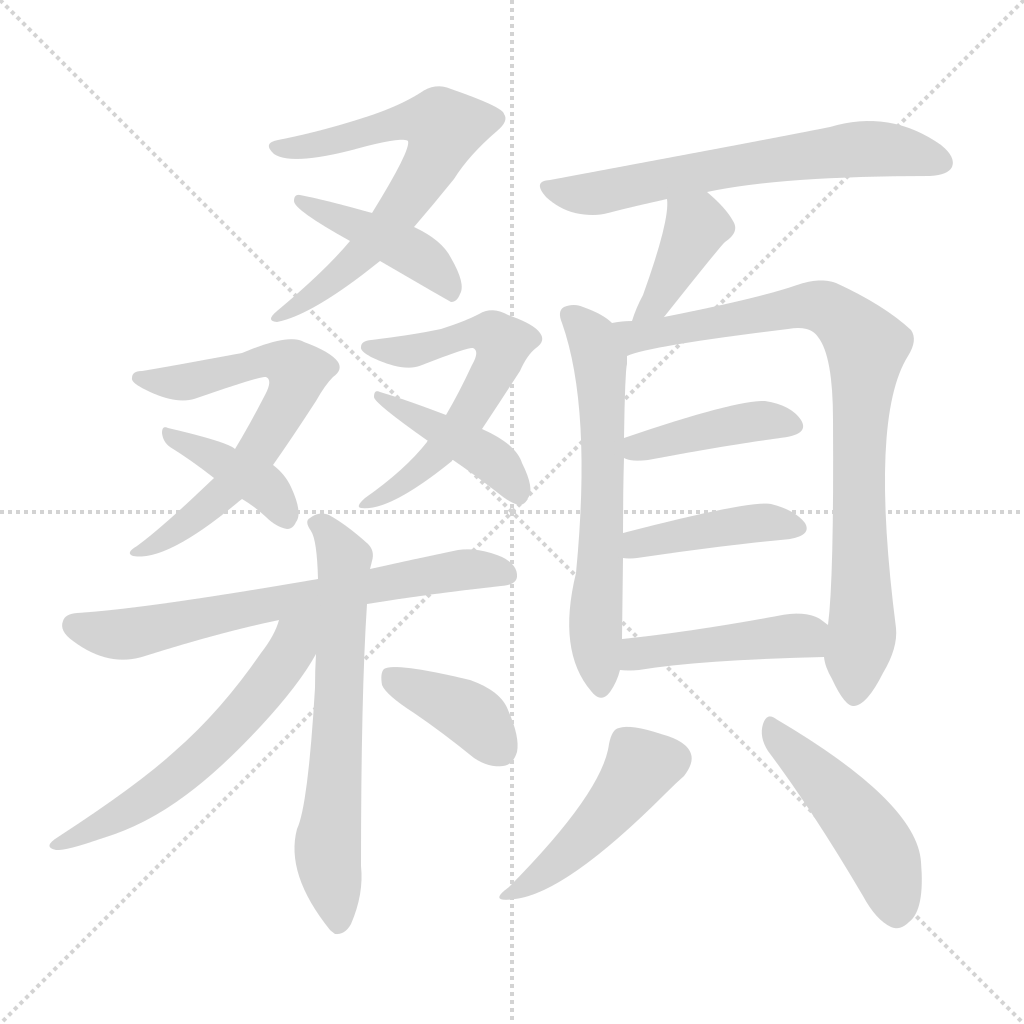
Sang, 19 strokes
Page 1408, Entry 01
Pronounced sang (rising tone).
Jade Chapters (Yupian): Forehead.
Book of Changes (Yijing), Explanation of the Trigrams: The Zhen trigram represents a white forehead in the context of a horse.
Also: The Xun trigram represents a broad forehead in the context of a person.
Book of Etiquette and Ceremonial (Yili), Master of Funeral Rites: The host cries and performs a kowtow, touching the forehead to the ground.
Commentary: Using the head to touch the ground without revealing the face.
Yang Xiong's Dialects (Fangyan): The forehead and face are referred to as sang.
Also in Rhyme Compilation (Jiyun) and Rhyme Collection (Yunhui): Pronounced sang. The meaning is the same.
Forest of Changes (Yilin): Mane black and forehead, returning east to the high lands.
Wei Emperor Wen, Poem on Observing Troops During an Eastern Inspection: Gu Gong Danfu settled at Mount Qi, truly beginning the destruction of the Yin Shang. Meng Xianzi managed Hulao, and the people of the Zheng state kowtowed in fear.
Textual Research: Yang Xiong's Dialects (Fangyan) states that the forehead is called sang. Note: Corrected the original character to match the text.