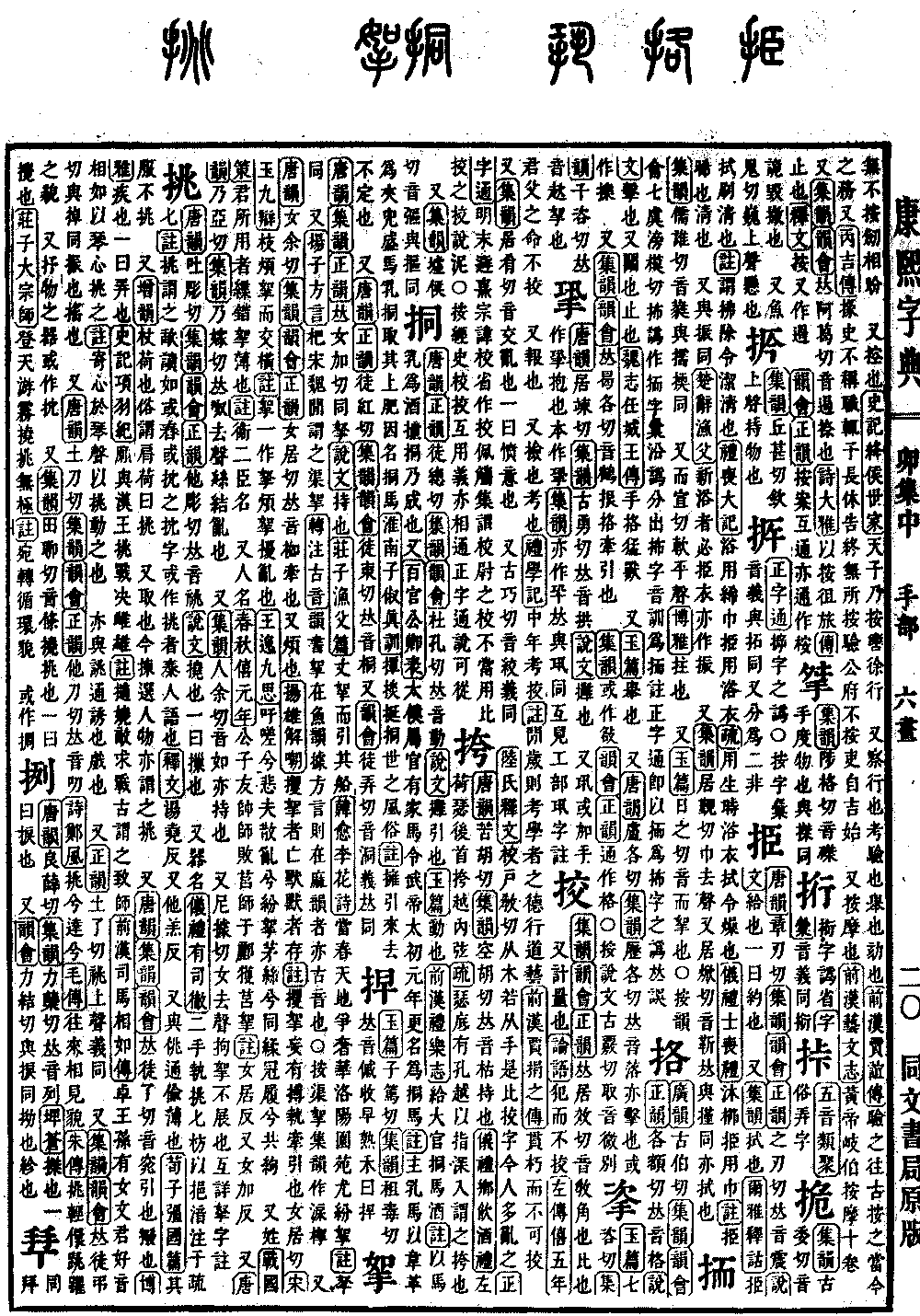
Mao Collection, Middle Volume
Radical: Hand (shǒu)
Page 430, Entry 16
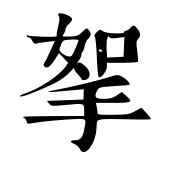
Tang Yun (Tang Dynasty Rhyme Dictionary), Jiyun (Compilation of Rhymes), and Zhengyun (Correct Rhymes) state the pronunciation is na. It is the same as the character for grasping (na). The Shuowen Jiezi (Explaining Graphs and Analyzing Characters) explains it as the meaning of holding or grasping. In the Fisherman chapter of the Zhuangzi (Master Zhuang), it is written: The elder grasped the pole and pulled his boat. In Han Yu’s Poem on Plum Blossoms, it is written: In spring, heaven and earth compete in luxury, and the gardens of Luoyang are especially tangled. The commentary explains that the character for grasping (na) is the same here. Also, the Fangyan (Regional Dialects) by Yangzi records that the agricultural tool known as a rake is called qu-na in the regions of Song and Wei. The Zhuanzhu Guyin (Annotations on Ancient Sounds) mentions that in rhyme books, this character is categorized under the yu rhyme, but according to regional dialects, it also exists in the ma rhyme, which is a reflection of ancient pronunciation. Note: The term qu-na is written as ju-na in the Jiyun.
Furthermore, the Tang Yun states the pronunciation is ru. The Jiyun, Yunhui (Combined Rhymes), and Zhengyun state the pronunciation is ju, sounding the same as the character for rags (ru). It carries the meaning of pulling or dragging. It also carries the meaning of causing disturbance. In Yang Xiong’s Deconstructing Ridicule, it is written: Those who grab and drag will perish, while the silent will survive. The commentary explains: grab and drag refers to reckless clutching, holding, or pulling. The pronunciation is ju. In Song Yu’s Nine Arguments, it is written: Branches tangle and cross in confusion. The commentary notes that this character is also written as the character for grasping (na). Fan-na means to disturb or confuse. In Wang Yi’s Nine Thoughts, it is written: Oh, how sad! Scattered and in disarray. Reed fibers are the same, and caps and shoes share the same ornaments.
It is also a surname. The Stratagems of the Warring States (Zhanguo Ce) records: The men your lordship employs are Xie, Cuo, Na, and Bo. The commentary notes these are the names of two ministers of the State of Wei. It is also used in personal names. The Spring and Autumn Annals (Chunqiu) in the first year of Duke Xi records: Duke You led the army to defeat the Ju army at Li, and captured Ju Na. The commentary notes the pronunciation is ju. It is also pronounced na.
Additionally, the Tang Yun states the pronunciation is na. The Jiyun states the pronunciation is na, with the same intonation as the departing tone of the character for clamor (na). It means silk threads that are tangled and chaotic.
Furthermore, the Jiyun states the pronunciation is ru, sounding the same as the character for like (ru). It also means to hold or grasp. It is also pronounced ju, with the same intonation as the departing tone of the character for female (nu). It means to be restrained or unable to stretch. Refer to the annotations for the character for grasping (na).