You Collection, Upper Volume
Radical: Speech (yán)
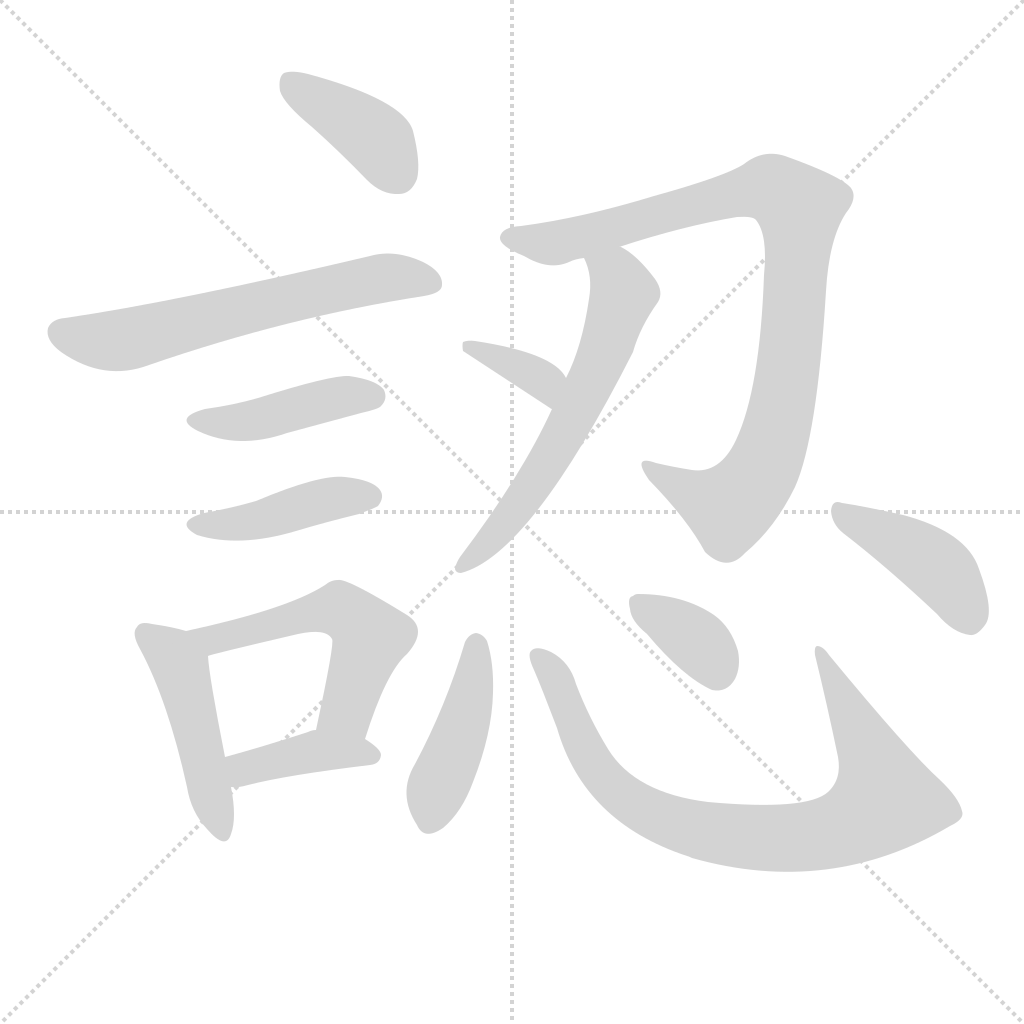
認
Kangxi strokes: 14
Page 1161, Entry 18
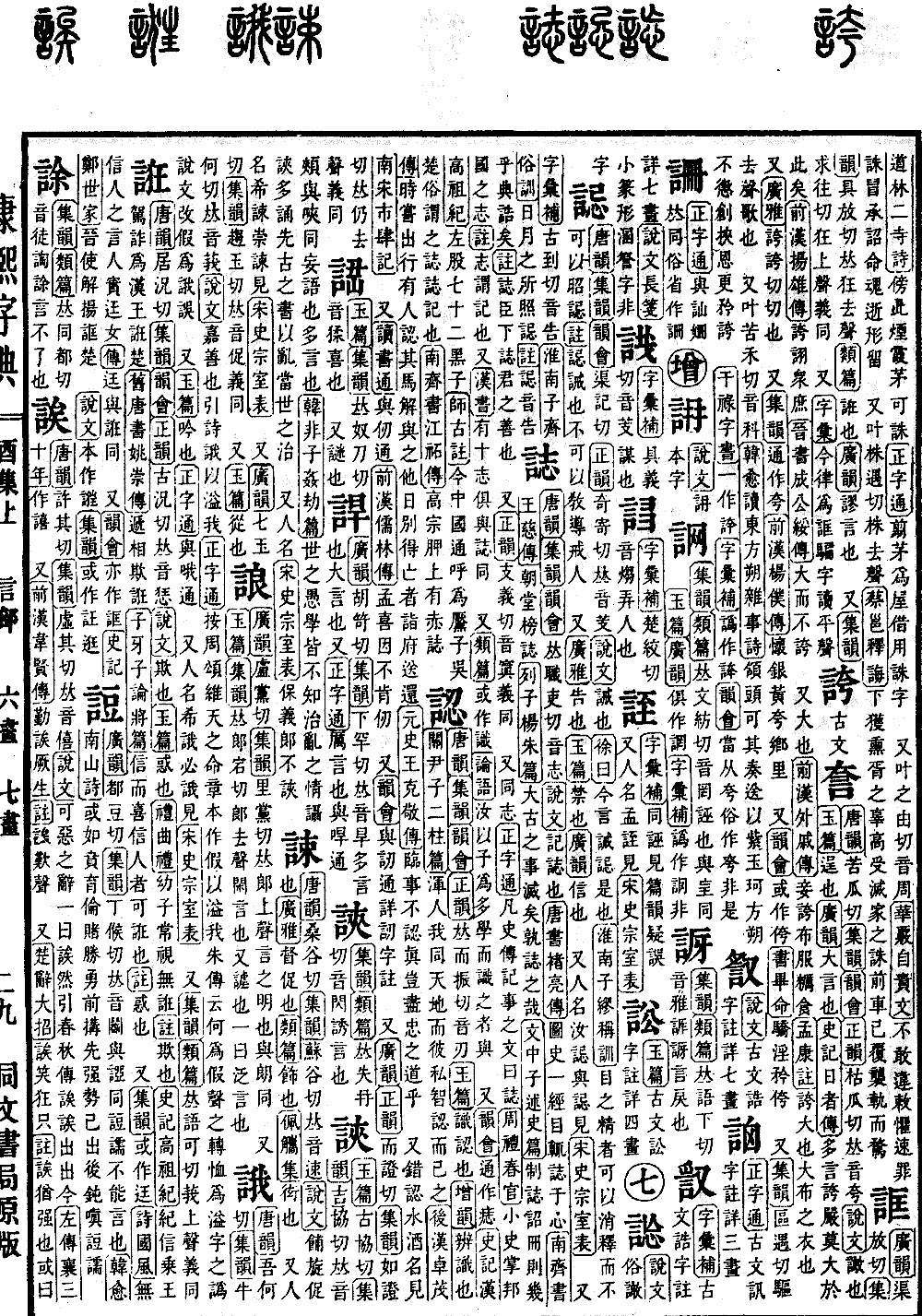
Pronounced rèn. In the Jade Chapter (Yùpiān), it means to recognize. In the Supplement to the Rhymes (Zēngyùn), it means to distinguish and identify. As stated in the Book of Master Guan Yin (Guānyǐnzi), Two Pillars Chapter, one who is enlightened treats the self and others as one with heaven and earth, while those with petty wisdom merely recognize their own selves. In the History of the Later Han (Hòuhànshū), Biography of Zhuo Mao, it is recorded that while traveling, someone claimed his horse as their own; he unfastened it and gave it to them. Later, when the horse was recovered, the person who had lost it came to the government office to return it. In the History of the Yuan (Yuánshǐ), Biography of Wang Kejing, it asks, if one does not take matters seriously, can that be called the path of loyalty? Also, it is the name of a type of water-wine, as seen in the Records of the Markets of the Southern Song (Nánsòng shìsì jì). Also, in the Comprehensive Study of Books (Dúshū tōng), it is used interchangeably with the character for measure (rèn). In the History of the Former Han (Qiánhànshū), Biographies of Confucian Scholars, Meng Xi refused to acknowledge it. Also, in the Collection of Rhymes (Yùnhuì), it is used interchangeably with the character for stuttering (rèn); see the entry for that character for details. Also, pronounced rèn (departing tone). The meaning is the same.