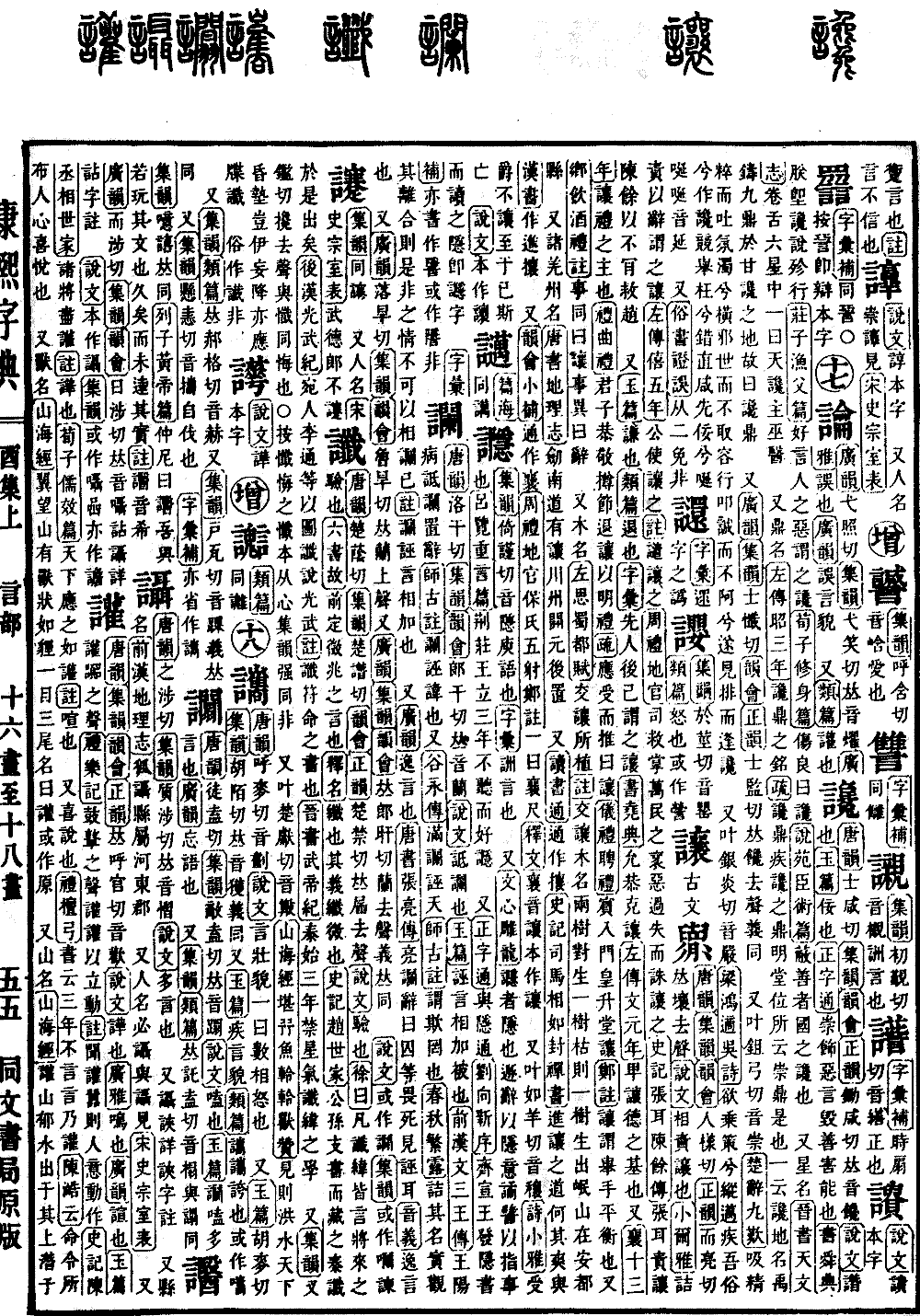
You Collection, Upper Volume
Radical: Speech (yán)
Kangxi Strokes: 24
Page 1187, Entry 01
Archaic script. Tang Rhyme (Tangyun), Collection Rhyme (Jiyun), and Rhyme Compilation (Yunhui) cite it as pronounced rang (falling tone); Correct Rhyme (Zhengyun) cites it as pronounced rang (falling tone).
In the Explanation of Script (Shuowen), it means to reproach one another. In the Small Erh-ya (Xiao Erya), to reproach with words is called rang. In the Zuo Tradition (Zuozhuan), Fifth Year of Lord Xi: The Duke sent to reproach him. Commentary: To reprimand him. In the Rites of Zhou (Zhouli), Office of the Earth: The Official of Salvation manages the various evil and mistaken acts of the populace and rebukes them. In the Records of the Grand Historian (Shiji), Biography of Zhang Er and Chen Yu: Zhang Er reproached Yu for refusing to save Zhao.
Also, in the Jade Compilation (Yupian), it means modesty. In the Categorized Compilation (Leipian), it means to withdraw. In the Collection of Characters (Zihui), putting others before oneself is called rang. In the Book of Documents (Shangshu), Canon of Yao: Sincerely respectful and capable of modesty. In the Zuo Tradition (Zuozhuan), First Year of Duke Wen: Modesty is the foundation of virtue. Also, Thirteenth Year of Lord Xiang: Modesty is the master of ritual. In the Book of Rites (Liji), Summary of the Rules of Propriety: The gentleman is respectful, restrained, and modest in order to clarify ritual. Commentary: To decline something one ought to receive is called rang. In the Book of Etiquette and Ceremonial (Yili), Guest Rites: The guest enters the gate and ascends the hall with gestures of modesty. Zheng Commentary: Modesty here refers to raising the hands to the level of the chest.
Also, in the Commentary on the Ritual of Drinking in the Village (Xiangyinjiuli): If the matter is the same, it is called rang; if the matter is different, it is called ci (declining).
Also, the name of a tree. In Zuo Si's Rhapsody on the Capital of Shu (Shudu Fu): Where the jiaorang (intertwined modesty) trees are planted. Commentary: Jiaorang is the name of a tree. Two trees grow facing each other; if one tree withers, the other will grow. It originates in the Min Mountains, in Andu County.
Also, the name of a prefecture of the various Qiang tribes. In the History of the Tang Dynasty (Tangshu), Treatise on Geography: In the Jiannan Circuit there was Rangchuan Prefecture, established after the Kaiyuan era.
Also, in the General Principles of Reading (Dushutong), it is used interchangeably with rang (to seize). In the Records of the Grand Historian (Shiji), Treatise on the Feng and Shan Sacrifices: How contrary are the ways of progress and modesty! In the Book of Han (Hanshu), it is written as progress and seizing.
Also, in the Minor Supplements to the Rhyme Compilation (Yunhui Xiaobu), it is used interchangeably with xiang (to assist). In the Rites of Zhou (Zhouli), Office of the Earth, The Protector, The Five Archery Styles, Zheng Commentary: One is called xiangchi (a measurement term). The Explanation of Text (Shiwen) notes: Xiang is pronounced rang; the original text was written as rang.
Also, rhymes with the sound of rang (rising tone). In the Book of Odes (Shijing), Lesser Odes: Receiving the goblet without modesty, until the end brings ruin. In the Explanation of Script (Shuowen), it was originally written as a variant form.