Shen Collection, Upper Volume
Radical: Grass (cǎo)
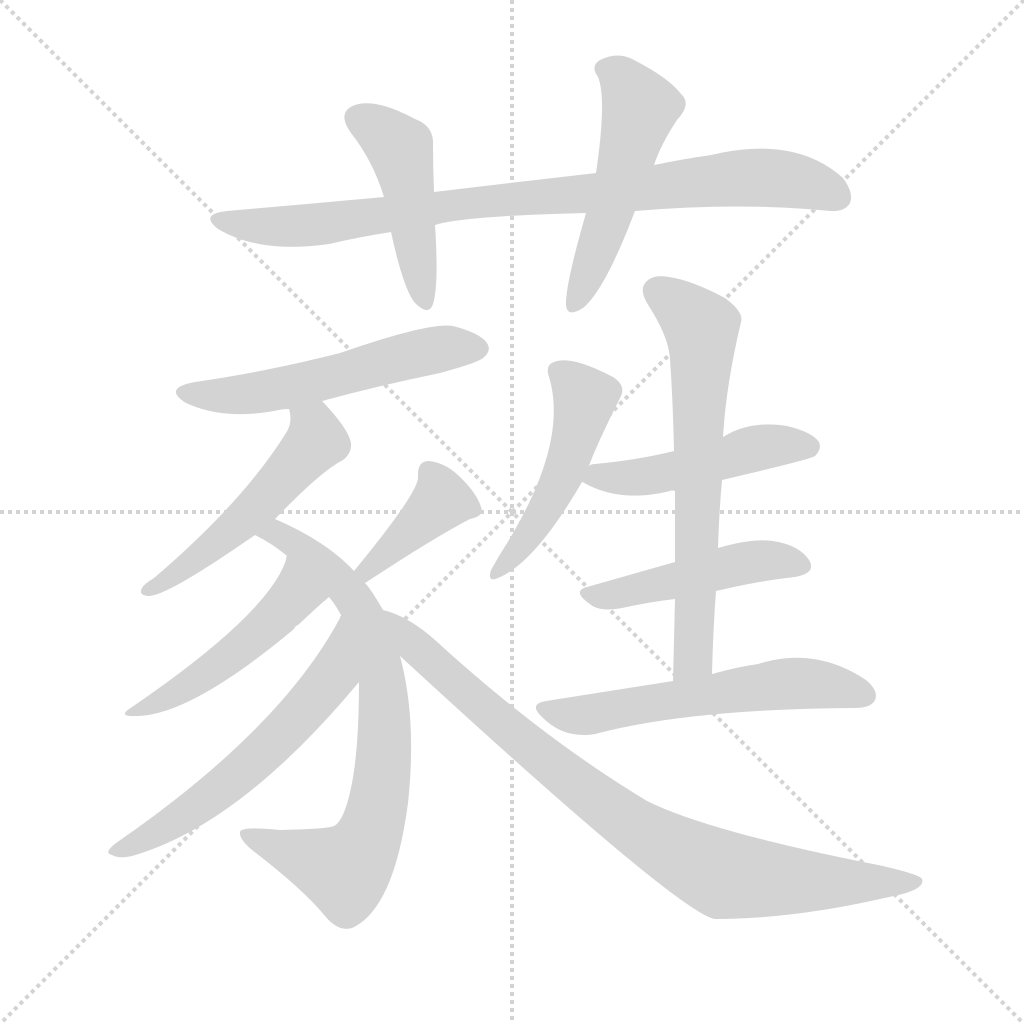
Rui
Kangxi Strokes: 18
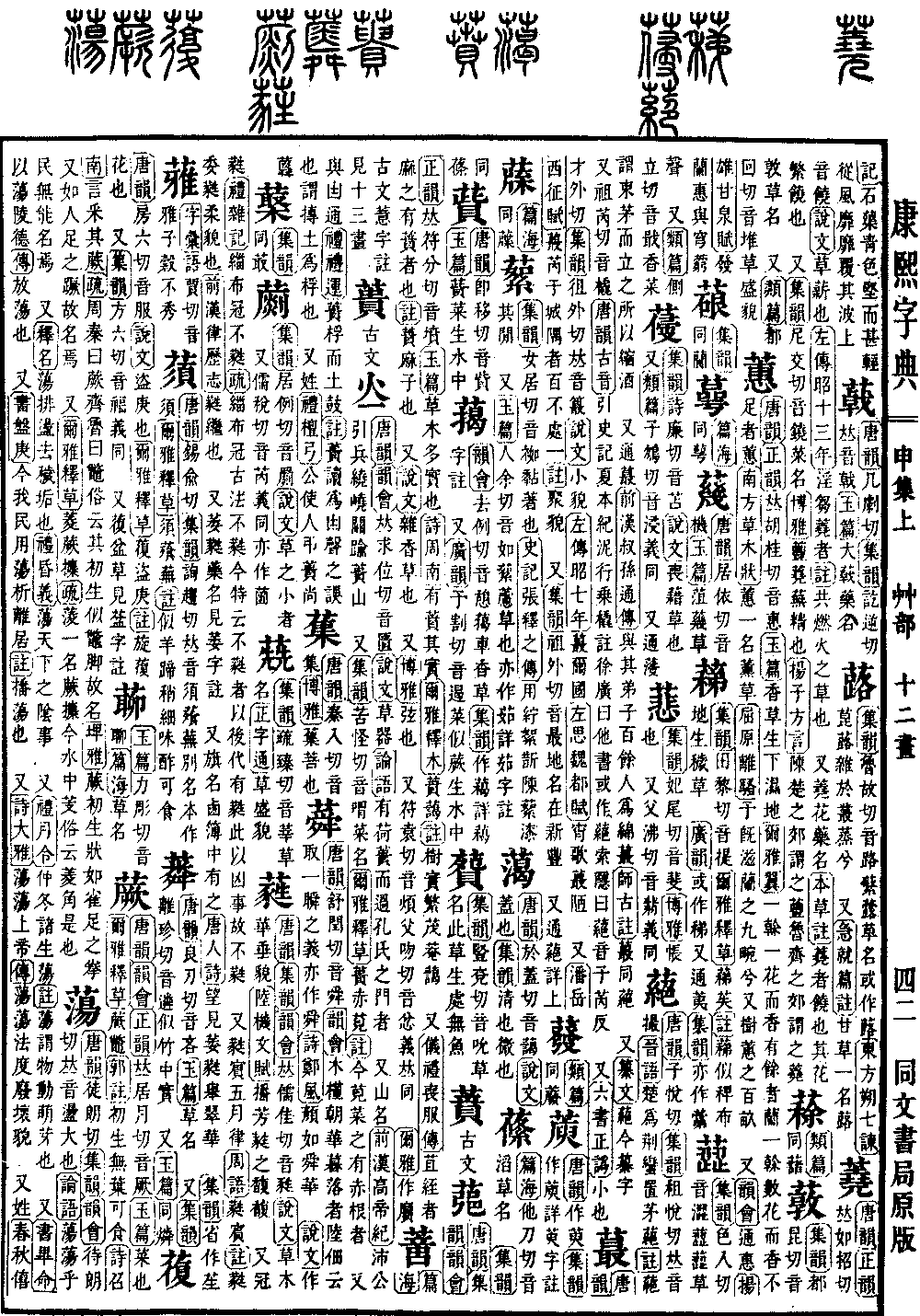
Page 1058, Entry 35
Pronounced rui. According to the Analytical Dictionary of Characters (Shuowen), it describes the appearance of flowers or plants hanging downward. Lu Ji, in the Literary Exposition (Wenfu), describes it as the spreading fragrance of dense flowers. It also refers to the decorative hanging ornaments of a cap or sash. In the Book of Rites (Liji), Miscellaneous Records (Zaji), it states that a black cloth cap lacks hanging ornaments. The Commentary (Shu) explains that according to ancient regulations, black cloth caps did not have hanging ornaments. The specific mention of their absence here is because later generations adopted caps with hanging ornaments, and in this instance, such ornaments were omitted due to the mourning context. It also refers to Ruibin, the musical pitch of the fifth month. In the Discourses of the States (Guoyu), it is mentioned as Ruibin. The Commentary notes that rui implies weirui, which signifies a soft and drooping appearance. The History of the Former Han (Qianhan Shu), Treatise on Music and Calendars, states that rui signifies continuation. It also refers to weirui, a type of medicinal plant. See the entry for the character wei. It also refers to a type of banner used in ceremonial processions. Tang dynasty poetry mentions seeing the ceremonial procession banners raised with kingfisher feather decorations. The Collected Rhymes (Jiyun) notes that this is the simplified form of sheng. Textual research: The Tang poem entry refers to seeing the weirui banner raised with kingfisher brilliance. Following the original text, weirui has been corrected to weirui.