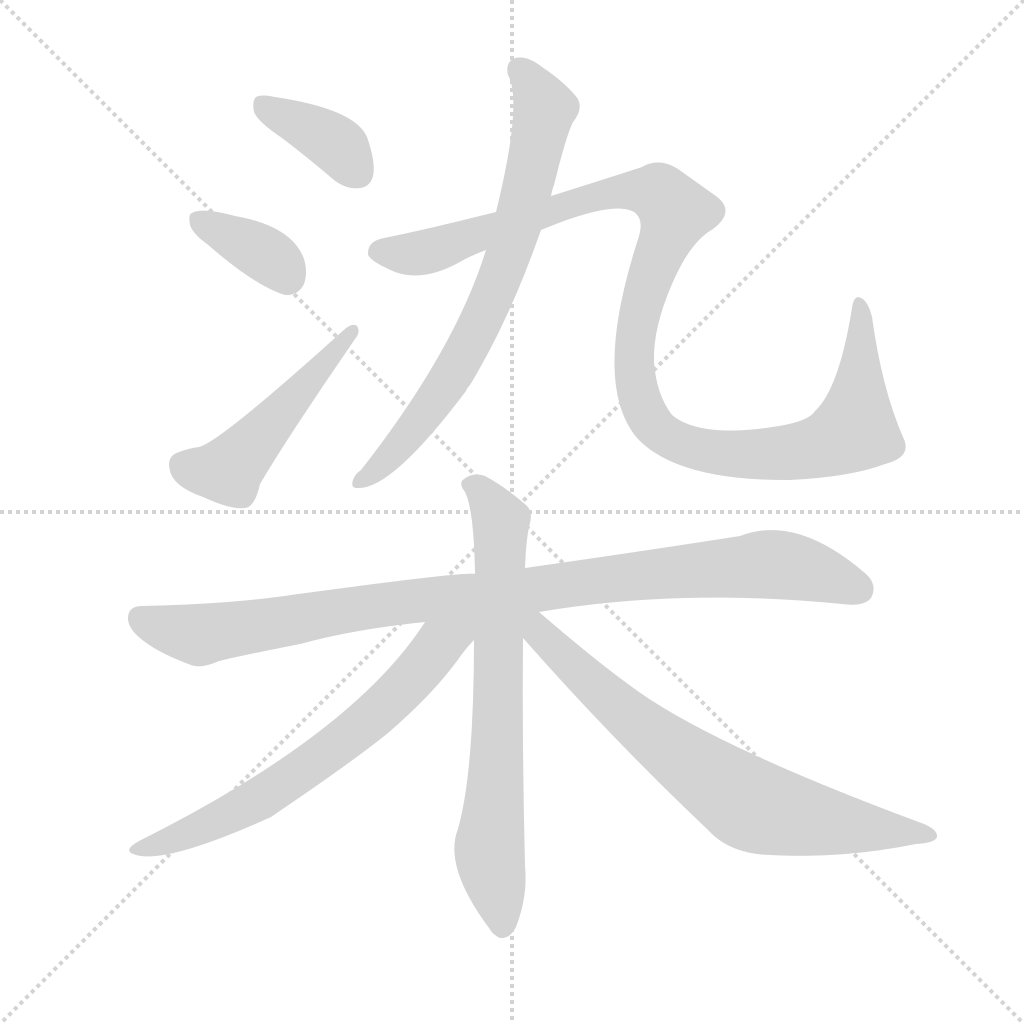
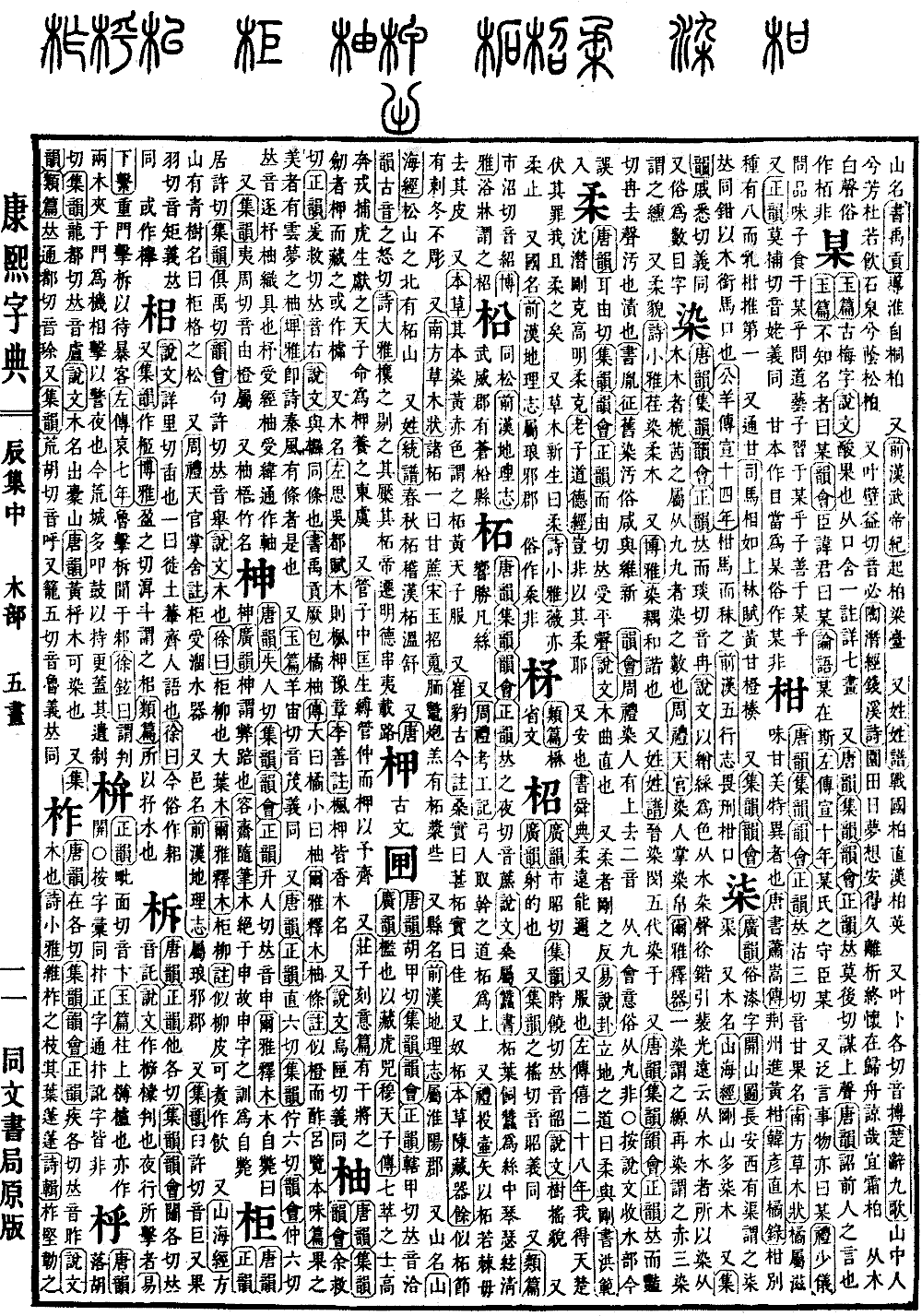
Chen Collection, Middle Volume. Radical: Tree (mù). Kangxi strokes: 9. Page 519, Entry 04.
Tang Rhymes (Tangyun), Collection Rhymes (Jiyun), Rhyme Compilation (Yunhui), and Correct Rhymes (Zhengyun) state the pronunciation is ran (rising tone).
Explaining the characters (Shuowen Jiezi) defines it as: to apply color to silk textiles. The character construction uses Water as the radical and Mixed as the phonetic element. Xu Kai cites the opinion of Pei Guangyuan: Water is used because it is the medium for dyeing; Tree is used because it refers to plants like gardenia and madder used as dyes; Nine is used because it represents the number of times the material is dyed.
Book of Rites (Zhouli), Offices of Heaven (Tianguan) records: The dyer is responsible for dyeing silk and gauze.
Literary Expositor (Erya), Explaining Vessels (Shiqi) records: Dyeing once is called light red (quan), dyeing twice is called light scarlet (cheng), and dyeing three times is called light crimson (xun). It also implies a soft appearance.
Book of Odes (Shijing), Lesser Odes (Xiaoya) records: Branches of soft and flexible trees.
Broad Glossary (Boya) explains: Dye-mate means harmonious and concordant. It is also a surname. Surname Records (Xingpu) records: In the Jin Dynasty, there was Ran Min, and during the Five Dynasties period, there was Ran Yu.
Also, Tang Rhymes (Tangyun), Collection Rhymes (Jiyun), Rhyme Compilation (Yunhui), and Correct Rhymes (Zhengyun) state the pronunciation is ran (falling tone). It means to tarnish or to infect.
Book of Documents (Shangshu), Expedition of Yin (Yinzheng) records: The impure customs of the past must all be reformed.
Rhyme Compilation (Yunhui) records: The character for dyer in the Book of Rites (Zhouli) has both level and falling tone pronunciations. The character shape conveys meaning through the component Nine. The vulgar form written with the component Marrow is incorrect.
Note: Explaining the characters (Shuowen Jiezi) places this character under the Water radical, but it is currently incorrectly placed under the Tree radical.
Critical investigation: Regarding the original text stating dyeing twice is called scarlet, I have carefully corrected it to light scarlet (cheng) in accordance with the original text of the Literary Expositor (Erya).