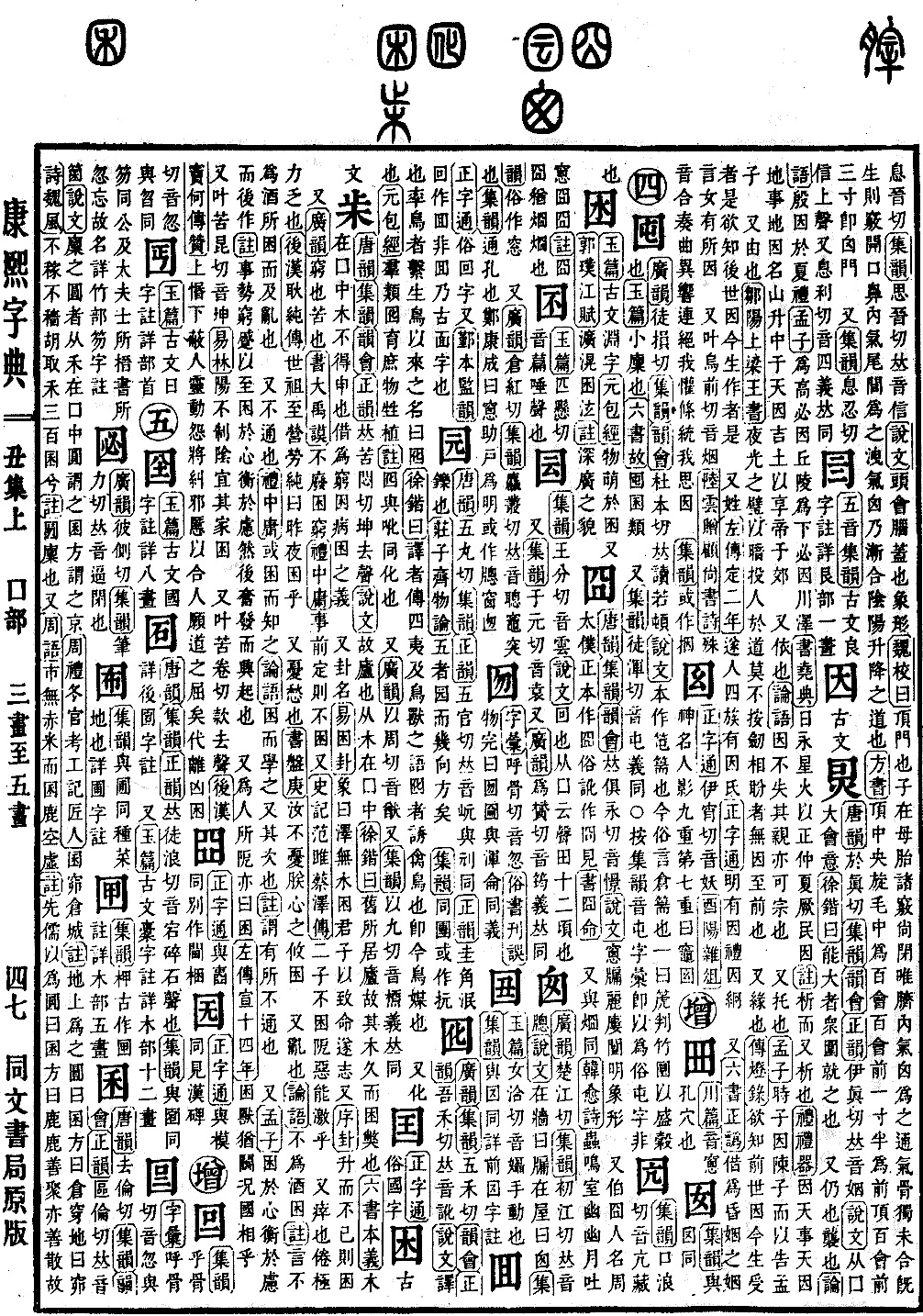
Chou Collection, Upper Volume
Radical: Enclosure (wéi)
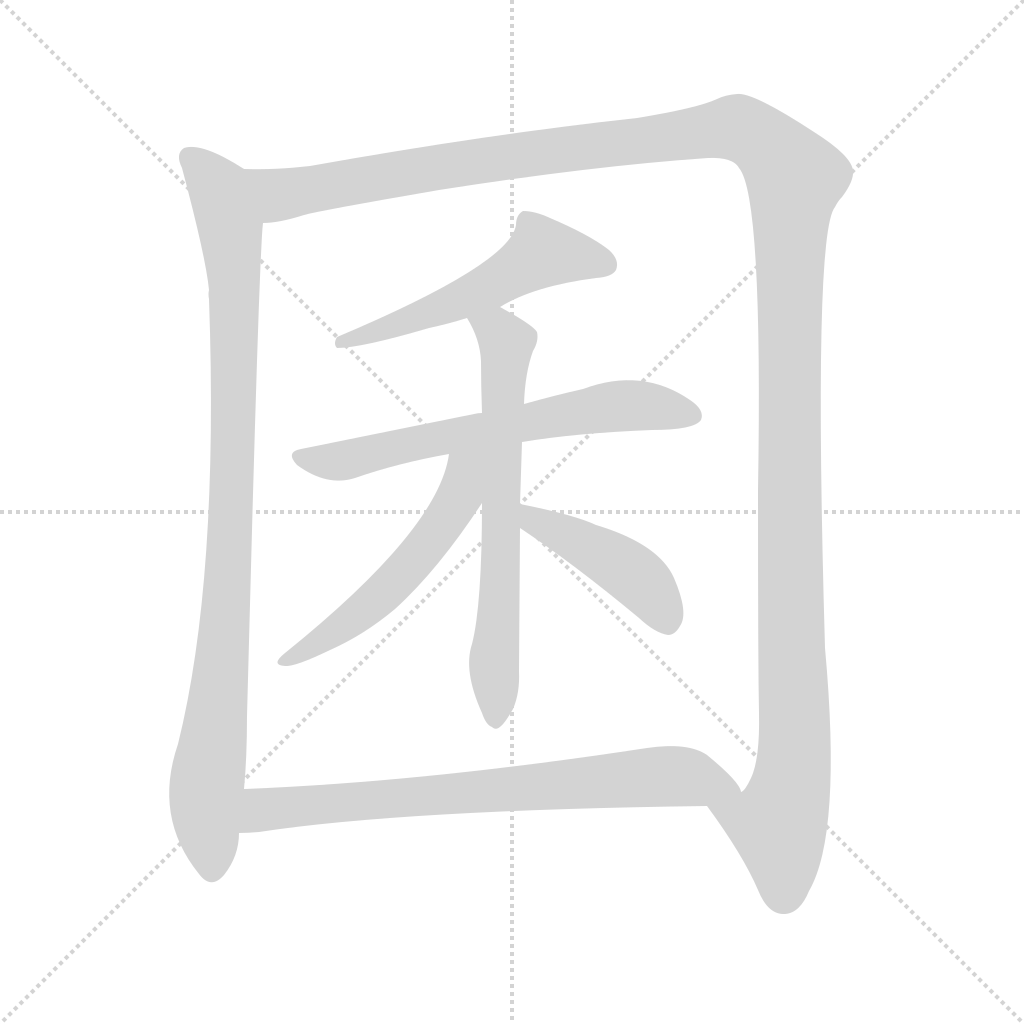
Character: Qun
Kangxi Strokes: 8
Page 217, Entry 32
Pronounced qun.
According to the Explaining and Analyzing Characters (Shuowen Jiezi), it refers to a circular granary. The character is composed of the radical for grain within the radical for enclosure. A circular structure is called a qun, while a square structure is called a jing.
In the Rites of Zhou (Zhouli), section on Winter Officials, Artisans' Record, it mentions qun, jiao, cang, and cheng. The commentary states that those built on the ground are called qun if circular and cang if square, while those dug as subterranean pits are called jiao.
In the Book of Odes (Shijing), Wei Airs, it asks: If you do not plant and do not harvest, why do you take away three hundred granaries of grain? The commentary defines it as a circular granary.
In the Discourses of the States (Guoyu), it states that there is no unhulled rice in the market, while both the qun and lu are empty. The commentary notes that earlier scholars held that circular granaries were called qun and square ones were called lu. Deer are adept at gathering and scattering, which is why the qun is also referred to as a lu.
It also appears in the term lunqun, describing the appearance of something curved or coiled. In the Biography of Zou Yang from the History of the Former Han (Qianhan Shu), it describes coiled tree roots, curved and unique, which can become implements for an emperor, provided that those close to him recommend them beforehand. In Zuo Si's Rhapsody on the Capital of Wu (Wudu Fu), it describes abundant flowers covering the branches and leaves, coiling like a horned dragon. The commentary explains this as the trees appearing coiled like a dragon.
It is also the name of a star. According to the Star Classic of Master Shi (Shishi Xingjing), the Heavenly Granary (Tianqun) consists of twelve stars, governing things related to storehouses.
Pronounced jiong. The meaning is the same.