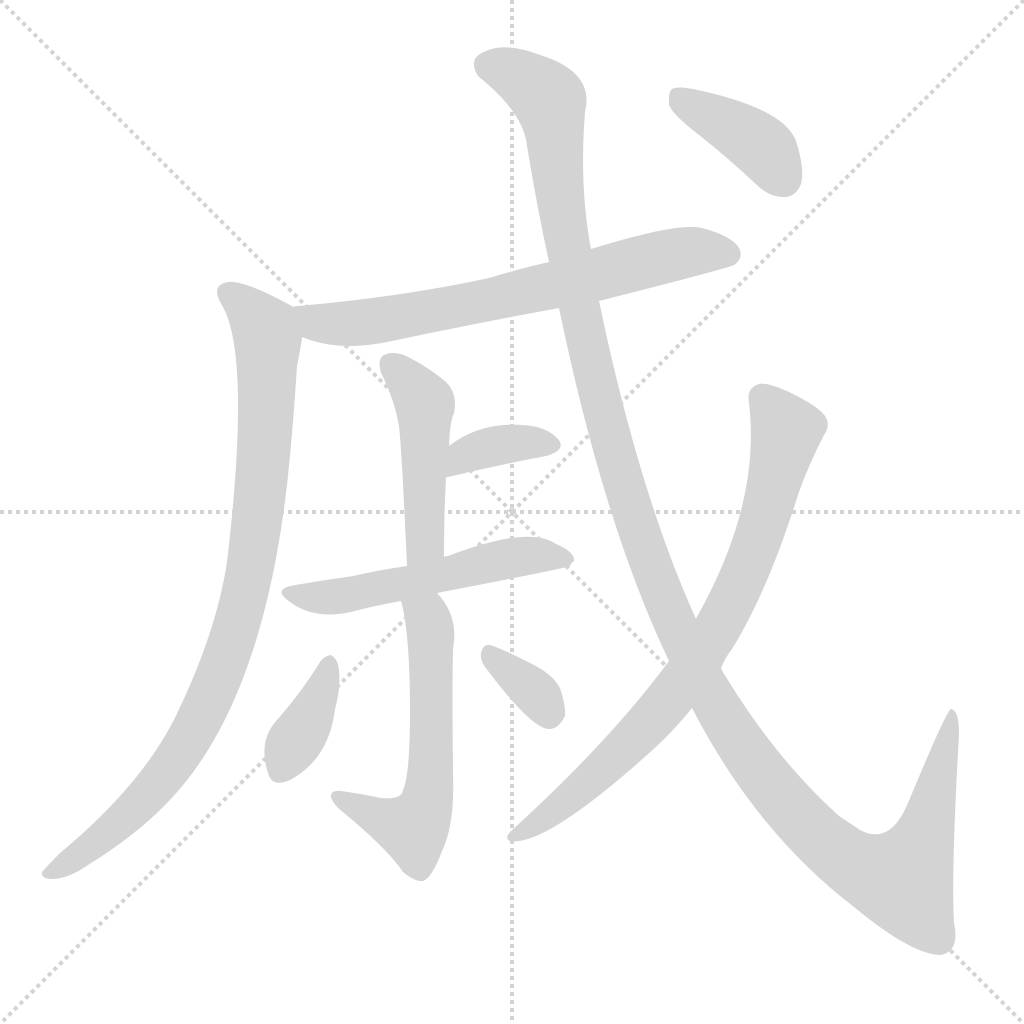
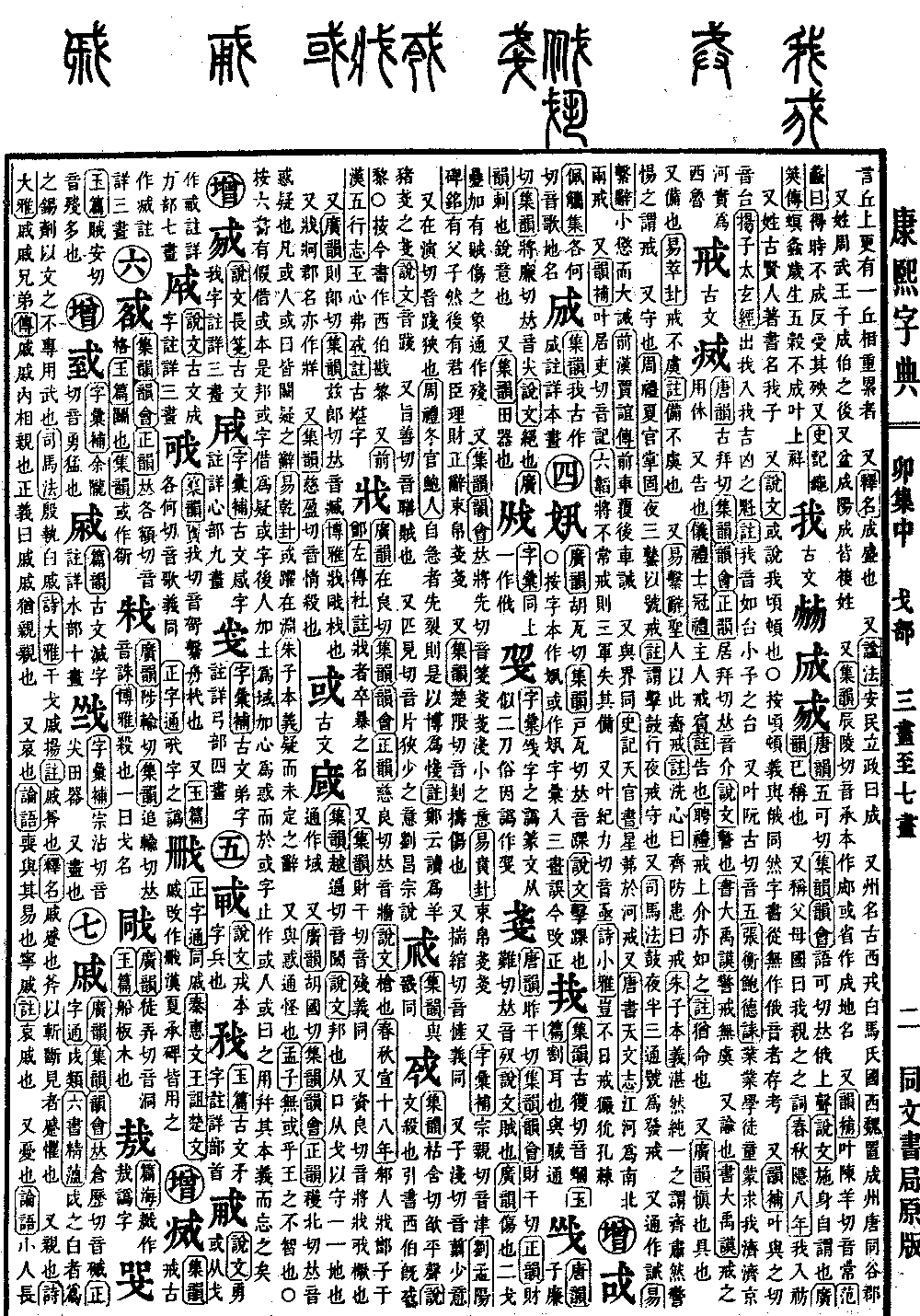
Mao Collection, Middle Volume
Radical: Halberd (gē)
Kangxi Strokes: 11
Page 412, Entry 38
In Guangyun (Dictionary of Broad Rhymes), Jiyun (Collection of Rhymes), and Yunhui (Collection of Rhymes), pronounced qi (falling tone).
Zhengzitong (True Character Guide): A type of battle-axe.
Liushu Jingyun (Essence of the Six Writings): A white battle-axe, decorated with tin, signifies that it is not used solely for martial purposes.
Sima Fa (Methods of Sima): The Yin dynasty held white battle-axes.
Book of Odes (Shijing), Deya (Greater Odes of the Kingdom): Shield, spear, battle-axe, and fan. Commentary: A battle-axe is a qi.
Shiming (Explanation of Names): Qi is also fear. The axe is used for cutting and severing; those who see it are struck with fear and dread.
Also means intimate. Book of Odes (Shijing), Deya (Greater Odes of the Kingdom): Intimate are the brothers. Commentary: Intimate refers to mutual closeness. The Correct Meaning states: Intimate is the same as to cherish.
Also means sorrow. Analects (Lunyu): In mourning, it is better to have sorrow than to be overly attentive. Commentary: Sorrowful grief.
Also means worry. Analects (Lunyu): The petty person is always full of worry. Commentary: The appearance of worry.
Also means to irritate. Book of Documents (Shujing), Jinteng (Golden Cabinet): Do not yet irritate our former kings. Cai Commentary: Qi means the feeling of worry or irritation.
Also means indignation. Book of Rites (Liji), Tanjong (The Questions of Zengzi): Anger leads to indignation. Commentary: Indignation is the appearance of angry resentment.
Also, a person with a hideous ailment is called qishi. Book of Odes (Shijing), Beifeng (Odes of Bei): Obtaining this qishi. Commentary: A qishi is someone who fawns and humbles themselves, unable to hold their head high.
Also, Xiao Erya (Small Erya): Qi means near.
Also, a place name. Spring and Autumn Annals (Chunqiu), Duke Wen, First Year: Gongsun Ao met the Marquis of Jin at Qi. Commentary: Qi is a city in the state of Wei.
Also a surname. During the Han dynasty, there was the Marquis of Linyuan, Qi Si.
Also, in Jiyun (Collection of Rhymes) and Yunhui (Collection of Rhymes), pronounced cu (entering tone). The same as cu (hasty). Zhou Rites (Zhouli), Winter Officials, Record of Trades: If it is not subtle, there is no way to achieve haste.
Also, in Jiyun (Collection of Rhymes) and Yunhui (Collection of Rhymes), pronounced zu. The name of a district located in the East Sea.
Also, according to Yunbu (Supplement to Rhymes), rhymes with cu (entering tone). Book of Odes (Shijing), Xiaoya (Minor Odes of the Kingdom): The year is drawing to a close, gathering mugwort and harvesting beans. My heart is full of sorrow, I have brought this misery upon myself.
Textual research: In Shiming (Explanation of Names), Qi means to contract. The axe is used for cutting and severing; those who see it are struck with fear and dread. Following the original text of Shiming regarding military weapons, both instances of the character meaning to contract have been corrected to read as the character for sorrow.