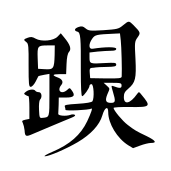
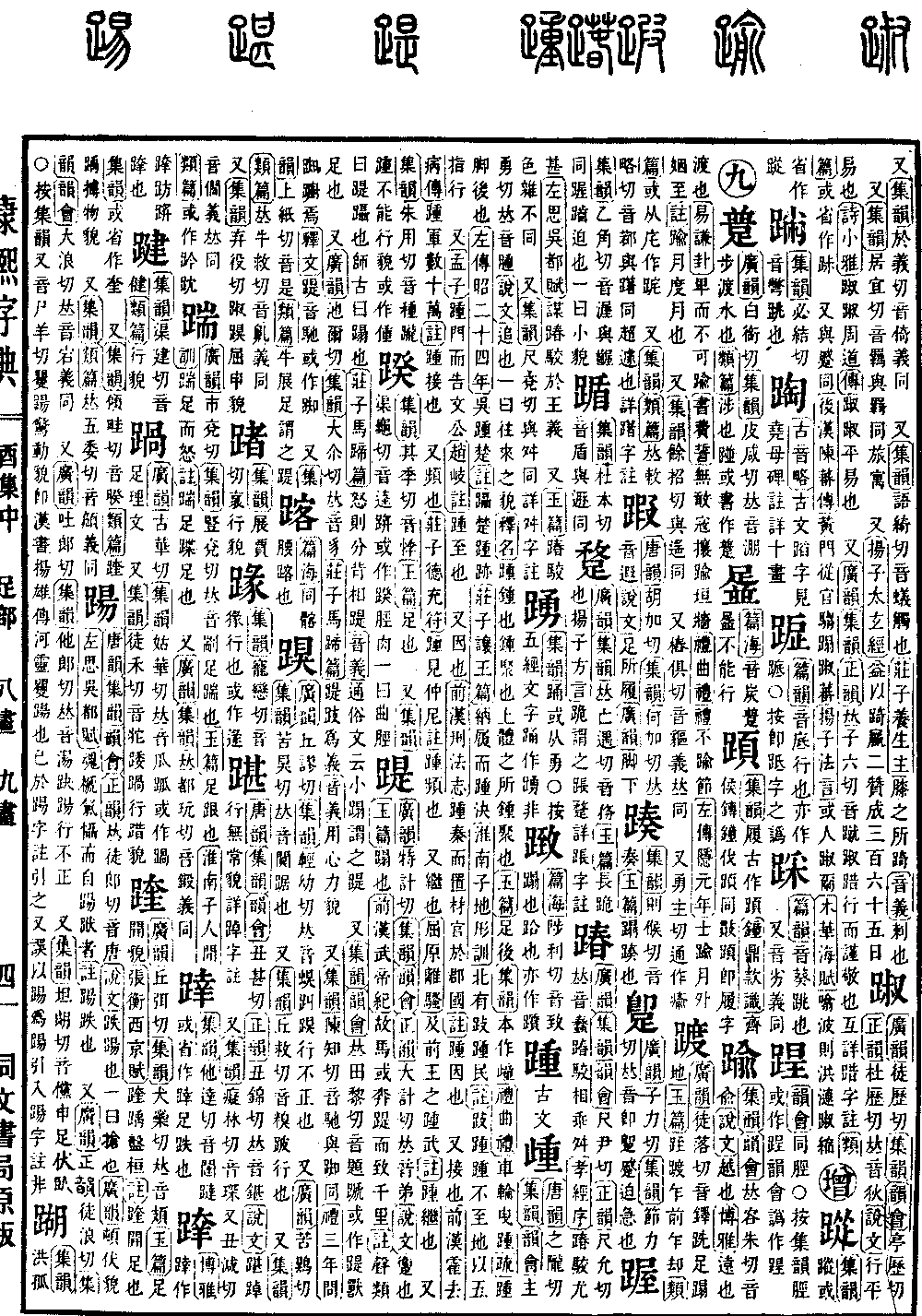
Zi Collection, Page Position: Upper, Radical: Person (rén), Stroke Count: 7
Page 123, Entry 01
Pronounced qiu (falling tone) — Guangyun (Guangyun), Pronounced qing (falling tone) — Jiyun (Jiyun). Pronunciation is the same as "螑". Meaning: to walk unevenly.
Zi Collection, Page Position: Upper, Radical: Person (rén), Stroke Count: 7
Page 123, Entry 02
Pronounced ku (falling tone) — Guangyun (Guangyun), Pronounced ku (falling tone) — Jiyun (Jiyun). Pronunciation is the same as "闃". Meaning: to sit squatting.
Zi Collection, Page Position: Upper, Radical: Person (rén), Stroke Count: 7
Page 123, Entry 03
Pronounced qiu (falling tone) — Jiyun (Jiyun). Pronunciation is the same as "糗". Meaning: to walk with a limp.
Zi Collection, Page Position: Upper, Radical: Person (rén), Stroke Count: 7
Page 123, Entry 04
Pronounced niu (falling tone) — Jiyun (Jiyun), Lepian (Leipian). Meaning is the same as the previous entry.
Zi Collection, Page Position: Upper, Radical: Person (rén), Stroke Count: 7
Page 123, Entry 05
Pronounced qi (entering tone) — Jiyun (Jiyun). "踧䠐" refers to the appearance of bending and stretching. The character "螑" was originally written with "狊" as a component.