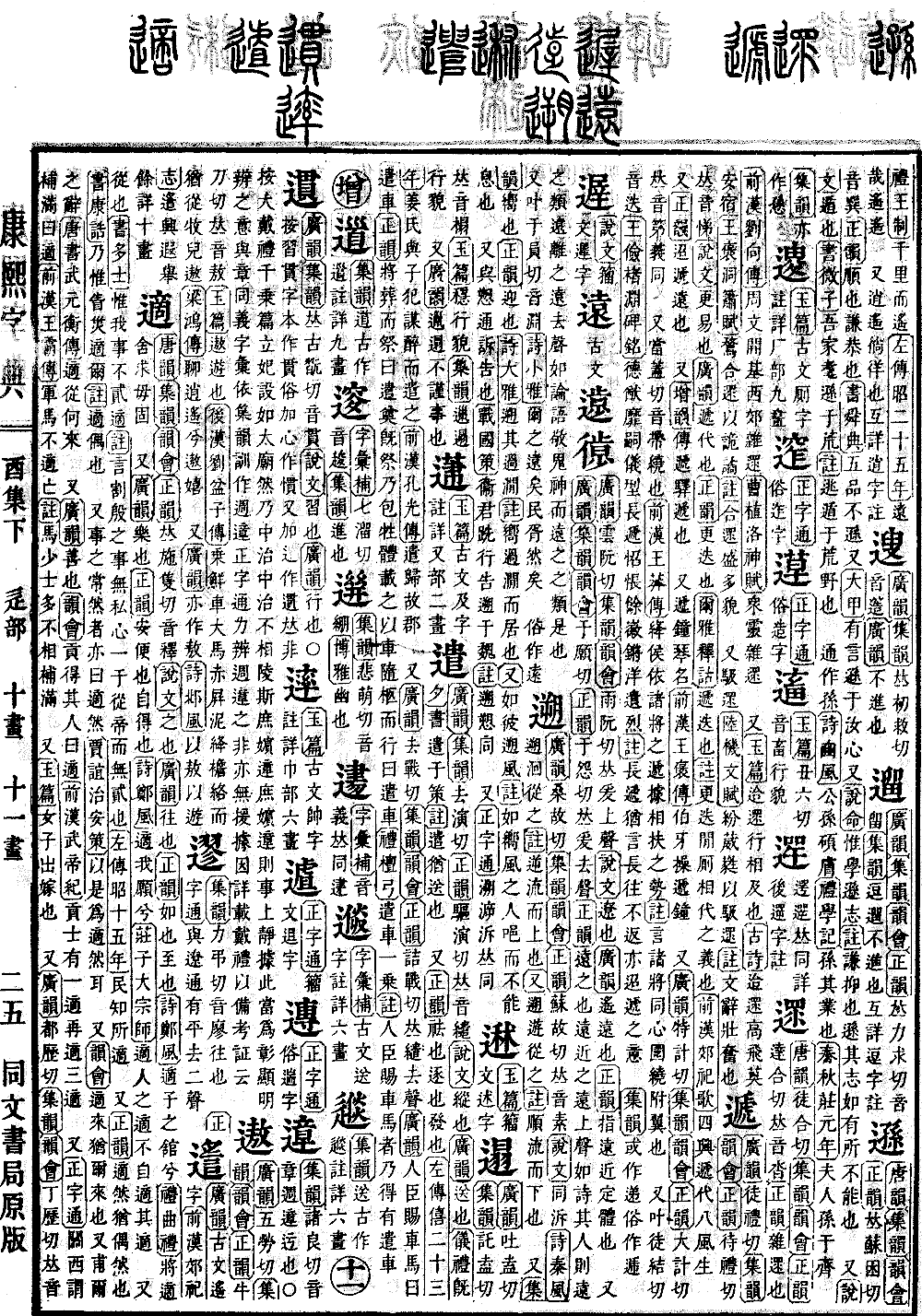
You Collection, Lower Volume
Radical: Walk (chuò)
Character: Qian
Kangxi Strokes: 17
Page 1263, Entry 19
Pronounced qian (rising tone).
Shuowen Jiezi (Explanation of Simple and Compound Characters): To release.
Guangyun (Broad Rhymes): To send off.
Book of Etiquette and Ceremonial (Yili), section on the ceremony after the burial: To write the parting words on bamboo slips. Commentary: To qian means the same as to send off.
Also, Zheng Yun (Orthophony of Rhymes): To dispel, to expel, to dispatch.
Zuo Commentary on the Spring and Autumn Annals (Zuo Zhuan), 23rd year of Duke Xi: Lady Jiang conspired with Zifan, made him drunk, and sent him away.
Book of Han (Hanshu), Biography of Kong Guang: Dispatched him back to his former commandery.
Also, pronounced qian (falling tone).
Guangyun: When a ruler bestows carriages and horses upon an official, they are called qianche (parting carriages).
Zheng Yun: A sacrifice offered when about to conduct a funeral is called qiandian (parting offering). After the sacrifice, the animal carcasses are wrapped and loaded onto carriages to follow the coffin, which are then called qianche.
Book of Rites (Liji), section on the manners of Confucius: One carriage for the parting offerings. Commentary: Only officials who have been bestowed carriages and horses by the ruler may possess parting carriages.