Xu Collection, Upper Volume
Radical: Metal (jīn)
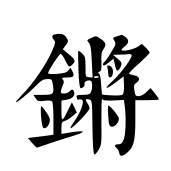
Qiang
Kangxi Strokes: 19
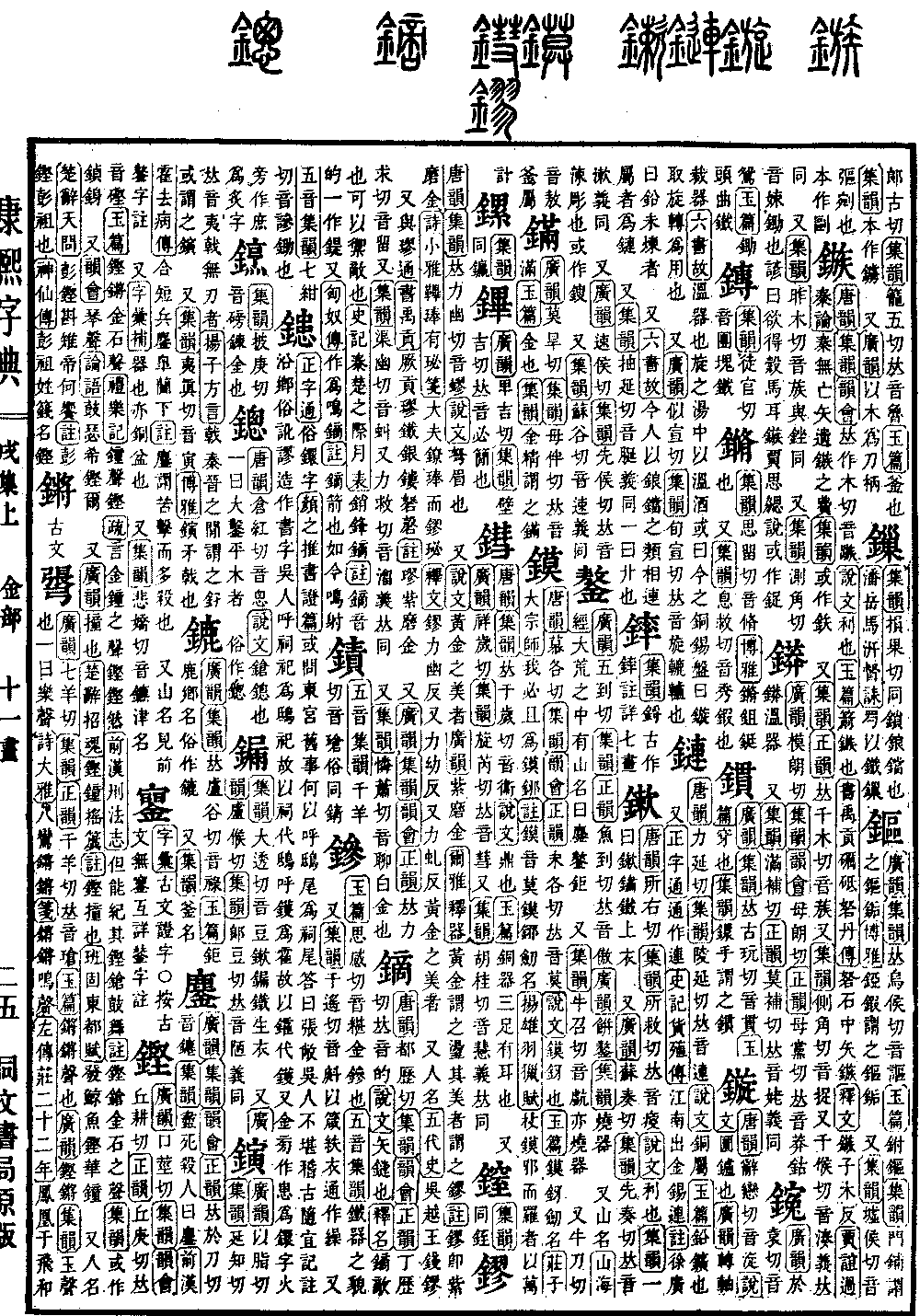
Page 1319, Entry 33
Broad Rhymes (Guangyun): Pronounced qiang.
Collected Rhymes (Jiyun) and Correct Rhymes (Zhengyun): Pronounced qiang.
The pronunciation is the same as qiang.
Jade Chapters (Yupian): Defined as qiangqiang, describing a sound.
Broad Rhymes (Guangyun): Defined as kengqiang.
Collected Rhymes (Jiyun): Defined as the sound of jade stones striking each other. Another view is the sound emitted by musical instruments.
Book of Odes (Shijing), Great Odes (Daya): Records, "Eight bells ringing qiangqiang."
Annotations (Jianzhu): Explain, "Qiangqiang refers to the sound of ringing."
Zuo Commentary (Zuo Zhuan), Year 22 of Duke Zhuang: Records, "The phoenixes fly, their harmonious calls are qiangqiang."
Book of Rites (Liji), Jade Ornaments (Yuzao): Records, "Then the jade sounds out qiang."
Annotations (Zhuoshi): Explain, "Qiang refers to a sound."
Additionally, Book of the Later Han (Hou Hanshu), Biography of Zhang Heng: Records, "Ascending the high pavilion, it is qiangqiang."
Annotations (Zhuoshi): Explain, "Qiangqiang describes a tall and lofty appearance."
It is also used interchangeably with qiang (qiàng).
Book of Rites (Liji), Summary of Propriety (Quli): Records, "The scholar is qiangqiang."
Annotations (Zhuoshi): Explain, "Qiang, versions also write it as cang. Or written as qiang."
Commentary and Exegesis (Shujie): Explains, "Refers to a dignified and spirited appearance."
Additionally, Collected Rhymes (Jiyun): Pronounced cheng. The meaning is the same.