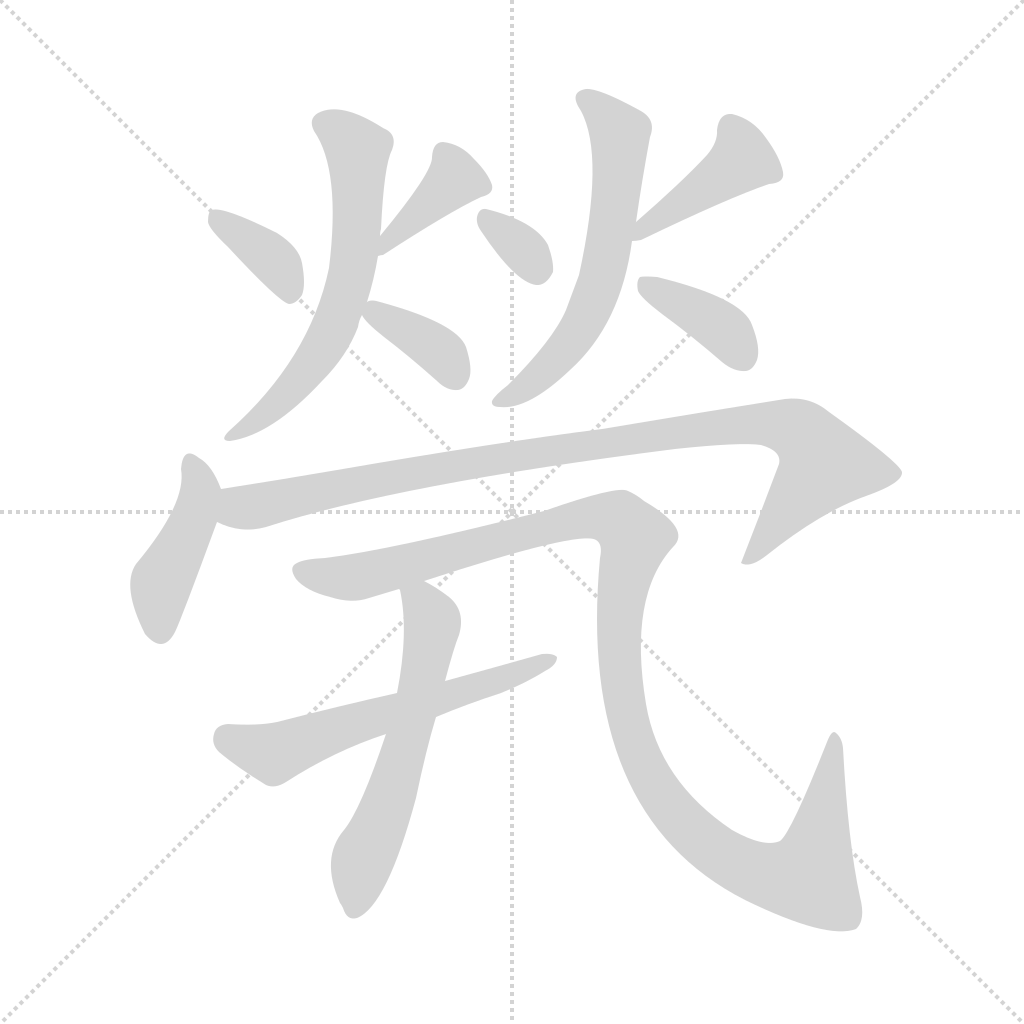
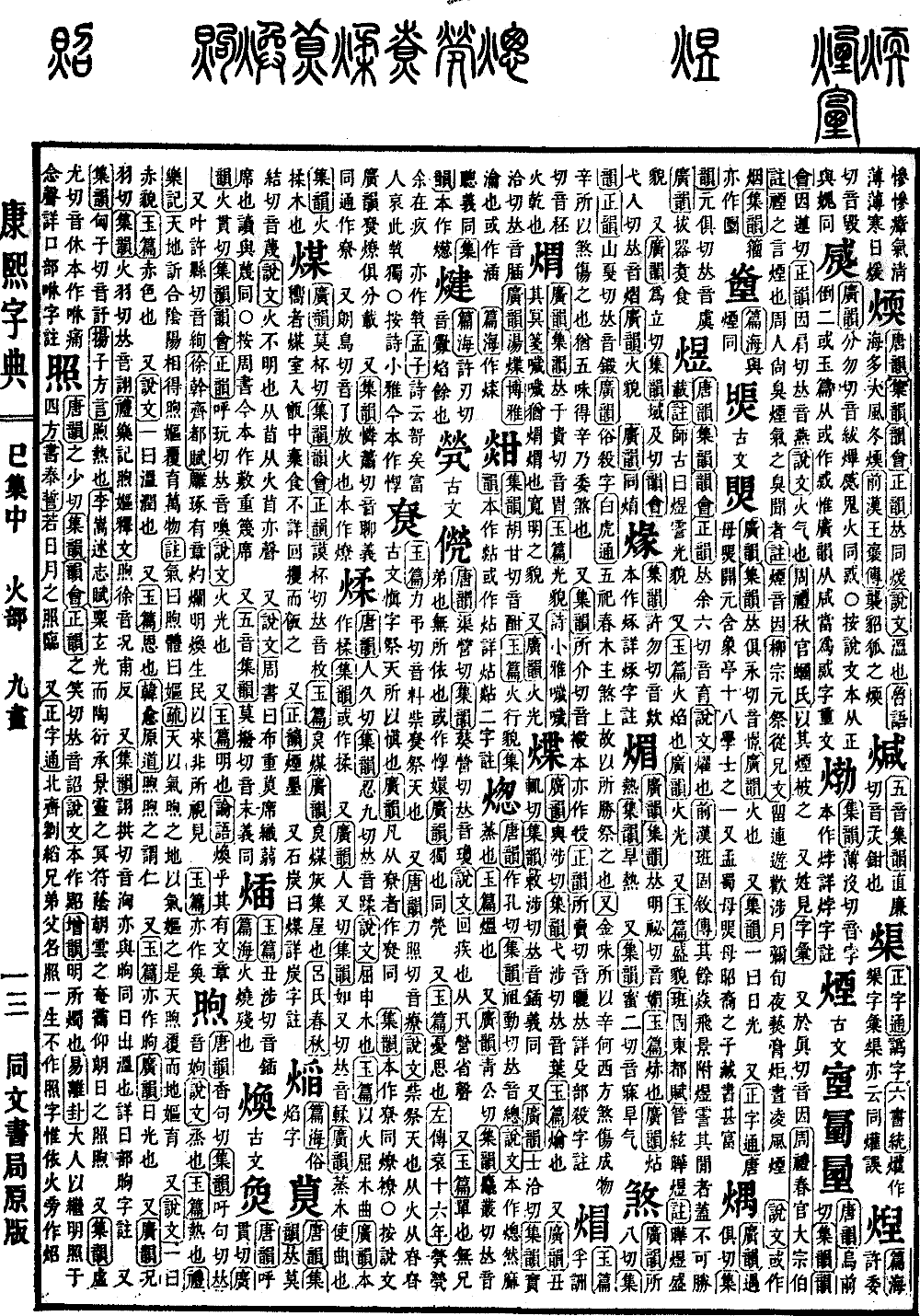
Si Collection, Middle Volume. Radical: Fire (huǒ). Kangxi stroke count: 13. Page 677, Entry 25. Ancient form. Pronounced qiong (rising tone). According to the Analytical Dictionary of Chinese Characters (Shuowen Jiezi), it denotes rapid rotation. Derived from the radical for rapid (xùn) with a shortened phonetic component of camp (yíng). Furthermore, according to the Jade Chapters (Yupian), it means alone, having no brothers, and having nothing to rely upon. Sometimes written in a variant form (qióng) or (huán). According to the Extensive Dictionary of Chinese Characters (Guangyun), it means solitary and is the same as the character (qióng). Furthermore, according to the Jade Chapters (Yupian), it means worry and longing. In the Zuo Tradition (Zuo Zhuan) for the sixteenth year of Duke Ai, it is written: I am alone and in distress. It is also written as a variant. In the Mencius, the Book of Odes (Shijing) says: Fortunate are the wealthy, but pity this solitary one. Note that in current versions of the Lesser Odes section of the Book of Odes (Shijing), this is written as (qióng).