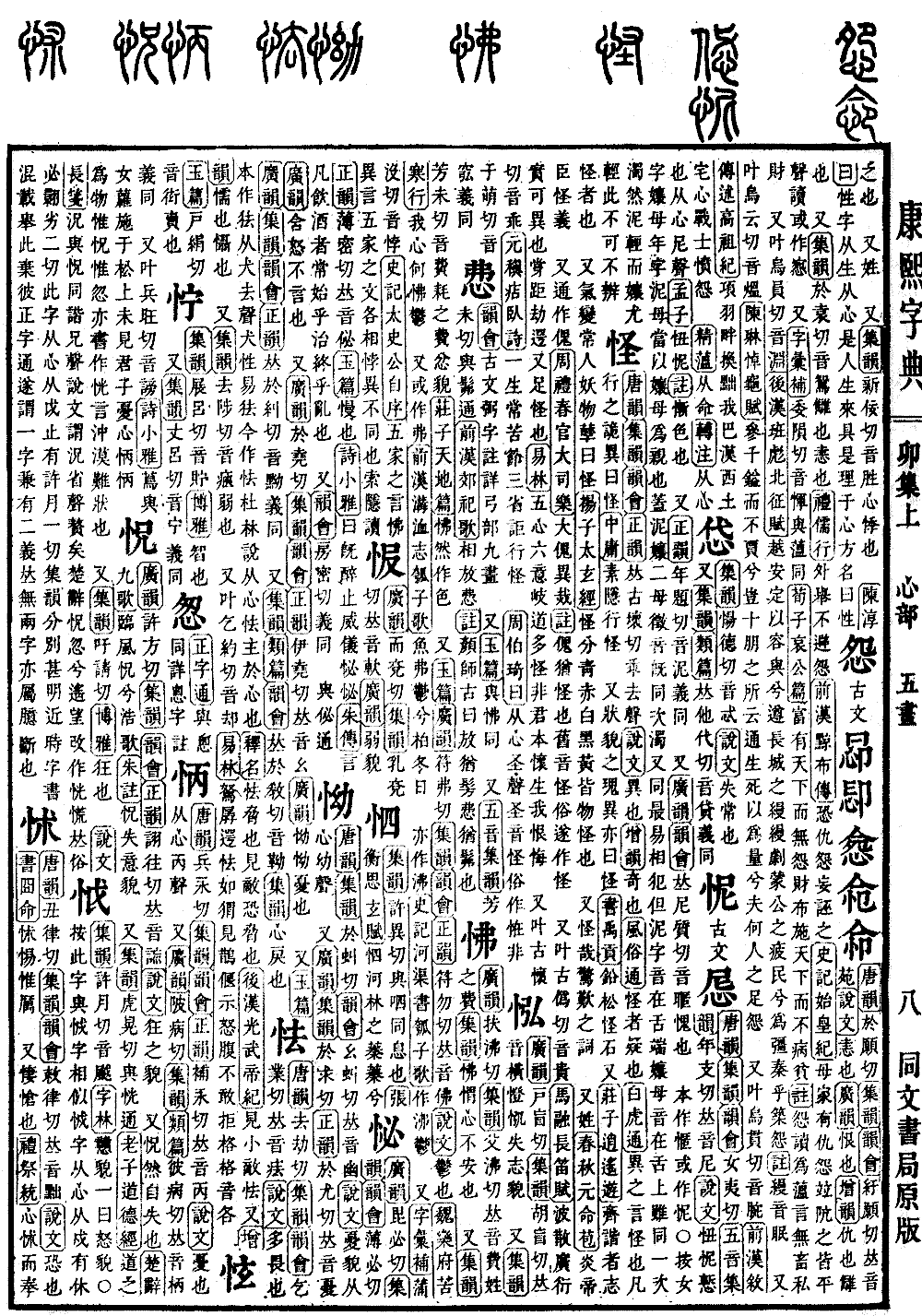
Mao Collection, Upper Volume
Radical: Heart (xīn)
怯
Kangxi stroke count: 9
Page 382, Entry 18
Pronounced qiè
According to the Explanation of Writing (Shuowen), it means to be easily afraid. The original form was written with the dog radical and the phonetic component qu. The nature of a dog is easily startled. It is now written as qie. Du Lin states: it is formed with the heart radical, as fear resides in the heart.
According to the Explanation of Names (Shiming), qie means to be coerced. When seeing an enemy, one is fearful and feels coerced.
From the Annals of Emperor Guangwu in the History of the Later Han (Hou Hanshu): To be cowardly when facing a small enemy.
Also, according to the Expanded Rhymes (Zengyun), it means cowardly or intimidated.
Also, pronounced qie. It means weak.
Also, rhyming with qie (entering tone). From the Forest of Changes (Yilin): A nag, weak and hesitant, cowardly as a hedgehog seeing a magpie. It shows its belly in retreat, not daring to resist or clash. Clash is pronounced ge.